Vietnam Family Travel: A Complete Planning Guide for Parents
When my family first decided to visit Vietnam in 2024, I remember feeling surprised about just how many different places there were to visit. I had it in my head that Vietnam was a fairly small country with relatively few major destinations. I was wrong.
Vietnam is a masterclass in diversity, from the natural beauty of the North to the busy streets of Saigon in the South. Navigating a country this dynamic with kids requires more than just a list of places to visit. It requires planning. Whether you’re just taking a quick two-week escape or visiting Vietnam as part of a wider world schooling adventure, these are tips and tricks that will help you make the most of your time in country.

Best Time of Year to Visit Vietnam with Kids
As someone who has lived in Vietnam for nearly 2 years straight, I personally don’t feel like there’s ever really a bad time to visit.
Vietnam is a long and narrow country, giving it three distinct climate zones. Generally, March to April and September to November are the sweet spots for travelers as these months offer the best balance of moderate temperatures and lower humidity across the entire country. (I prefer April.) Or, if you’re looking at Vietnam as a possible escape from winter weather, there’s still plenty to do, even during the winter months!
That said, different regions of Vietnam are better or worse depending on what it is you want to do, so it’s worth planning accordingly.

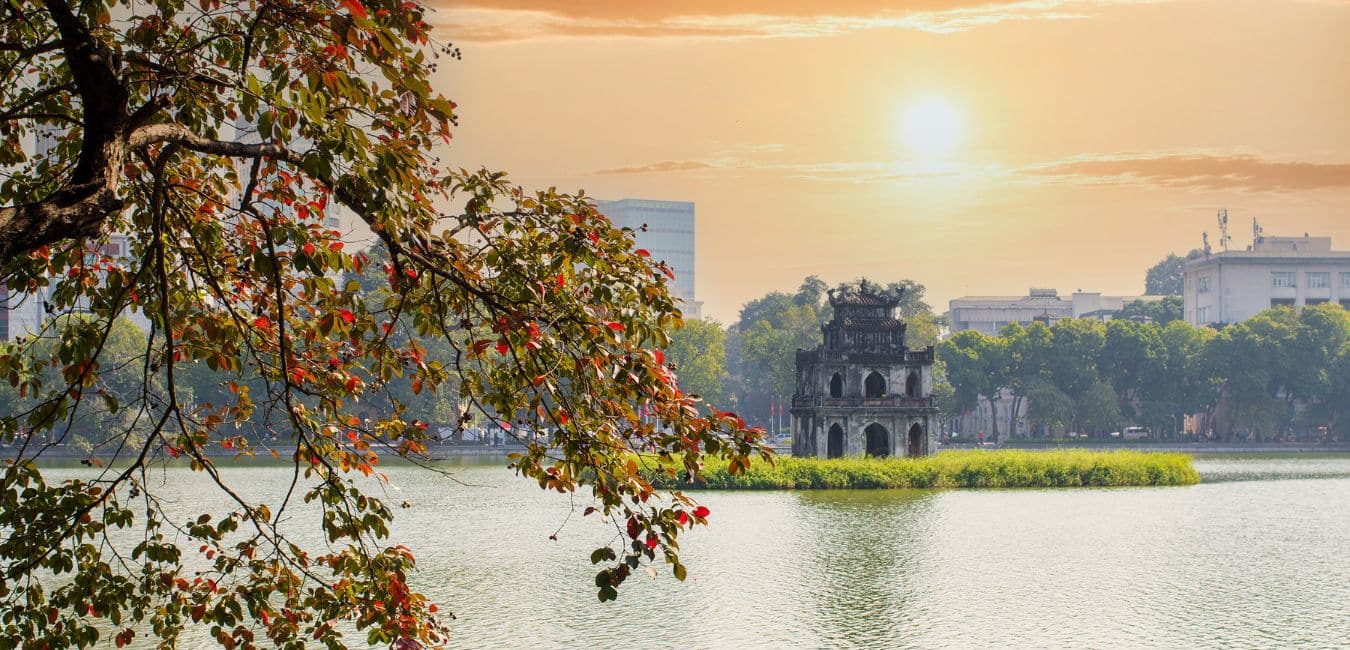
Best time of Year to visit Northern Vietnam (Hanoi, Sapa, Ha Long Bay)
If you want to make the most of your trip to North Vietnam, you should aim for either spring or autumn.
Winters, from December to February can get surprisingly cold here, dipping to 4°C. Summers, on the other hand, run from May to August and are hot, humid, and rainy. Hanoi, in particular, often floods during the late summer season.
But during the Spring and Autumn months, everything cools off enough to be bearable, without getting cold. Autumn is often considered the best time to visit Sapa because that’s when then rice fields turn golden, just before the harvest. But if you plan on visiting even just a week or two after harvest, be sure to pack some extra layers!

Central Vietnam (Hoi An, Hue, Da Nang)
Central Vietnam gets cool (not cold) in the winter time and pretty hot in the summer. Visitors should aim for the months between the two extremes, either February to April or August to early September. (Again, April is often the best choice!) I find that the shoulder months, February and August, are great choices if you want cooler weather for exploring cultural landmarks, while the early summer months (April through June) are great for beach trips in Da Nang!

The coastal areas here can get typhoons in the late autumn, so avoid planning a trip in late September through November, just in case.
South Vietnam (Saigon, Phu Quoc, Da Lat)
This region is far enough south to be reliably warm year-round. The dry season from December to April is ideal for avoiding the heavy summer rains, making this a great option for a winter break. Ho Chi Minh City (Saigon) and the southern islands stay warm the whole winter season, but can get brutally hot closer to summer.
Summer trips to this region can still be fun, though! Just make sure to spend a few days in Da Lat to give yourself a break from the heat.
Getting Around in Vietnam with Kids
Use Grab to get around Vietnam’s Cities
If you haven’t visited South East Asia, you may not be familiar with Grab. Basically, it is this region’s version of Uber, and it works very well for getting around in Vietnam’s cities. You can choose between car rides (perfect for families) or even cheaper scooter rides if you’re traveling solo. Plus, the Grab app lets you order food (think Uber Eats), groceries, and more, all from inside the same app.
I use Grab literally every day and have found it to be very reliable. However, if you can’t get a car for some reason, you can also use the Green SM App (formerly Xanh, which means Green, but in Vietnamese). It’s a very similar rideshare app that uses a fleet of electric vehicles with a distinctive teal color.

I really like their app and their cars, but the easy availability of food delivery options and the wider usage across South East Asia means I typically reach for Grab first. Either option works great!
Should I rent a Scooter in Vietnam?
You’ll get a lot of varying answers on this question, but personally, I wouldn’t.
For one, if you’re traveling with kids, riding in a car is a much safer option than riding a scooter. Traffic patterns in Vietnam are quite different from places like the United States, which increases the likelihood of foreigners getting into accidental collisions. And scooters don’t have a lot in the way of safety mechanisms to protect their riders in case of crashes.
For another, motorcycle licenses from the US don’t work in Vietnam. Even if you’re a confident motorcycle rider, you won’t legally be able to rent and drive scooters here without getting an international driver’s license from a country on the same IDL agreement as Vietnam, which, unfortunately, does not include the States.
It’s both easier and safer to just call a Grab.
Vietnam has many different options for getting between cities
While Grab works great for getting around in cities, it would be cost prohibitive as a method of travel between cities. Luckily, Vietnam has a robust system of trains, planes, and buses that work to move people across the country effectively and inexpensively.
Trains
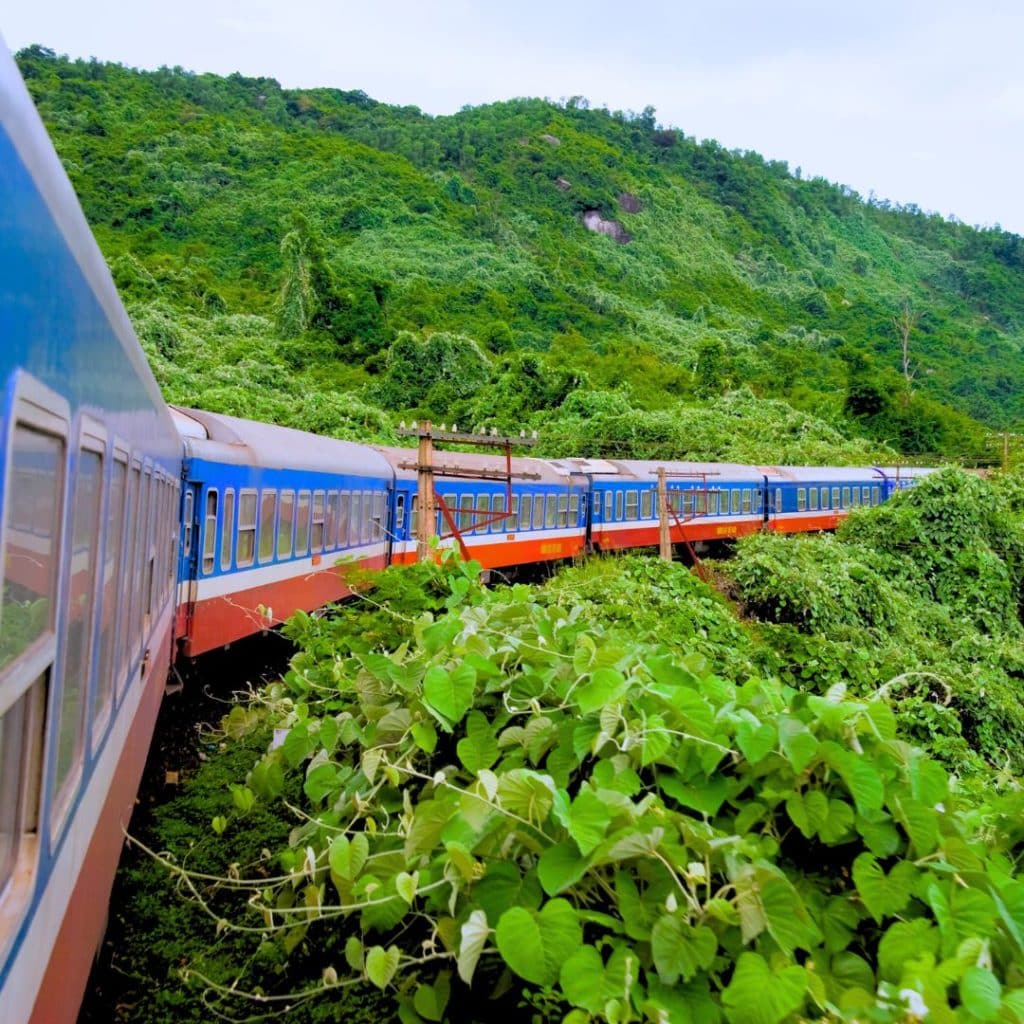
Vietnam has a coastal train track that runs from Saigon in the South all the way to Hanoi in the North, with stops at almost every city along the way! For longer trips, families should skip the seat carriages and splurge on a four-berth private sleeper compartment. It is cozy, safe, and turns the journey into an adventure. Our kids loved sleeping on the train and watching the changing landscape out the window.
It is also a very efficient way to cover long distances without the hassle of airport security lines and luggage limits. Just remember to pack enough snacks for the trip, as the onboard food can be a bit hit or miss for younger, picky eaters. (Older picky eaters, too.)
Planes
As much as I love a good train ride, Vietnam is looong. If you plan on moving between the North and South on your trip, it’s going to save you a ton of time to fly instead of taking the train. Domestic tickets are pretty cheap, as well, making this a cost-effective way to get the most out of your trip.
VIP Sleeper Buses
Planes and trains can’t get you everywhere in country. For the places where they don’t reach, there’s VIP Sleeper Buses!
These buses are iconic in Vietnam, but they aren’t as comfy as a train or as fast as a plane. If you try one, look for VIP Cabin buses, which have fewer seats and wider, more comfortable beds. These buses provide a private space for each passenger, or each pair of passengers, on some buses. They are generally well-equipped with charging ports and Wi-Fi, and are generally comfortable enough to get some sleep between destinations.
 Luxury Van Transfer – Hanoi->Cao Bang
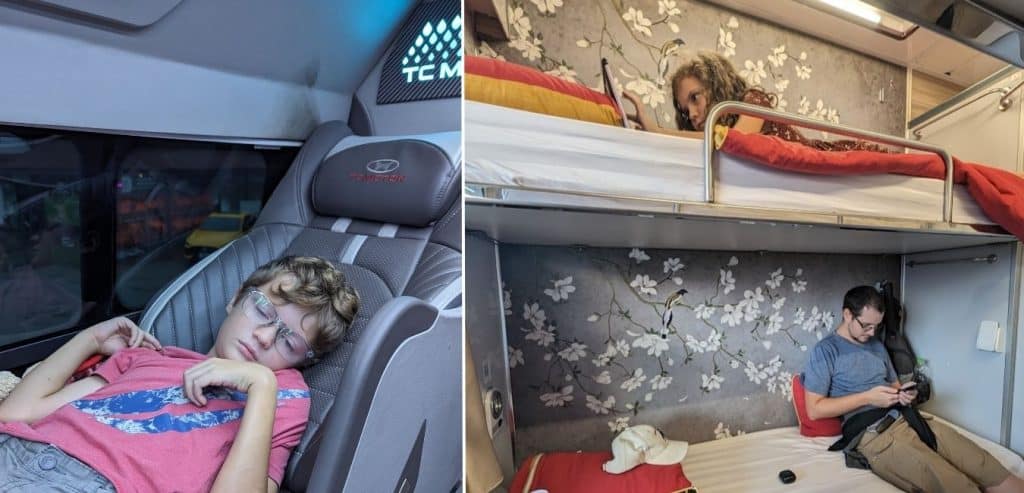 VIP Sleeper Bus (Sapa->Ninh Binh) (Left)
Sleeper Train (Da Nang ->Hanoi) (Right)
If your kids are prone to car-sickness, they can be a little rough, though. Our kids were fine once they got to sleep, but the first hour or so on each of our trips included car sick bags and ginger chews. Worth being aware of, but it wasn’t bad enough to keep us from booking another bus when we needed to!
A quick note on walking in Vietnamese Cities
Vietnamese sidewalks are often filled with parked motorbikes, food carts, and various other obstacles. If you’re traveling with a toddler, it can be a good idea ditch the stroller and invest in some form of carrier. Navigating a stroller through the crowded sidewalks of Hanoi or Ho Chi Minh City would not be fun. A carrier keeps your kids safe and out of the path of traffic.
Best Vietnamese Food Options for Families
Vietnamese cuisine is incredibly kid-friendly because it relies on fresh, whole ingredients and has significantly less spice than most other Asian cuisines. Instead, flavors tend to be sweet and rich, perfect for picky eaters!
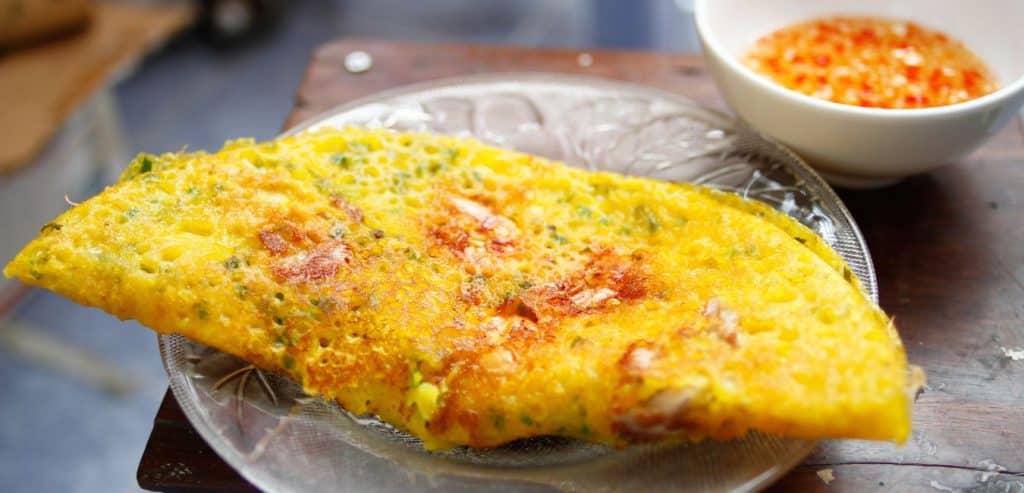
These are a handful of classic Vietnamese dishes that you can find basically anywhere in the country, and which are sure to be a hit with the whole family.
Pho
The ultimate comfort food. Pho broth is light, the noodles are fun to slurp, and you can keep the herbs on the side if your kids are picky. Each region in Vietnam has a slightly different take on pho, but all of them are family-friendly. It is a fantastic go-to meal when the kids are tired and just want something easy.
Of course, while pho is delicious, there are a ton of other great Vietnamese soups to try, as well. I particularly like bun cha Hanoi, which is a northern soup dish with tasty grilled pork meatballs!
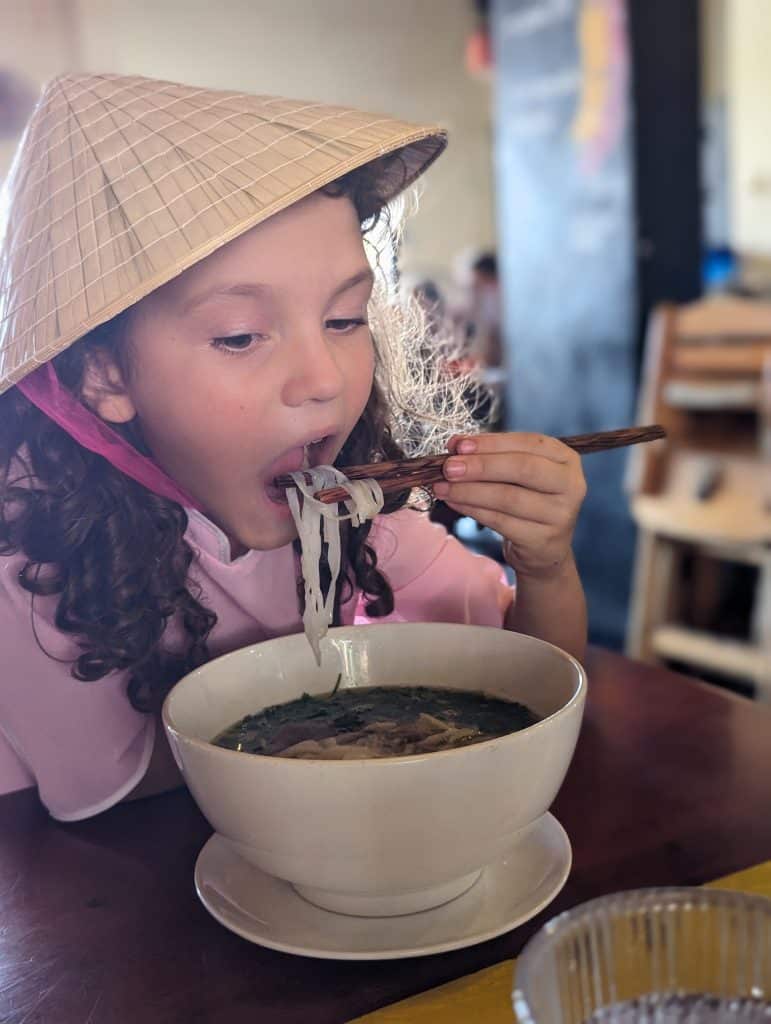
Pho remains my daughter’s go-to meal when we go out 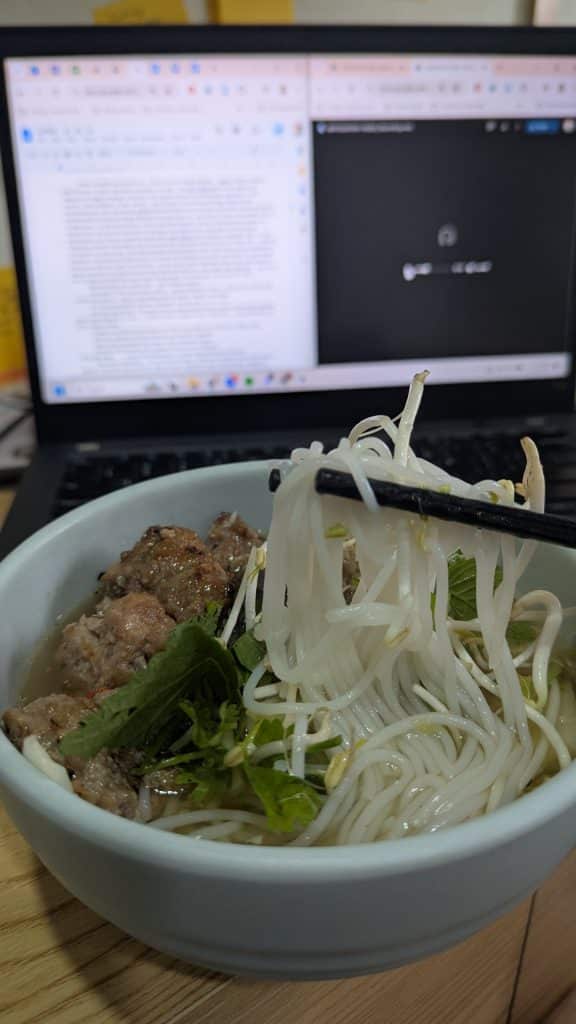
Hanoi-style Bun Cha is my personal favorite soup dish in Vietnam!
Banh Mi
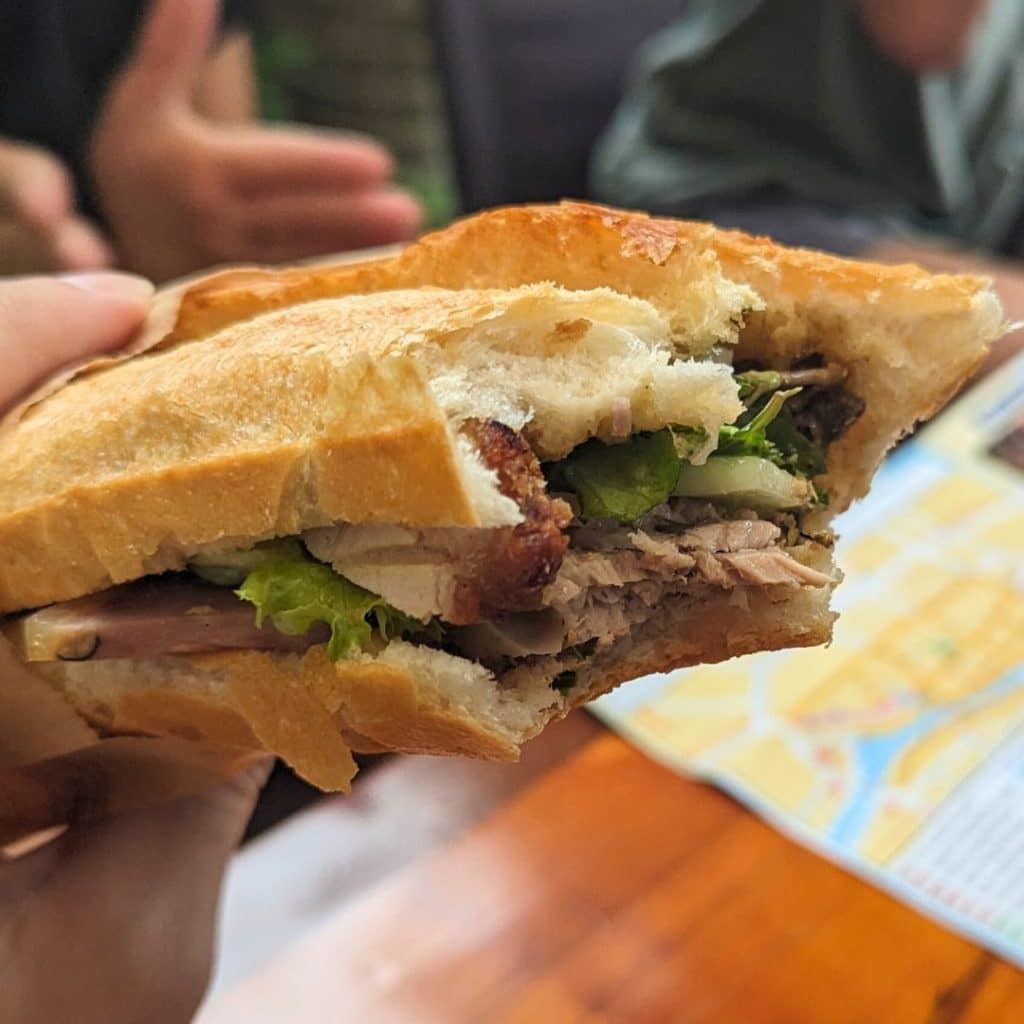
Essentially a delicious sandwich on a crusty Vietnamese baguette, or banh mi. It’s portable, familiar, and easy to customize with grilled chicken, pork, or just veggies and egg.
We’ll often grab these for quick lunches while moving between destinations. They are easy to hold, not too messy, and you can order them without the spicy chili sauce if you have kids with sensitive palettes. It is a perfect bridge between local flavor and familiar comfort food for children.
My favorite version has crispy pork belly and fresh herbs. Definitely give it a try if you find it!
Fresh Spring Rolls (Goi Cuon)
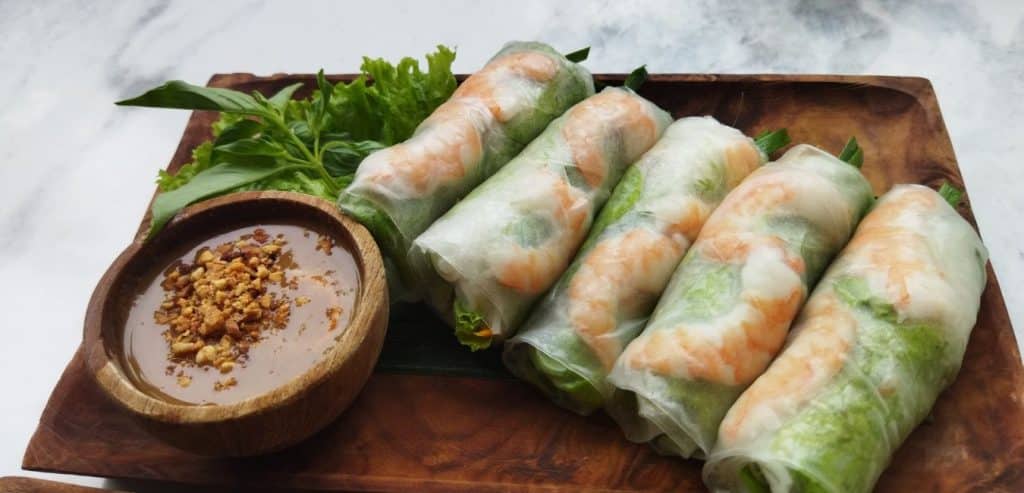
Spring rolls, or goi cuon, are a go to lunch option for our family when we just want something small. They are incredibly fresh, light, and healthy. Because they are not deep-fried like many other spring rolls, they feel a bit better as a regular snack.
Thit Nuong (Grilled Meat)
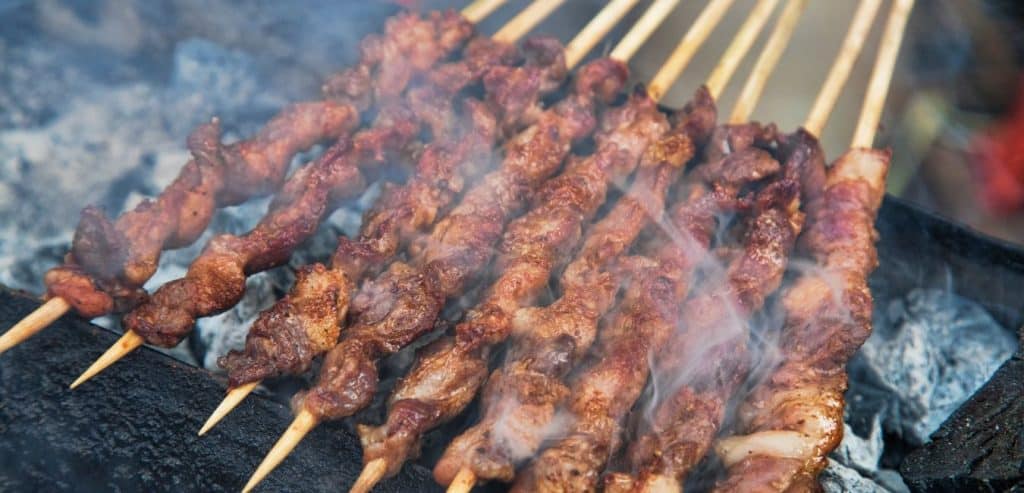
Literally translating to “grilled meat,” thit nuong are basically just grilled meat skewers that you can eat with rice paper wraps and fresh herbs. Simple, delicious, and dirt cheap, we eat our fill of these tasty skewers for dinner at least once a week.
Best Places to Visit in Vietnam with Kids
While I have a longer list of 25 destinations to visit in Vietnam, these are the cornerstone spots for families who want a balance of comfort and culture.
Da Nang
Da Nang makes an incredible family travel base. It has safe beaches, a modern airport, and easy access to both Hoi An and Hue. It’s easy to navigate with kids and balances modern city amenities with a laid-back coastal vibe. And, because it’s so popular with expats, there’s almost always other families around for community!

Hoi An
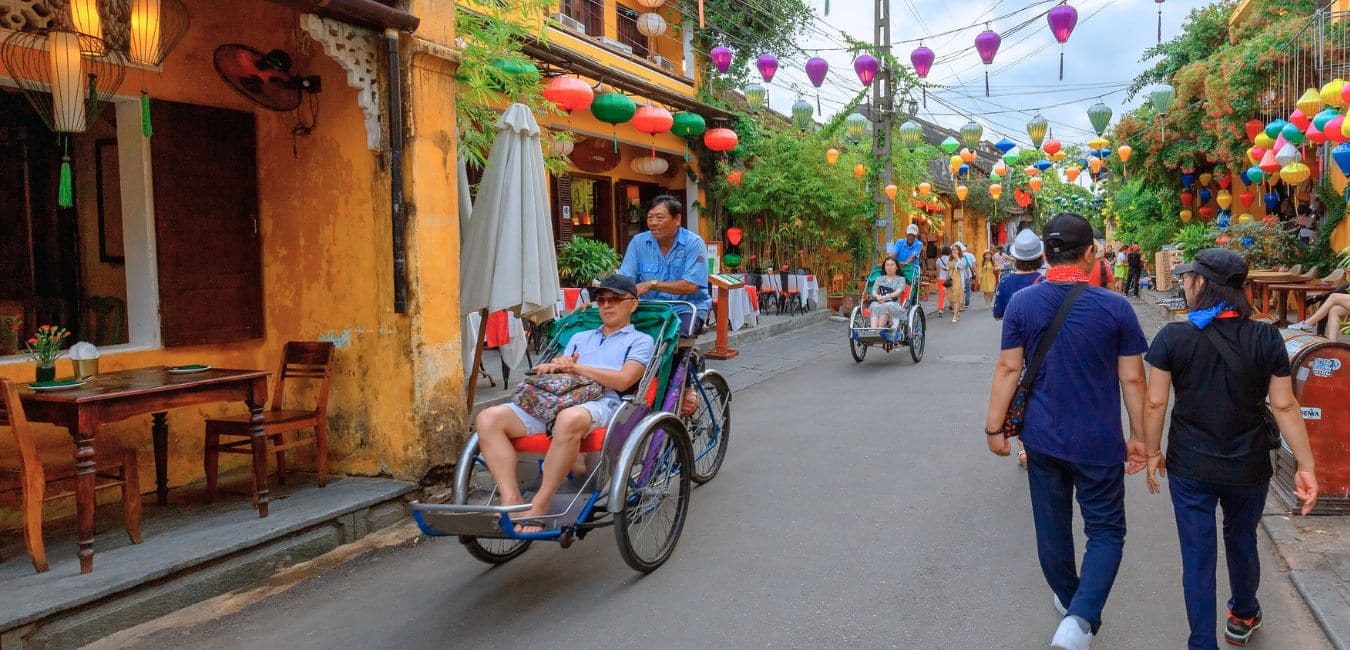
Hoi An is a UNESCO Cultural Heritage site, famous for its pedestrian-friendly Old Town. The lantern-lit streets are magical in the evening, and it’s a great place to slow down for a few days.
Most people spend their time in Hoi An focused on soaking in Vietnamese culture and history, but there are also some great beaches in the area and it’s the launching off point for the nearby Cham Islands, for those looking to add a bit of adventure to their trip!
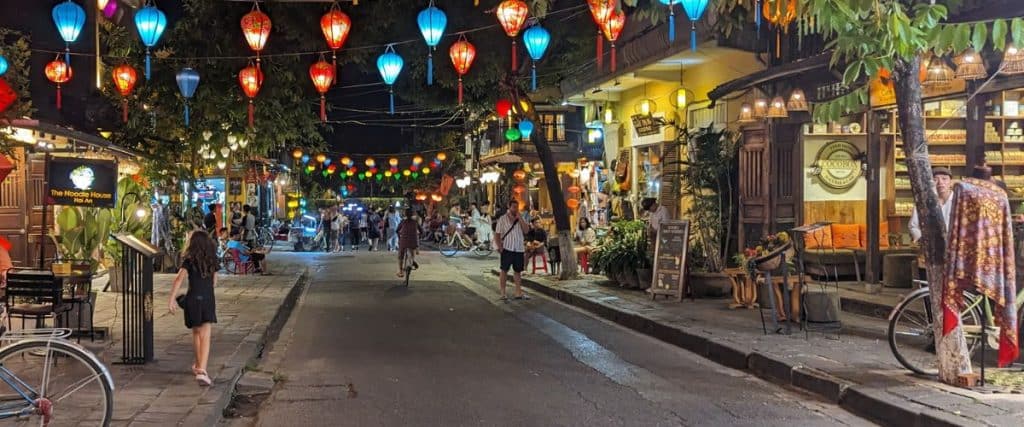
It’s a very safe, incredibly photogenic city, and and amazing spot to learn about local history and architecture without the constant chaos found elsewhere.
Hanoi
For families with older kids or history-loving teens, the capital is essential. It is a bit chaotic, but the culture and food are worth it!I suggest staying in the Old Quarter, with its abundance of markets, coffee shops, and places to eat.

Sapa
If your family wants to hike, Sapa is one of the best spots in the country to do it. The terraced rice paddies here are beautiful, and Sapa is also home to Fansipan, which is the tallest mountain in Vietnam.
Sapa’s also a beautiful location for learning about some of the local indigenous cultures, and has some absolutely stunning viewpoints above the valley. 100% worth a visit.

Phu Quoc
Phu Quoc is purpose built for family resorts and downtime. After a few weeks of heavy sightseeing, the convenience of an all-in-one resort with pools, on-site restaurants, and easy beach access is hard to beat.
It’s a perfect spot to stop for a week and just enjoy being a family by the water!
Do I need a Visa to visit Vietnam? (July 2026)
Unfortunately, there’s not a simple Yes/No answer to this particular question. Rather, the answer depends on what passport you have, your purpose for entering the country, and how long you plan on staying!
But, assuming that you are entering on a US Passport, for tourism purposes only, the answer is yes. You do need a Visa to enter Vietnam. But, getting one is actually pretty easy!
You can apply for an eVisa to enter Vietnam for 90 days at the official Immigration Department website. It costs $25 for a single entry visa or $50 for a multiple-entry visa (if you plan on exiting and entering the country more than once during your 90 days).
But, be VERY careful when filling out your travel details! I’ve heard more than a few stories of travelers being denied entry into Vietnam for small mistakes on their visa application, like misspelled names, flipped date fields, and such. If there’s a mismatch on the information, you may be turned away!
If you want to be extra sure that your Visa will be handled correctly, it’s possible to use visa application services that handle the entire process for you. It’s an extra expense, for sure, but it helps make things way easier and prevents a ton of potential stress when entering the country.
There are a ton of different providers for visa and fast tracking services, depending on where you're entering, but you can hire this one easily through Get Your Guide and it includes immigration line fast track services, help with carrying your bags, and an escort all the way to your car!
(This is worth the extra cost.)

How much does a trip to Vietnam cost?
Vietnam can be an incredibly affordable country for families to visit, thanks to inexpensive lodging and food prices! That said, the total cost of your trip depends on a number of factors, including how long you’ll be staying at what kinds of accommodations, which tours and activities you book, and what kinds of food you choose to eat.
An Estimated Budget for a Family of 4
|
Item |
Daily Cost |
Budget for 10 Days |
|---|---|---|
|
Lodgings |
$40-$80 |
$400-$800 |
|
Tours and Activities |
$60-$120 |
$200-$400 |
|
Food |
$80 |
$800 |
|
Local Transportation |
$5 |
$50 |
|
Transportation Between Cities |
$10-$60 |
$40-$200 |
|
Odds and Ends |
$25 |
$200 |
|
Total Estimate: |
$300/day |
$2400/10 Days |
Note: If the math above looks funky, it’s because the longer you stay in an area, the less expensive things start to be. You get discounts on long stays, you find favorite spots, and you only pay for big ticket items once.
How much do Lodgings cost in Vietnam?
On my family’s first visit to Vietnam, we booked a month-long stay in a 2 bedroom apartment about mid-way between Da Nang and Hoi An. It wasn’t anything special, but it only cost us about $450 for the month, or roughly $15/night. This included all our utilities!
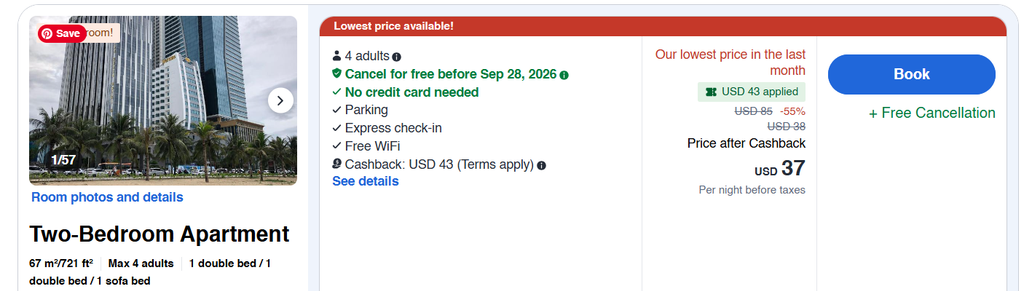
Since then, prices have gone up in the region, but there are still tons of great, inexpensive options for families all over the country. Here’s a screenshot from Agoda with a 2 bedroom apartment located a block from the ocean for $37/night in July of 2026.
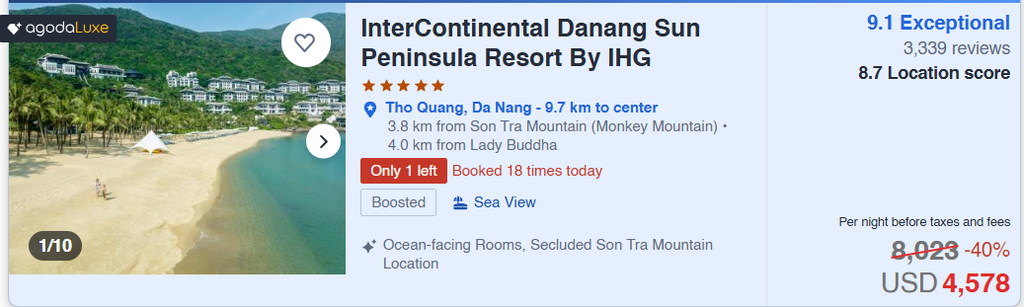
But high-end luxury stays are also available, and there are spots like Intercontinental Da Nang that could run you more than $5000/night. Obviously, that’s on the higher end of what’s on offer in Vietnam, but the point is that whatever your budget is, there are places here to fit that price point!
And, of course, the longer you plan on staying, the better rates you can negotiate.
How much do Tours and Activities cost in Vietnam?
Likewise, tours and activities range the gamut in terms of price and quality.
The least expensive route is usually to simply book a ride to whatever spot you want to see, buy an entrance ticket and explore it for yourself! However, doing so often means missing out on learning interesting facts about the history, architecture, and context that professional tour guides can provide.

Tour prices vary wildly depending on what it is you’re doing, but for the most part, I’ve found tours to be fairly economical in Vietnam compared to other countries. For most places, you can expect to pay around $15-$50 per person for a guided activity, and there are often discounts for children.
Obviously, the actual price will depend heavily on the activity you choose and what all is included. Personally, I like booking more basic guided activities through Get Your Guide, and more upscale activities with Seek Sophie.
How much does Food cost in Vietnam?
I am a huge fan of good food, and Vietnam has tons of great options to choose from! Whether you’re looking for a nice sit down restaurant or just a simple banh mi, it’s easy to find plenty of great choices at low prices.
The cheapest possible options are found at the various street vendors that you find around town. You’ll see plenty of food carts or small stands offering you grilled meats and veggies, banh mi, or basic noodle dishes for around a dollar. But depending on your appetite, you may end up ordering several rounds.
My family has a favorite spot where we get piles of meat skewers and pork belly, served with rice paper, fresh lettuce and herbs, kimchi, and dipping sauce. For the four us, I usually end up paying around 400k ($15) total, including drinks. A nicer sit down restaurant on the beach on the other hand, may charge 200k ($8) per person for basically the same meal.
I would personally budget around $20/person per day for food and drinks. But be careful! Depending on the day, it’s super easy to either stay below or go over that amount, so your day to day food expenses can swing wildly!
Odds and Ends (Internet, Souvenirs, Shopping, etc.)
It’s a fact of life that, no matter where you are, there will be things that you want or need that didn’t fall perfectly in the budget. So, here’s a small catch-all section!
Internet is pretty cheap in Vietnam, and it’s easy enough to get a tourist SIM at the airport for internet connectivity. I use Viettel for my internet here, and I’ve been really pleased with it!
Of course, if you have a US-version of a modern flagship phone (like an iPhone or a Google Pixel 10) there’s a good chance you don’t have a SIM card slot and will need to get an eSIM through a provider like Airalo or Saily. It’s a bit more expensive than a local SIM, but you can buy it before your trip and have internet on arrival.
For a 10 day trip, Airalo costs $35 for unlimited data.
Other small expenses include things like souvenirs, clothing, or items you buy to make your stay more comfortable.
For instance, for our month long stay, we ended up buying a kitchen knife and cutting board for our apartment, as our “fully equipped” kitchen lacked that particular amenity. We bought a hand-carved stamp in Hoi An as a souvenir, and we bought some shirts and a hats for the family, some of which we’re still getting good use from!
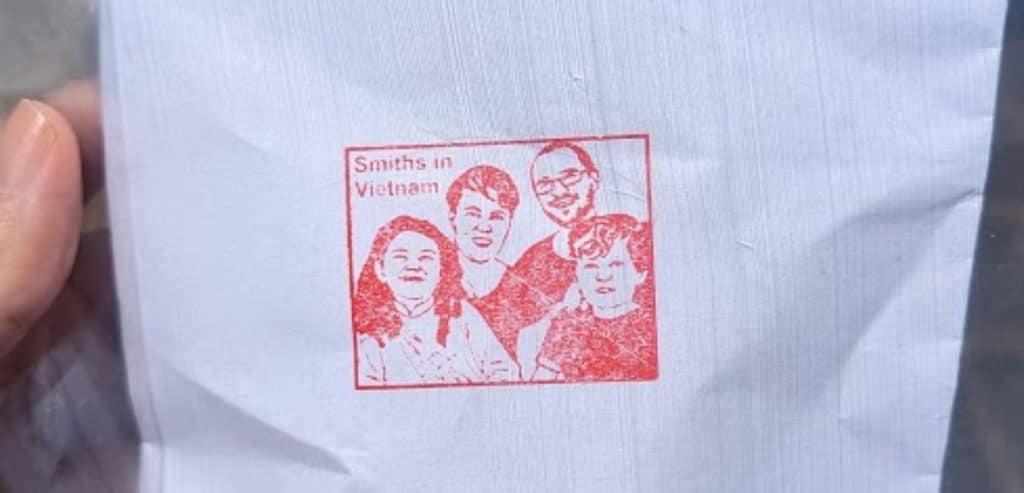
In all, I would budget about $25/day for odds and ends. It’s very possible you won’t spend it all, but it’s good to be prepared, just in case!
Quick Tip: You will see people using QR codes for payments across South East Asia instead of carrying cash. If you want to do the same, you can use the Moreta Pay App. It’s a genuinely helpful app for saving money on ATM withdrawals and not having to worry about carrying large amounts of cash around a foreign country, and it works in a ton of different spots throughout Asia and Latin America.
How long do I need in Vietnam?
Listen. Vietnam is an incredibly vibrant and varied place, and it’s impossible to see everything it has to offer in a single trip! Even so, I highly recommend coming for a visit, even if you can only swing a short visit.
Personally, I think the shortest amount of time that makes sense for a trip to Vietnam would be about 10 days. But, don’t expect to be able to see and do everything during that time! Instead, it’s worth picking one of the three major regions in Vietnam and leaning into it. This lets you get a deeper look at local culture, food, and history without spending half your trip transiting from city to city.
If you can take it slower, I definitely suggest doing so. My family spent a whole month exploring North Vietnam, spending about a week in each location we visited. We saw so much that we would have missed on a quicker trip, and it still felt too fast at times!
But, if you really only have 10 days in country and want to see as much as possible during that time, I suggest checking out one of my 10 Day Vietnam Itineraries I’ve linked below!

Tips for Staying Healthy in Vietnam
Staying healthy while traveling is mostly about simple, consistent habits. Just because we aren’t located in the States doesn’t mean that we skip our check-ups and dentist appointments! And in fact, places like Vietnam often have better options for basic healthcare for cheaper than it would be in America. That said…
Travel Medical Insurance
Travel medical insurance is one of the best possible investments you can make for your trip! I recommend SafetyWing because it is built for long-term travelers and has a fantastic family policy where one kid per adult (under 10) is covered for free on their Essentials plan.
While I hope you never actually need to use it, having travel medical insurance provides a ton of peace of mind. It is a small monthly cost that makes the entire long-term travel lifestyle sustainable, ensuring that your family’s health is never at risk due to lack of coverage.

Hydration
Vietnam is hot and humid. Keep water bottles filled with filtered water and encourage regular breaks. Headaches are often the first sign of dehydration in kids (and adults). We found that the heat can really creep up on you, especially when you are busy exploring a new temple or city block.
We make it a habit to stop for a coconut water or fresh fruit juice throughout the day. (I’m a big fan of having such easy access to fresh-squeezed orange juice.)
The heat during a Vietnamese summer is no joke. While there are definitely plenty of spots around where we can stop and get a drink, we also like to keep water on hand while exploring.
My day bag has water bottle holders, but over time, the elastic has gotten loose and larger water bottles tend to fall out. The solution? One of these!
They're cheap. They work well. And they keep our water more accessible than it was when I just relied on my backpack!

First Aid Kit
Pack a small magic kit with antiseptic cream, bandages for scrapes, and a thermometer. If you have smaller children bring your own Children’s Tylenol or other Children’s medicines. While you can find pharmacies everywhere in the major cities, children’s meds aren’t super common. Plus, it’s always easier to have the brands you trust in your bag. Having a kit ready means you can handle a small scrape or a minor fever on your own terms without having to hunt down a local store.
I keep band-aids, Neosporin, Children’s Tylenol, and allergy medicine in mine.
You don't need to buy a specific first-aid kit for travel, but pre-made kits like this are a convenient size and already have a good chunk of what you want in your kit without needing to buy things piece-meal.
I would definitely add some Children's Tylenol, or your children's allergy medicine of choice, but otherwise, this is a pretty easy kit to recommend.

Pollution and Air Quality
In big cities like Hanoi, air quality can sometimes be an issue. If you have kids with asthma or sensitivities, plan for more nature days in the countryside to balance out your city time. The traffic congestion in urban hubs is a significant contributor to air pollution.
We balance our city stays with quick trips to national parks or mountain retreats where the air is cleaner. But really, it’s all about balance. If you’re going to spend time in one of the bigger cities, it’s usually worth spending a few days in one of the country’s quieter, greener environments right after.