

A 10 Day Itinerary for Central Vietnam: Budget-Friendly Beaches and Culture worth Exploring
While most travel guides I’ve seen tend to focus around Vietnam’s larger cities in the north and south, Central Vietnam has a ton going for it that many visitors to the country end up skipping. With 2 different UNESCO World Heritage Cities with an accessible (and inexpensive) modern city between them, there’s a lot here for visitors to enjoy!
Whether you’re looking for a relaxing beach holiday somewhere with a lot of sun or are leaning towards a holiday filled with culture and history, spending 10 days in Central Vietnam will be sure to scratch that itch.
This 10-day itinerary in Vietnam explores culture in Hoi An, imperial history in Hue, and leaves plenty of time for fun in the sun in Da Nang, all without breaking the bank.

A 10 Day Itinerary for Central Vietnam
Best for: Travelers who want a mix of ancient history, UNESCO heritage, adventure, and fun in the sun, all without too much time spent in transit.
Central Vietnam doesn’t get as much attention as Hanoi or Ho Chi Minh City, which is honestly baffling when you look at all it has to offer. Two UNESCO World Heritage cities, incredible beach vibes, and a central city that has all the conveniences of a big city while still being small enough to feel relaxed. (Plus what is literally the world’s largest cavern, though that deserves its own trip and didn’t make this itinerary.)
Central Vietnam is genuinely my favorite part of the country.
This 10-day itinerary includes visits to:
- Hoi An
- The Cham Islands
- Da Nang
- Hue
- and, optionally, Lang Co
Logistics: You’ll most likely be both flying into and out of Da Nang International Airport (DAD), which receives direct flights from across Asia. And because of it’s centralized location, Da Nang will be something of a main hub for the whole itinerary.
Begin your trip in Hoi An
After making your way through customs, you’ll want to head south to Hoi An, which is around 45 minutes to an hour away from the airport. The easiest option way to get there is to use the Grab App (Like Uber, but for Southeast Asia.) Make sure you have it set up before you arrive and either grab a travel SIM card from Viettel or use an eSIM service like Saily or Airalo to get mobile data.
Logistics Note: I recommend getting a hotel room located just outside of Old Town, so it’s easy to walk over whenever you’d like! Places like The Lit Villa offer nice enough rooms for a fraction of the price that you would pay in other countries. Of course, if you want to maximize your savings, you could also skip the budget accommodations altogether and grab a nice room at one of the resorts. It just depends on where you want to spend your money.
What to eat in Hoi An: The city has its own regional dishes that you won’t find done as well anywhere else in Vietnam.
– Cao Lau is a thick rice noodles served with slices of barbecued pork, fresh herbs, and crispy croutons in a rich, barely-there broth. I get this every time I visit!
– Banh Mi Phuong is the banh mi spot made famous by a visit from Anthony Bourdain. Personally, I think I’ve had better banh mi elsewhere, but it’s still worth a visit
– My Quang is a bowl of turmeric-tinted noodles with shrimp, pork, and roasted peanuts, usually served with a crunchy rice cracker. It’s served throughout central Vietnam
Day 1: Arriving in Hoi An and Seeing Old Town
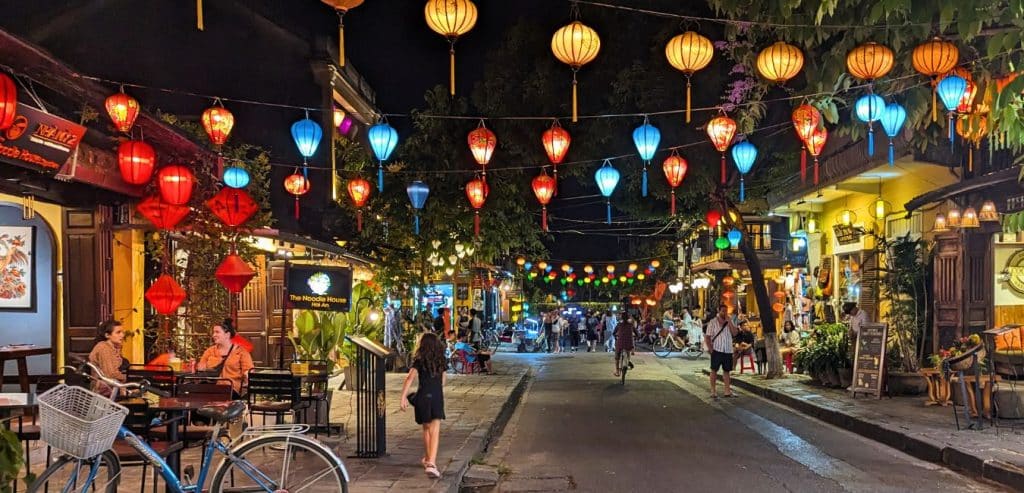
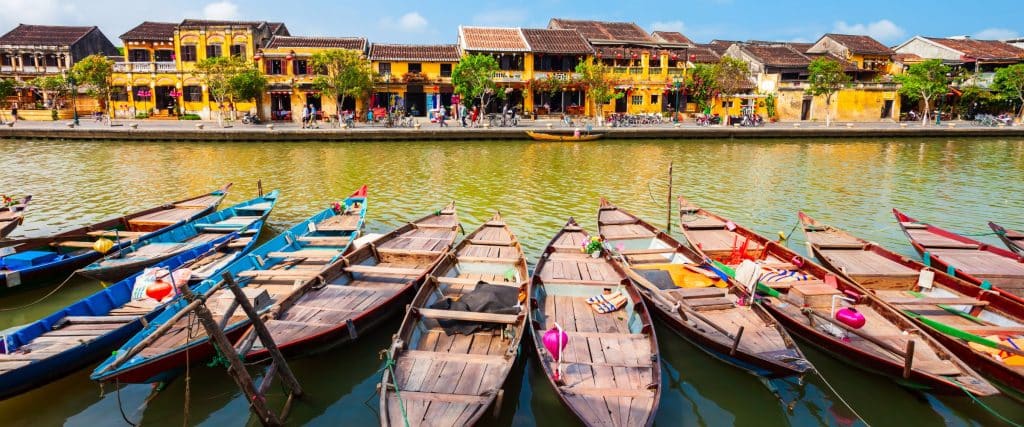
Hoi An’s Old Town is the undeniable heart of the city and one of the most photogenic places in Southeast Asia. Ancient merchant houses line the riverbank, their yellow-ochre walls strung with silk lanterns that glow brightly in the evenings. The area is a UNESCO World Heritage Site, and unlike many heritage zones, it still feels genuinely lived in. Locals shop, worship, and go about their lives in the same buildings that have stood here for centuries.
Read more: Best things for Families to Explore in Hoi An
Spend whatever portion of your first day that you can wandering the streets and admiring the sights of Hoi An’s Old Town. I recommend choosing one of the restaurants lining the river for dinner and grabbing a seat on the second floor overlooking the water. Food isn’t as cheap riverside, but the view is great, especially in the evenings.
This is also the best time to visit one of Hoi An’s many tailors to get some custom-made clothes. Hoi an is famous for it, but getting the clothes takes a day or two, since they’re making them from scratch. The earlier you can put in your order, the better.
Pro Tip: Remember to drop a pin on your favorite map app so you can easily find your way back to whichever tailor you use. There are a ton in Hoi an, both in and outside of Old Town. If you forget where the one you used is, it can be difficult to find your way back again.
Day 2: Hoi An and My Son Sanctuary
For your second day, I recommend getting an early start and going out to eat some bò né . It’s a beef and eggs dish served sizzling on a cow shaped cast iron plate and served up with banh mi bread. Trust me, it’s great.
After breakfast, you should head to one of the nearby craft villages. I recommend exploring either Tra Que vegetable village, where you can get a tour of a local farm, or Thanh Ha pottery village where you can try your hand at making a pot!
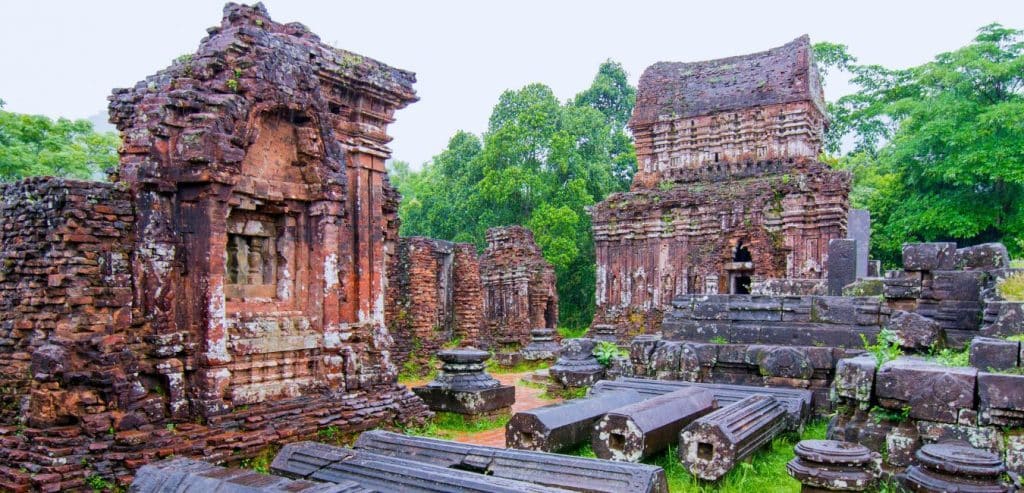
After lunch, you should hire a driver or join a tour of My Son Sanctuary, which is about an hour’s drive from Hoi An. My Son is a cluster of ancient Champa Hindu temples dating back to the 4th century and is basically Vietnam’s version of Angkor Wat, albeit on a much smaller scale. Large parts of the site were damaged during the American-Vietnam War, but what remains is both atmospheric and historically fascinating. A good guide makes a real difference here, so it’s worth springing for a tour.
Day 3: Snorkeling in the Cham Islands
Despite sitting just a short speedboat ride from Hoi An, most visitors to the area never make it to the Cham Islands. I suppose they just get overshadowed by the charm of Hoi An’s Old Town, but for nature lovers visiting the area, they make a pretty spectacular stop!
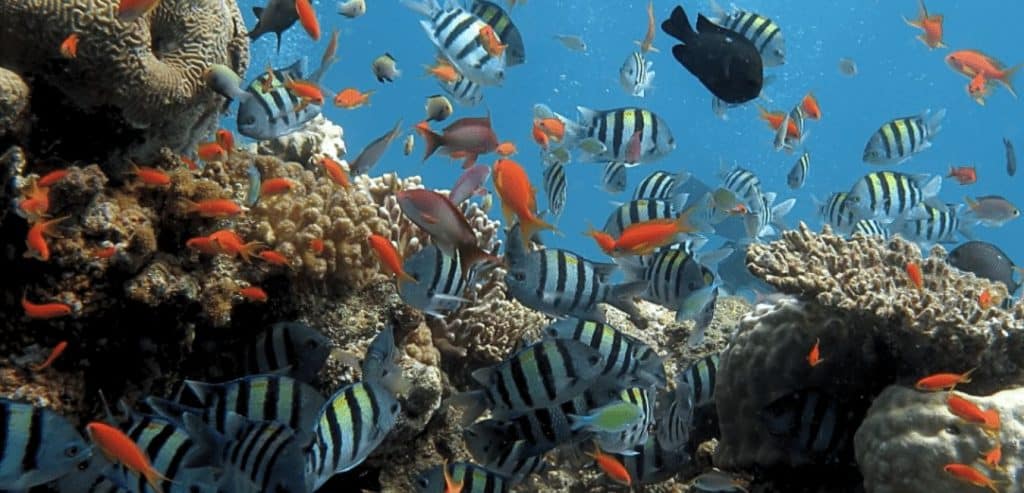
The Cham Islands are a Marine Biosphere Reserve, and the extra effort put into preserving area’s biodiversity has helped make these islands one of the absolute best places to snorkel or dive in all of Vietnam.
While I wouldn’t suggest making a trip to Vietnam solely for the snorkeling, I would absolutely recommend taking advantage of it while you’re here!
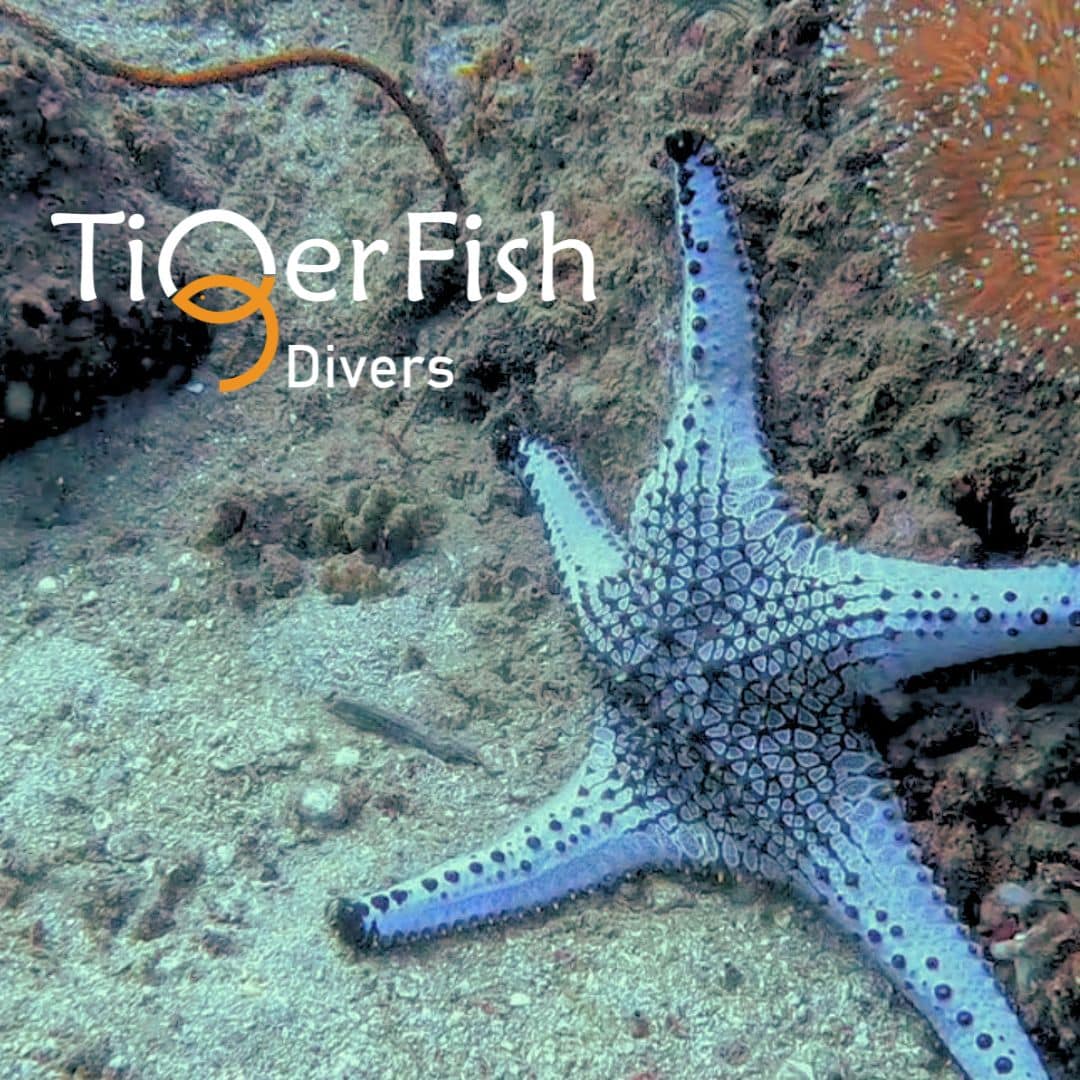
Vietnam isn't particularly known for its diving scene, but, personally, I had an amazing time diving in the Cham Islands! The corals were beautiful, the locations uncrowded, and we managed to spot several creatures we'd never had the chance to see before!
Plus, since there was guided snorkeling available for the kids, my wife and I could dive without worrying about what they would be doing while we were underwater.
It's not exaggerating to say that we are already considering going again just 1 week later.
Day 4: Learn about Silk Production and head to Da Nang
This is your final day spent in Hoi An before moving farther north. I suggest taking the morning to visit the Hoi An Silk Village for a look at where silk comes from. It’s a pretty laid back tour that dives into the history of silk and traditional methods for weaving. Really interesting stuff!

Afterwards, remember to pick up any clothes that you had made for you in Old Town before heading for Da Nang.
Logistics Note: Grab is the easiest way to get between Hoi An and Da Nang. However, if you want to save a little money, many hotels in Hoi An can help you arrange a transfer shuttle, instead. It will probably only save you 100-150k VND, but that’s basically a full meal!
Get a taste of Vietnamese city life in Da Nang
Da Nang is a coastal city located north of Hoi An. It’s primarily known for its beautiful stretches of white sand beaches, unique bridges, and affordability. However, it’s also a great spot for local temples surrounded by nature, a variety of seasonal festivals, and fascinating museums!
The big highlights for Da Nang are:
- Relaxing on the beach
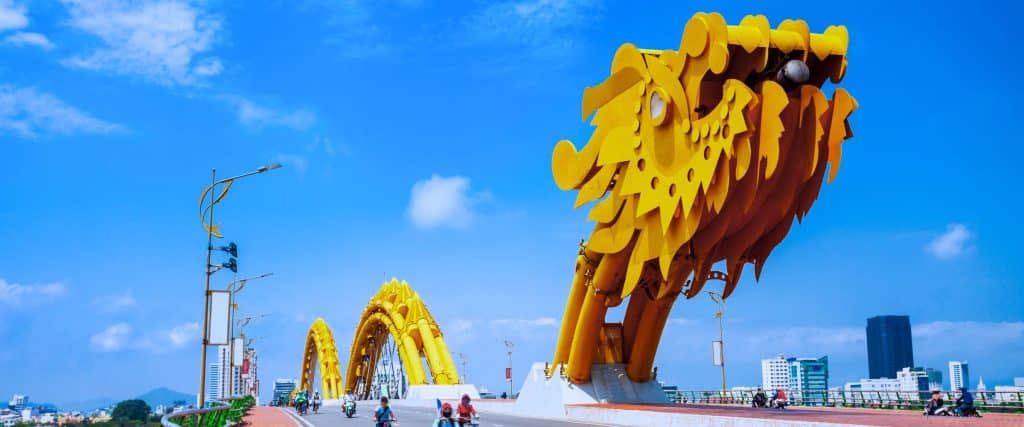
- The Dragon Bridge and Son Tra Night Market (It breathes fire at 9pm, on Fridays-Sundays)
- Visiting Son Tra Peninsula (endangered monkeys and the largest statue in Vietnam)
- Marble Mountain (Fairly easy hiking with beautiful views and temples tucked away in caves.)
I’ve listed each of these different places in the day-by-day itinerary below, but the days are pretty interchangeable. Swap them out to fit where you like or mix and match between days!
Read more: Exciting Educational Adventures with Kids in Da Nang, Vietnam
Logistics Note: Since you’ll only be staying in Da Nang for a few nights, I highly recommend getting a hotel in or near An Thuong, which is the expat hot spot in Da Nang. Things there do tend to be a bit pricier than elsewhere in town, but there are a huge selection of places to eat nearby and the beach is within walking distance.
If that’s not in the budget, you should get a place in Hai Chau on the other side of the river. Hai Chau tends to be more budget-friendly, has lots of great places to eat, and has easy access to the Han River. Plus, the beach is still just a short grab ride away!
Side note: While there’s plenty here to fill a few days on your itinerary, Da Nang really shines as a budget-friendly place to set up a long-term travel base. If that sounds interesting shoot me an email and I’ll get you in touch with a friend of mine who does real estate in Da Nang for expats. He makes the whole process way easier, and will almost certainly be able to find a great place to live that fits your budget!
Day 4: Da Nang – Culture Day (Museums, Night Market, Dragon Bridge)
Because of its location sandwiched between Hoi An and Hue, Da Nang often gets overlooked as a destination for travelers looking to learn about Vietnam’s history and culture, but that’s a real shame because it actually has quite a bit to offer!
First up is the Da Nang Museum. This museum has 3 floors of exhibits ranging from regional plants and animals, to local customs and architecture, to the region’s war history from the American-Vietnam war. It’s all very well organized and interesting, and since it costs less than a dollar to get in, it’s also one of the most affordable attractions in town!
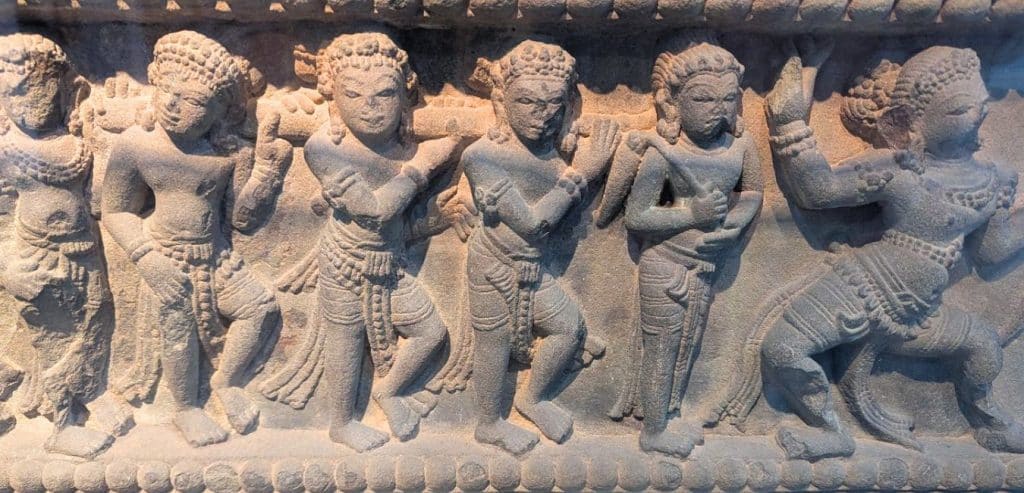
If that wasn’t enough museum-going for you, also be sure to check out the Museum of Cham Sculpture. This a collection of sculptures and carvings collected from Cham archeological sites from around Vietnam, including from the My Son Sanctuary. It’s a pretty extensive collection, and my family loved exploring all the carvings!
Around dinner time, you should find your way to the Son Tra Night Market, right near the head of the Dragon Bridge. This is an excellent little night market for getting your souvenir shopping done, and probably the best spot for trying a wide variety of Vietnamese food! (My favorite is the roasted pork belly.)
If you’re visiting on the weekend, pass the time there until 9:00pm, when the Dragon Bridge breathes fire and spits out sprays of water! The best spots to watch are from the viewing platform on the bridge itself (you will get wet) or at one of the nearby rooftop bars with a drink in hand.
Optional River Boat Experience: While I prefer the view of the bridge from land, there are also some very affordable river cruises that let you watch from the roof of a boat instead. This has the advantage of keeping you out of the crowds that watch from land, and they often offer fresh fruit and a traditional dance exhibition, as well!
Day 5: Da Nang – Spend the day enjoying one of Da Nang’s beautiful beaches
Da Nang’s beaches are highly regarded for having long stretches of clean white sand and plenty of room to spread out. And it’s a reputation that’s well deserved! My Khe Beach, in particular, has lots of great spots where you can rent a beach chair with a great view of the sea, order some food, and relax.
One thing to note, though, is that the waves here are no joke. My Khe Beach is wondeful for relaxing, decent for surfing, but absolutely terrible for swimming, which is rather unfortunate. Especially if you’re traveling with kids. Luckily, there are a couple of ways that you can deal with this.
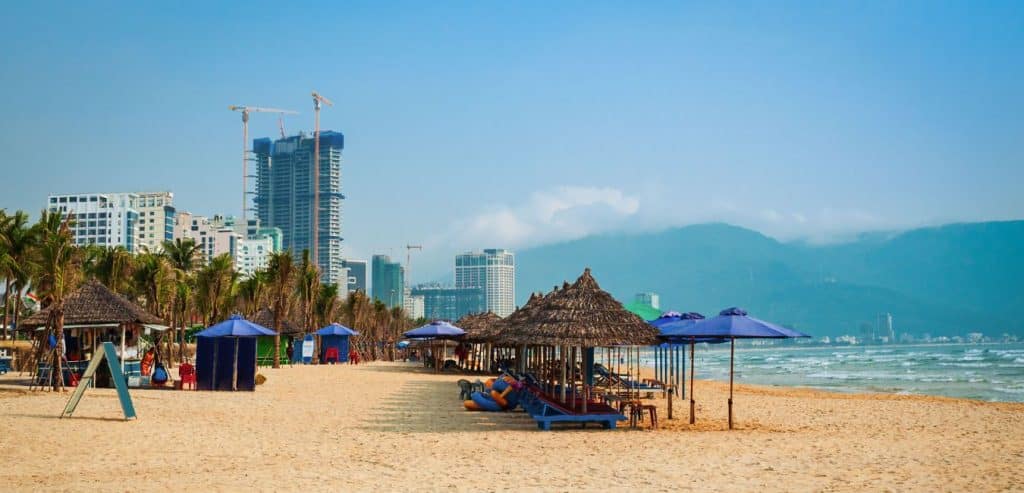
The easiest way is to head to one of the local beach clubs with pool access. For the fancier, resort style clubs, you can usually pay for a day pass that includes pool access and offers credit towards a food purchase. I suggest Furama Resort, Da Nang, if you go this route.
Alternatively, there are restaurants with pools right off the beach that will allow you pool access in exchange for ordering food and drinks. This is usually the more cost-effective route, especially if you only plan on staying for a short while. My family likes Kala Kala Beach Club for this, though do note that in the evenings they don’t allow children.
But if you really have your heart set on swimming in the sea, there is a third option! While Da Nang’s seaside has rough waves, the bayside beaches in the north do not! Spots like Simple Beach, on the Son Tra Peninsula, offer uncrowded beaches with much calmer waters. The trade off is that it’s a bit out of the way, so there are fewer options for places to eat and you may need to wait longer for a Grab when it’s time to go.
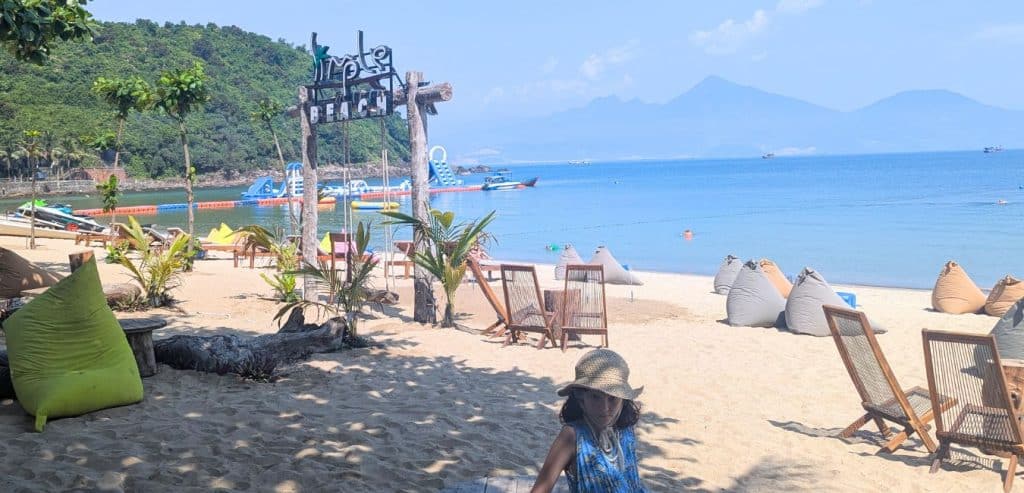
Don’t want to spend the entire day on the beach? This is a great opportunity to head up to Son Tra (Monkey Mountain) to see the Lady Buddha statue!
Not only is this the largest statue in Vietnam, but there’s beautiful temple grounds to wander, or for the adventurous among you, hiking trails through the jungle where you can spot endangered monkeys and visit 1000 year old trees!
Day 6: Da Nang – Marble Mountain Hike and the Heritage Train to Hue
For your last day based in Da Nang, I suggest spending your morning hiking around Marble Mountain to the south, before catching the afternoon train to Hue.
The Marble Mountains are a cluster of five marble and limestone hills rising dramatically out of the otherwise flat landscape south of the city. Stairs cut into the hillside provide a direct, if not particularly easy route to the top, where small shrines are hidden away in naturally occurring caves. Just be sure to bring some cash, because by the time you get to the top, you’re going to want to buy a cold water or a fresh coconut!
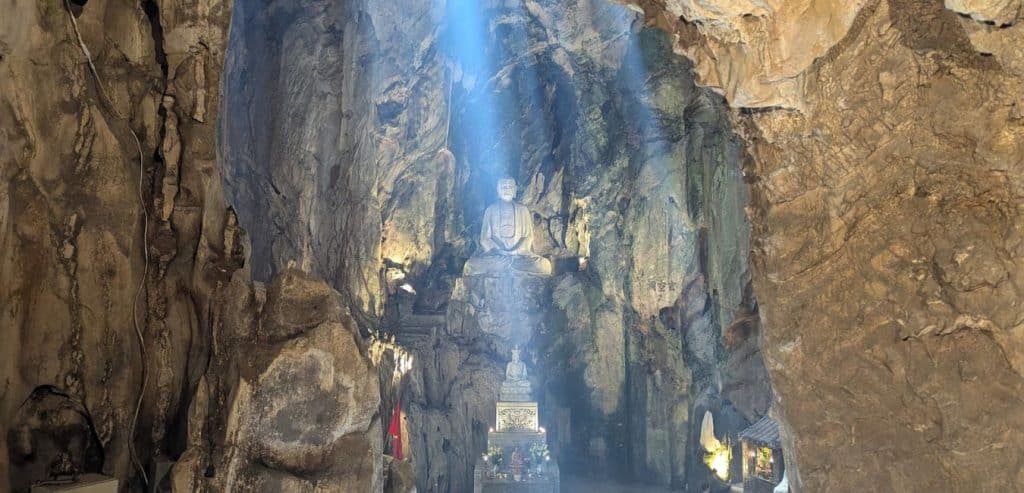
The whole hike only takes a couple hours, but the beauty of the shrines, and the views from the lookouts, make it an experience you shouldn’t skip. After you finish, head back to the hotel to clean up and go out for a leisurely lunch, since your train won’t leave until mid-afternoon.
While you could find a driver to take you to Hue, or even book a short flight, I highly recommend the Heritage Train through the Hai Van Pass as a simple and surprisingly fun way to get there. The Heritage Train leaves twice daily, and features soft seats in an air-conditioned train car, but that’s not the main reason I suggest it.
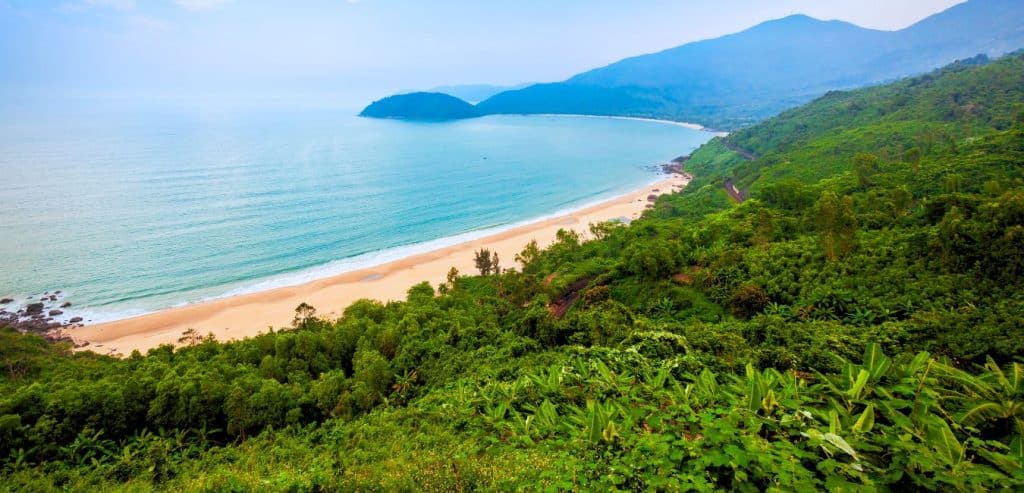
The train features a lovely “Dining Car” with traditional food and drink options, live music, and large glass windows for viewing the scenery in the Hai Van Pass. This train ride has been ranked as one of the most beautiful in the world, though I’ll admit that it depends greatly on what time of year you take the trip. The views tend to be best during the months of March to August.
When you arrive in Hue, it will already be time for dinner. Hire a taxi or call a grab to your hotel, to drop off your bags, and then head out to get a bite to eat. (If you need a place to eat, I recommend Quán Hạnh). Then head back to the hotel to get some rest for a full-day of exploring!
Learn about the former Kings of Vietnam in Hue
From Da Nang, you should head north to Hue: Vietnam’s former Imperial Capital and one of the most historically layered cities in the entire country. Hue was the seat of the Nguyen Dynasty from 1802 until 1945, when Emperor Bảo Đại abdicated at the end of World War 2, making it the last Imperial Capital in Vietnamese history.
Today, it’s one of the smaller and quieter cities in the country, but filled with reminders of its imperial past.
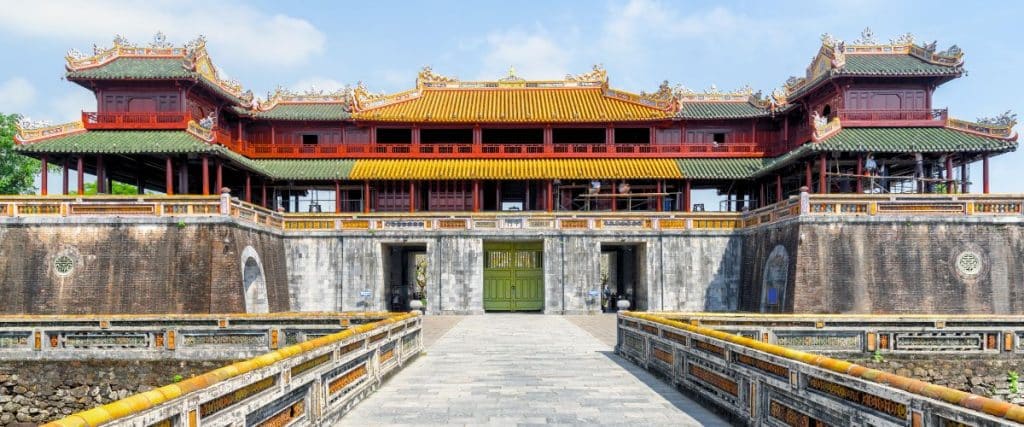
Major locations in Hue include:
- The Imperial Citadel
- The Tombs of the Kings
- Hue Walking Street (Weekend evenings only)
- The Abandoned Waterpark
- Dong Ba Market
Logistics Note: I recommend finding a place to stay within the Imperial City, on the north side of the river. Not only are prices typically less expensive there, but there are tons of small street restaurants and coffee shops around!
A food note: Every place has foods that they’re known for, and Hue is no different!
While in Hue, you have to try:
- Bun Bo Hue – This is a spicy(ish) beef and noodle dish with tomatoes that give it a rich red color.
- Banh Ep – These are pressed savory “pancakes” that originate from Hue.
- Cafe Muoi (Salt Coffee) – Iced Vietnamese coffee with a generous portion of salt creme on top. It’s my go-to drink in cafes all across Vietnam, but Hue is where it’s originally from!
Read More: Stepping into Vietnam’s Past in the Imperial City of Hue
Day 7: Explore Hue’s Imperial Palace and Dong Ba Market Trip
The Imperial Citadel at the heart of the city is the destination for visitors. It’s a vast walled complex of palaces, ceremonial halls, gardens, and gates that gives you a sense of what Vietnam looked like at its most powerful.
Unfortunately, much of the complex was destroyed during the war, and restoration is still ongoing. Even so, there’s enough to see inside the palace that you can spend hours walking around without seeing it all.
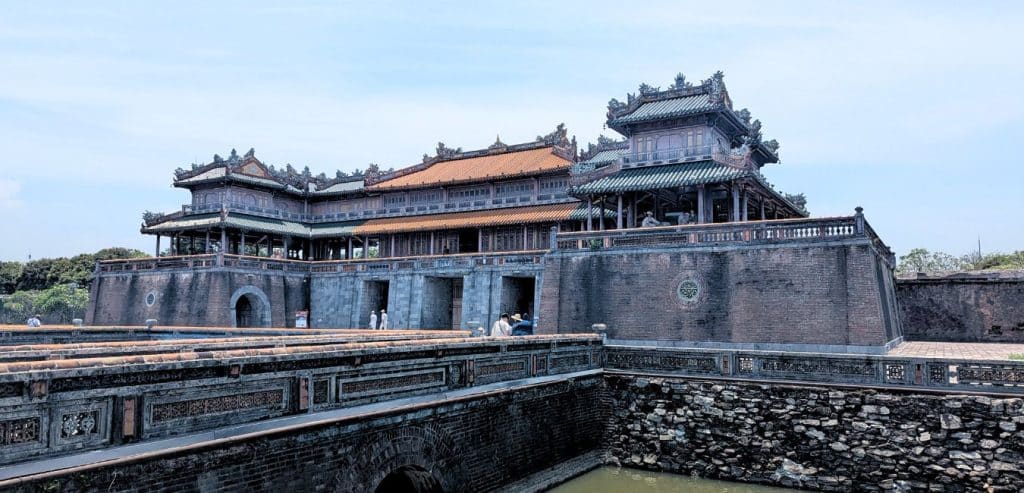
Just be sure to bring plenty of water and some snacks! While there are places to buy snacks and drinks inside the citadel, they’re few and far between and it gets hot in the sun.
If you want to make the most of your time here I really suggest booking a guide. There’s just so much history in Hue, and having someone at hand who can tell you why the different places are important makes the entire experience richer.
Once you’ve finished your walk in the Imperial City, I suggest finding a nice coffee shop (with air-conditioning) and recovering your strength before moving on! Around 3:00pm, once the heat of the day is past, it’s a great time to walk over to Dong Ba Market.
Dong Ba Market is the largest and oldest traditional market in Hue, and has been the main commercial center for the city since the 1887. It’s an incredible place to do some souvenir shopping, of course, but the real reason you’ll want to visit is for the vast array of food stalls and snack vendors!
If you’re a fan of traditional markets, Dong Ba Market will be a favorite stop, for sure! However, in the way of Vietnamese markets, it can be a bit crowded, especially during peak hours. Be aware of that and adjust your plans accordingly.
Day 8: Tombs of the Nguyen Emperors and the Walking Street or River Walk
While the Imperial Citadel is the major attraction in Hue, the impact of Vietnam’s past kings can also be seen in the tombs and mausoleums they left behind. In all, there are 11 Nguyen Emperors buried in Hue. Some of their tombs are simple; others are elaborate. All of them have things to say about the history of Vietnam.
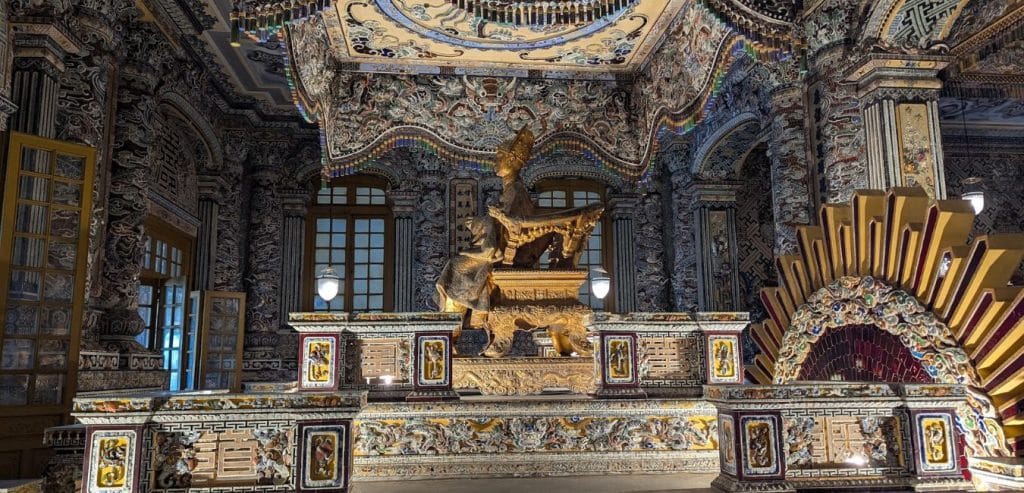
Unless you are very dedicated to the concept, you probably won’t be visiting all 11 tombs during your time in Hue, so I suggest choosing a handful of the most famous to explore. I’ve listed out the ones worth visiting in my post on Hue, so I won’t go into detail here.
But if you want to keep things easy and still have an excellent experience, I highly recommend choosing a tour operator to go with! This tour in particular takes you to a few of the most popular tombs, a local pagoda, and has a ride in a dragon boat, to boot!
In the evening, this would be the perfect day to add a visit to Hue’s Night Walking Street! (Assuming it’s a weekend.) This is an area of Hue just south of the Perfume River that is converted into a pedestrians only section of town during the evening hours. It’s filled with vibrant restaurants, cute stores, and inexpensive massage parlors.
It’s less “traditional Hue” and more modern night life, but after touring tombs all day, living a little is welcome.
Of course, if it becomes too much, or if you just want a slower pace, head towards the river for a relaxing riverside walk. This area is still vibrant, but it’s significantly less touristy, and a large number of locals will be out walking along the river, too!
Day 9: The Abandoned Water Park / Museum / Leaving Hue
The other spot that Hue has become known for is and abandoned waterpark with a huge dragon statue curled around the main building! It became Instagram-famous a few years back as influencers posted pictures of it and claimed that getting in was a tense urban explorer experience.
In reality, the abandoned dragon and the park it sits in has taken on a new life as a major tourist attraction that sees dozens of people visiting it each day. Yes, it’s technically on private property, and every visitor is a “trespasser,” but the area is actually pretty nice, and it’s common to see locals taking a stroll around the lake or using the path for an evening run.
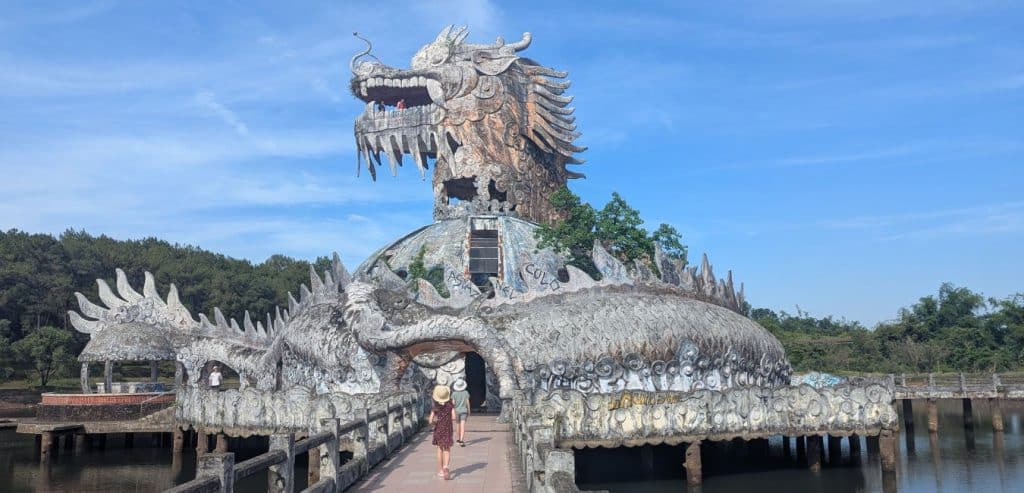
It’s a good idea to head over to the dragon statue earlier in the morning, both to beat the heat of the day and because it takes 20-25 minutes to get there. Once you’re there, take your time exploring, and grab a coconut or two from the vendors just outside the entrance to refresh when your done!
There shouldn’t be a fee to get in (it’s abandoned), but the people at the entrance will often ask for money. You can choose if you want to “fall” for their trick or not.
Once you’ve finished there, head back to your hotel for check out.
Logistics Note: On our visit to Hue, we booked the afternoon train back to Da Nang, which leaves several hours after we had checked out of our hotel. Some hotels will hold your luggage for you, but ours decided not to and we ended up having our bags with us for several hours as we tried to wrap up our time in Hue. It was sort of awful.
Instead, if you plan on taking the train back, consider booking the morning time. It limits how much time you have on your last morning, but helps prevent the “lugging bags around” situation.
Transportation Note: While I recommended the Heritage Train up to Hue, I would suggest taking the regular train back. It’s significantly cheaper and travels the same route, just without the stop in Lang Co. If you plan on taking the optional day in Lang Co, it’s usually cheaper to book a car than to go by train, as the only trains that currently stop at Lang Co are the Heritage Trains.
Optional Night 9: Stay in Lang Co or Continue on to Da Nang
The schedule so far has been admittedly hectic, with most days being filled near to bursting. If you’re in need of a slower evening before diving back in to Da Nang, it’s worth looking into staying a night in the much sleepier beach town of Lang Co.

Lang Co is a small town situated between the sea and a mid-size brackish lagoon. Outside of the handful of beach resorts, it is primarily a fishing village, and there are several wonderful seafood restaurants in town that benefit from that fact.
Lang Co is one of those places that doesn’t appear on most Vietnam itineraries, and I genuinely don’t understand why. When my family spent a weekend there, we barely saw another westerner on the beach. The seafood, particularly the oysters, fresh from the lagoon, was exceptional and inexpensive. And the beach itself is exactly the kind of wide, uncrowded stretch that’s increasingly hard to find in a country where every “undiscovered” beach gets written up and overrun within a season.
If you’re interested in pearls, there are pearl farms along the lagoon where you can browse and buy directly. It’s worth a look even if you don’t end up buying anything, but there are some beautiful options around that are worth it.
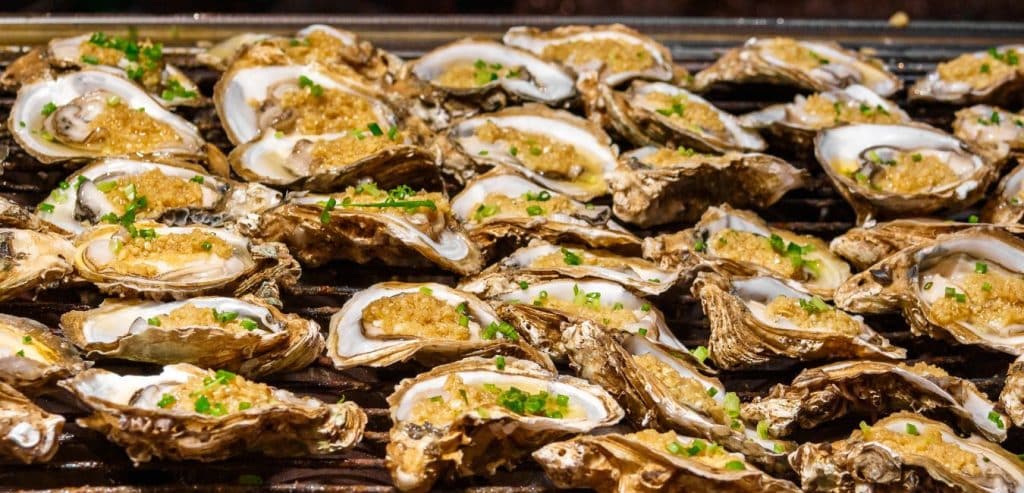
Book at one of the beachside resorts if you can manage it. The sunrise over the bay is spectacular, and the breakfast buffets at the better properties here are, genuinely, some of the best I’ve had in Vietnam.
Where to stay: Unfortunately, the resort we stayed at isn’t currently accepting guests, but B&H Villas is located just a short distance from where we were on the Lagoon side of town. It looks super cozy and is one of the less expensive spots in town, making it perfect for an overnight stop on your trip!
When you’re finished here, it’s time to head back to Da Nang. The easiest way back is probably either to book a transport via 12Go or through the front desk at whichever hotel you chose.
Day 10: Wrapping up in Da Nang
Day 10 of your trip is all about checking out anything you may have missed on your first pass through Da Nang, and squeezing every bit of Vietnam into your trip as you can before boarding your flight home.
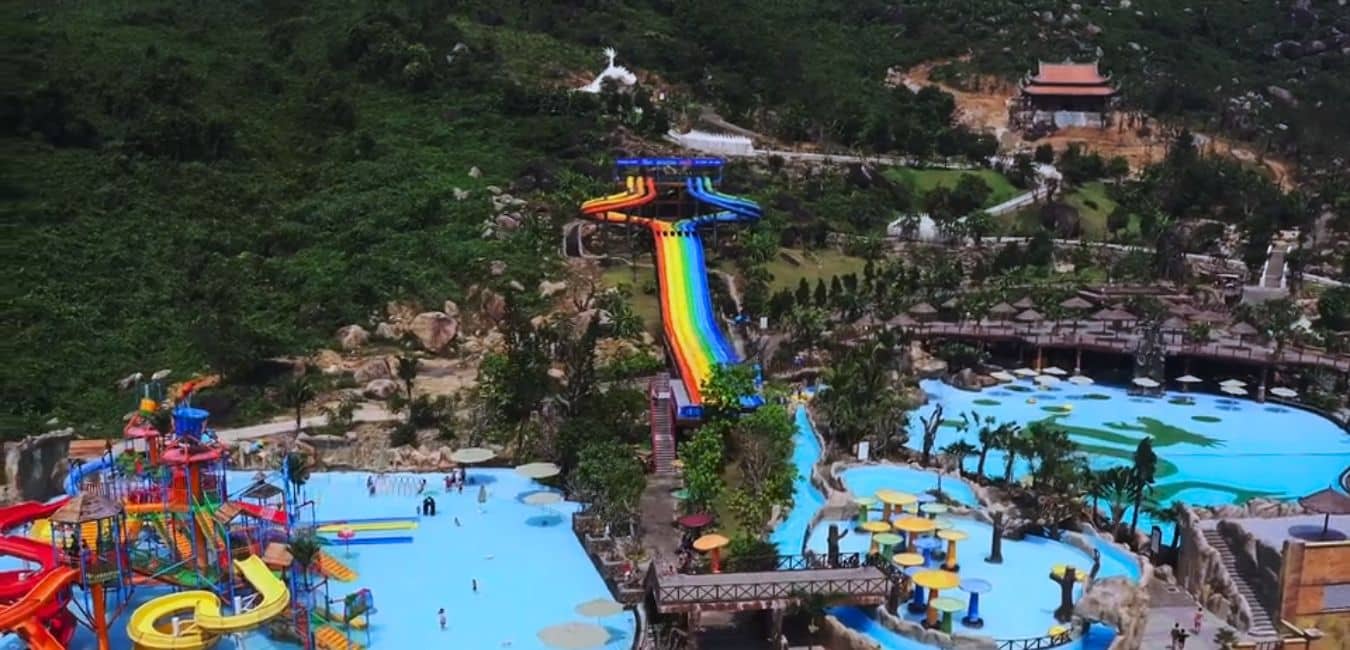
Another beach day is never a bad option. Or, if you didn’t make it to the Son Tra Peninsula earlier in the trip, this is your chance. Alternatively, if you’re in need of something more restorative, the hot springs outside the city make for a deeply relaxing half-day that pairs very well with a late flight out.
If you still have souvenir shopping to do before heading to the airport, the best option is likely Cho Han, which is a local market in the Hai Chau district. This is a great place to find inexpensive clothes, as well!
Logistics: You’ll be flying out from Da Nang International Airport (DAD), so I suggest getting a hotel room in the Hai Chau district.
Eat before you arrive at the airport! While there are food options inside the airport, if you need them, prices are significantly higher than what is typical for Da Nang.
What to Skip on Your 10 Days in Central Vietnam
There are a couple Central Vietnam destinations that come up constantly in travel articles that I’d actively steer you away from on a 10-day trip. Not because they’re bad necessarily, but because they’re not the best use of your limited time in Vietnam.
There are much better options in Da Nang than Ba Na Hills
I know the photos look incredible. A French colonial village perched in the mountains above Da Nang, connected by cable car, with cool mountain air and sweeping views? It sounds amazing. But here’s the reality: Ba Na Hills is an expensive, thoroughly artificial theme park that happens to be located in the mountains.
The “French village” is a constructed facade with carnival rides and overpriced restaurants. The Golden Bridge is genuinely striking, but you’ll see it on your way in and out and that’s about it. If you have kids who want a theme park day, it could be fine, but if you’re choosing between Ba Na Hills and a morning hike on Son Tra looking for endangered monkeys in the wild, there’s really no contest.
Going anyways? Here’s the best tour.
Phong Nha – Ke Bang National Park is worth its own trip
Home to the world’s largest cave (Son Doong) and some of the most incredible cave systems on the planet, Phong Nha is legitimately one of Vietnam’s most extraordinary destinations. It’s also about 5.5 hours north of Da Nang by road.
While there are smaller caves to explore, they aren’t worth the 11 hours of transit time it would take to get there and back when you only have 10 days! And if you really want to see Son Doong, this is a place that deserves its very own trip to Vietnam. It’s not a quick add-on. It’s a bucket-list worthy centerpiece. Leave it off your 10-day itinerary and save it for next time.
Already on your bucket list? Son Doong can only be accessed on tours done through Oxalis Adventure. Fair warning, as one of the greatest adventure outings on the planet, it is fairly expensive and also tends to be booked out more than a year in advance. Only 1000 people per year are allowed in the cave, so, it’s kind of a big deal. Good luck!
The Central Vietnam Itinerary at a Glance
| Days | Destination | Highlights |
|---|---|---|
| 1–3 | Hoi An | Old Town, My Son Ruins, Cham Islands, Custom tailors, and delicious food |
| 3–6 | Da Nang | Marble Mountains, Son Tra Peninsula, Dragon Bridge, and days on the beach |
| 6–9 | Hue | Imperial Citadel, Emperor’s Tombs, abandoned dragon park |
| Night 9 (optional) | Lang Co | Quiet beach, sea food, pearl farms, sunrise over the bay |
| 9–10 | Da Nang | More beach time, hot springs, or markets, and flying home |
Frequently Asked Questions
Final Thoughts
If you’re looking for a taster of what Vietnam has to offer, Central Vietnam has more than enough to fill a 10-day itinerary. But with affordable prices, great weather, and lots to see and do, don’t be surprised if you find yourself extending your stay.


