

The 13 Best Places for Families to Visit in Cambodia (From Iconic Sights to Lesser‑Known Gems)
Cambodia as a whole is often introduced as being the place you go for a single iconic thing: the stone towers of Angkor Wat at sunrise. And, don’t get me wrong, Angkor Wat deserves every bit of its reputation! That said, there’s a lot more to Cambodia than a single temple complex.
While it often gets overshadowed by the nearby tourism juggernauts that are Thailand and Vietnam, Cambodia itself has plenty of incredible spots to check out!
This list of 17 destinations from around Cambodia is designed as a practical, family‑friendly starting point to the country. It covers Cambodia’s major tourism destinations alongside several under‑the‑radar places that can be well worth the detour.

Cambodia’s Most Essential Stops
This section focuses on Cambodia’s core experiences: the temples that define its ancient past, and the capital city that helps explain its more recent history. If this is your first trip, these stops alone can comfortably fill one to two weeks without feeling rushed.
Angkor Archaeological Park (Angkor Wat)
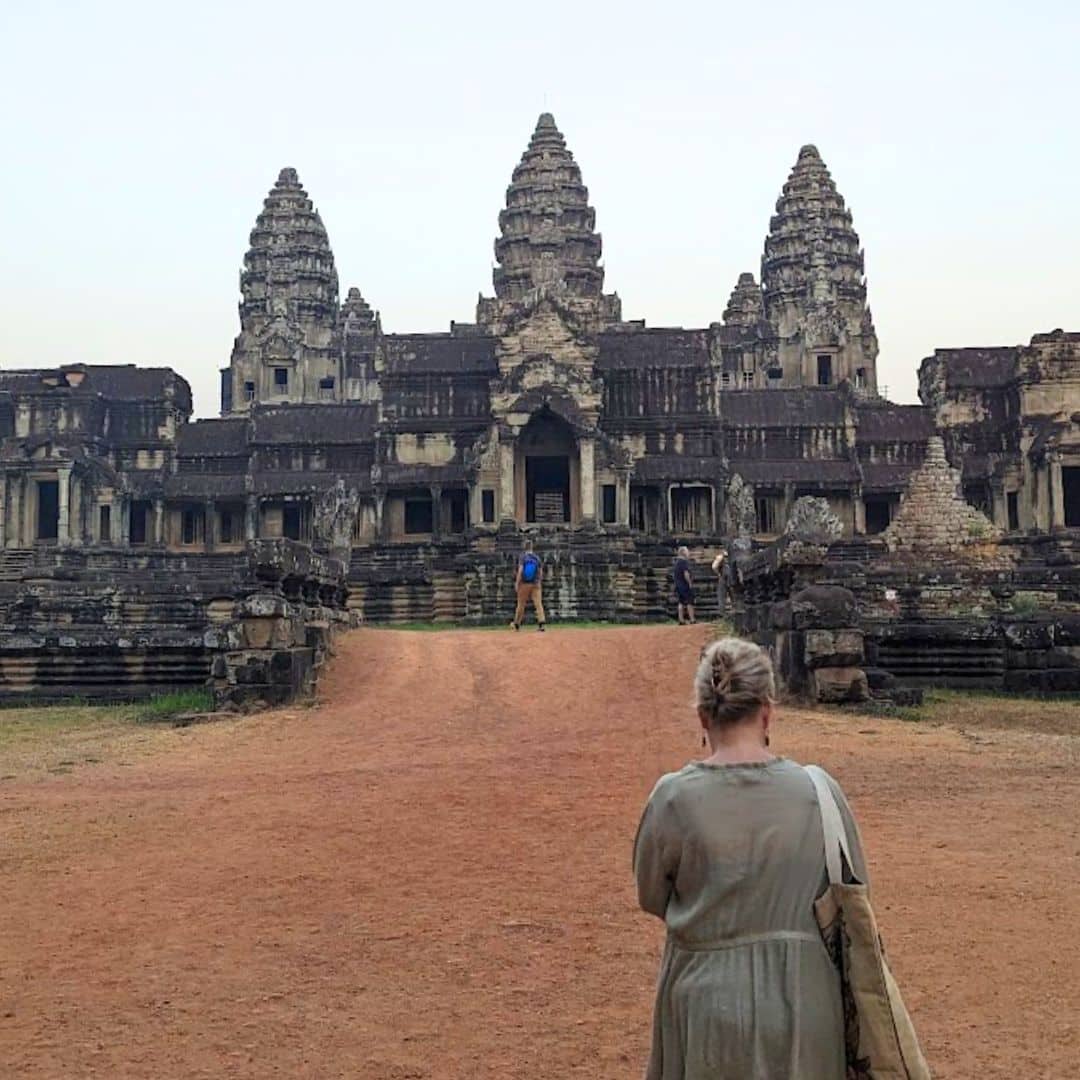
Angkor Archaeological Park is one of Southeast Asia’s most significant historical sites and considered to be the largest single archeological site on the planet, covering over 150 mi² of area. Rather than a single attraction, Angkor is a vast landscape of temples, reservoirs, and ancient infrastructure that reflects the scale and ambition of the Khmer Empire.
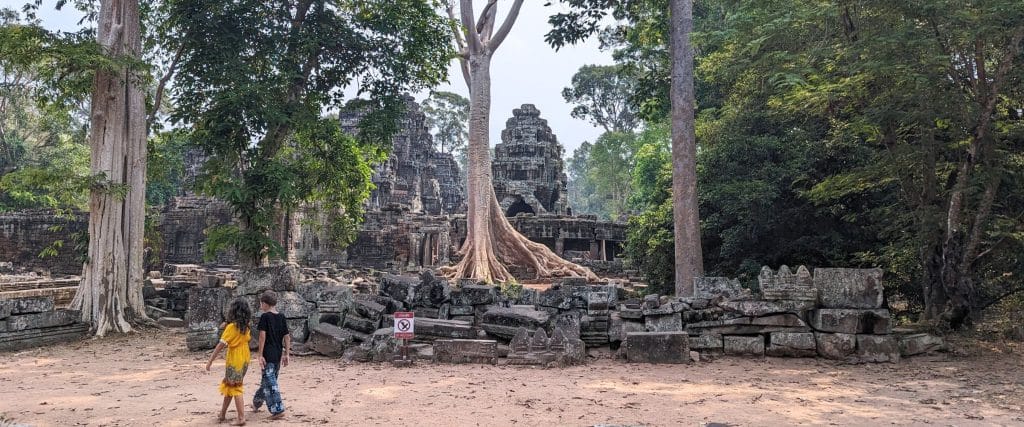
Angkor Wat is the most famous temple, but sites like Bayon and Ta Prohm often leave a stronger impression, especially when explored at a slower pace. It’s worth taking several days to explore everything the park has to offer, as trying to fit it all in a single day will leave you exhausted. Shorter visits, early starts (when the day is cooler), and spreading temple time across multiple days help keep things managable. For families and first-time visitors, I also suggest getting a guide for at least one of your visits, as a knowledgeable guide can turn the ruins into a far more engaging and educational experience.
Hands down, the best way to explore Angkor Archeological park is by tuk tuk (or, more accurately, by the remorque carriages). We absolutely loved the feel of the open air blowing by us in the park!
While you can definitely just book transportation around the park as needed, it's worth booking a guided tour like this one for at least one of your days in the park, as the guides can share a lot of great history with you.
Siem Reap
Siem Reap is the modern city outside of Angkor Archeological Park, making it a natural spot to base out of during your trip to the area. While it exists largely because of nearby Angkor, the town has grown into a destination in its own right, with a relaxed pace, strong tourist infrastructure, and a wide range of accommodations that make longer stays easy. My family loved our time here!
Beyond the temples, Siem Reap offers a mix of cultural and educational experiences that work well for families. Museums, craft workshops, and traditional performances all make for lovely educational experiences, but I personally loved grabbing a cup coffee from one of the many vendors right on the river and taking in the views!
This tour from Get Your Guide features two of my family's (non-Angkor) favorites in Siem Reap!
The Apopo Hero Rats are a special breed of rat that is trained to sniff out land mines and have been instrumental in finding old landmines, saving countless lives in the process.
Phare Circus is a phenomenal acrobatic circus in Siem Reap that holds the world-record for the longest-running single circus show. The show we went to was incredible, and easily the top circus show we've visited in South East Asia.

Phnom Penh
Phnom Penh is Cambodia’s political and cultural center, and it provides context for understanding the country beyond its ancient temples. As with most capital cities, Phnom Penh is home to some of the more expansive museums in the country, including the National Museum of Cambodia and the Tuol Sleng Genocide Museum.
While I would encourage you to check out the National museum, I would strongly suggest not visiting the Genocide museum with kids, as the images there are very graphic. As such, it does a great job of driving home the magnitude of the atrocities committed during the Khmer Rouge genocide, but it is not the sort of thing you want to expose kids to, at least with that much detail.
Apart from the museums, Phnom Penh also has a host of palaces and religious sites to check out, including the Royal Palace and Silver Pagoda, both of which are easy to visit and can work well even on a short stay. And of course, there are the local markets and street food to check out! (I suggest visiting the Central Market for a blend of great deals, local food, and some absolutely stunning Art-Deco architecture from when the market was built in the 1930s!)
Yes, you could throw together your own itinerary, organize your own travel, and probably save a bit of cash, but if you'd rather have an experienced guide take you to the spots that matter, explain why they're important and show you where the best spots are for dinner? Well, that where this highly-rated city tour by Tuk-Tuk comes in.
It's easy, fun, and a great way to explore the city!

Battambang
Battambang is a rewarding stop for families who want to slow down and see daily life outside Cambodia’s main tourist centers. The town itself is fairly quiet, compared to the larger cities in the country, but the variety of unique spots in the region makes it worth checking out.
The “bamboo train” is one of the more famous attractions, and an interesting way to experience a unique mode of travel that was once popular in the area. Basically, it’s a small platform that’s purpose built to travel along a set of train tracks using a small engine to pull you along. Plus, you can combine our trip with a visit to the local Wat Banan, a hill-top temple dating back to the 11th century! Just be ready to climb a lot of steps (358) to get the top.
Other great spots in the area include Phnom Sampeau, where you can see thousands of bats come out each night, regular shows at the original location of Phare Circus, and several other temples. Just be aware that the Khmer Rouge genocide impacted all of Cambodia, and this region in no different. There will be several monuments dedicated to remembering the many who lost their lives, usually composed of glass boxes filled with the bones of the victims. Be prepared for Phnom Sampov
This is the highest-rated Battambang tour on Get Your Guide and includes a full-day's worth of activities for a pretty reasonable price!
It includes the chance to ride on the bamboo train (for an extra $5), as well as a guide for the caves and Phnom Sampov.

Short stop-overs and day trips for added depth
It’s only natural to focus on the major destinations when planning a trip, but there’s a lot to see in between the larger spots! These locations sit naturally along common travel routes and are easy to add without needing to re-work your entire itinerary. Each of these spots offers a different way of seeing the country through smaller towns, quieter temple complexes, and landscapes shaped by rivers and agriculture rather than crowds.
Tonlé Sap Lake (Day trip from Siem Reap)
Tonlé Sap Lake is one of Cambodia’s most important natural and cultural regions, though it is often overlooked by visitors. It is Southeast Asia’s largest freshwater lake, but it expands and contracts dramatically with the seasons, varying in size and shape throughout the year. At its largest, it can cover over 6,000mi² of area at a depth of around 30ft. But in dry season, it can shrink to less than 1,000mi² and only a few feet deep.
The lake’s constant cycle of shrinking and growing shapes the lives of the communities who live on and around its waters.
Floating villages on the lake are the main draw, offering a glimpse into a way of life built entirely around fishing and seasonal change. Not all visits are equal, and choosing responsible operators matters here. Some tours can feel staged or rushed, while others offer a more respectful and educational experience, especially when guides take time to explain how families live, work, and adapt to the lake’s rhythms.
Time of year matters a ton for this particular trip, and you’ll like want to visit from October-January, after the rains have (mostly) stopped, but while the water levels are still high.
This is a 5-6 hour tour that explores one of the local floating villages on Tonle Sap, Kampong Phluk. The tour includes gives you a glimpse into what day to day life looks like for the locals, and there's an opportunity to take a short canoe ride through a nearby forest!

Kampong Thom (Stop-over between Siem Reap and Phnom Penh)
Kampong Thom is best known as a base for visiting Sambor Prei Kuk, one of Cambodia’s most important and least crowded temple sites. Built centuries before Angkor, the temples here are older, quieter, and ripe for exploration.
What makes Sambor Prei Kuk especially appealing is the lack of structure. The brick towers of the complex sit scattered through forest, connected by sandy paths rather than formal walkways, really making it feel like an adventure, instead of a guided tour. Trees grow through ruins, carvings are easy to examine up close, and it rarely feels rushed. At least for my family, this is the epitome of temple exploration and is a much more relaxed and less demanding outing than larger temple complexes.
Kampong Thom itself is a small, but functional, stop, serving mainly as a place to sleep and reset. That simplicity works in its favor. As a stop between Siem Reap and Phnom Penh, it adds historical depth without adding stress, and it offers a rare chance to experience Cambodia’s early history in a calm, uncrowded setting.
Definitely worth a day or two!
If you're interested in exploring Kampong Thom, the Palace Hotel is a solid option for a place to stay. (Plus, a pool!)
From town, it's easy enough to find a local driver to take you to the different sites (you can ask for recommendations at the hotel!)
It's also possible to visit Sambor Prei Kuk as a daytrip out of Siem Reap, but staying a couple days in Kampong Thom instead will save you some money.

Kampong Cham (Stop-over between Phnom Penh and Kratie)
Kampong Cham is a (very) relaxed Mekong River town that works well as a natural pause between Phnom Penh and eastern Cambodia (Kratie and/or Mondulkiri). It’s not really a A-lister of a destination and rarely appears on itineraries, but it does offer an excellent look at provincial life without needing to travel to the far edges of the country.
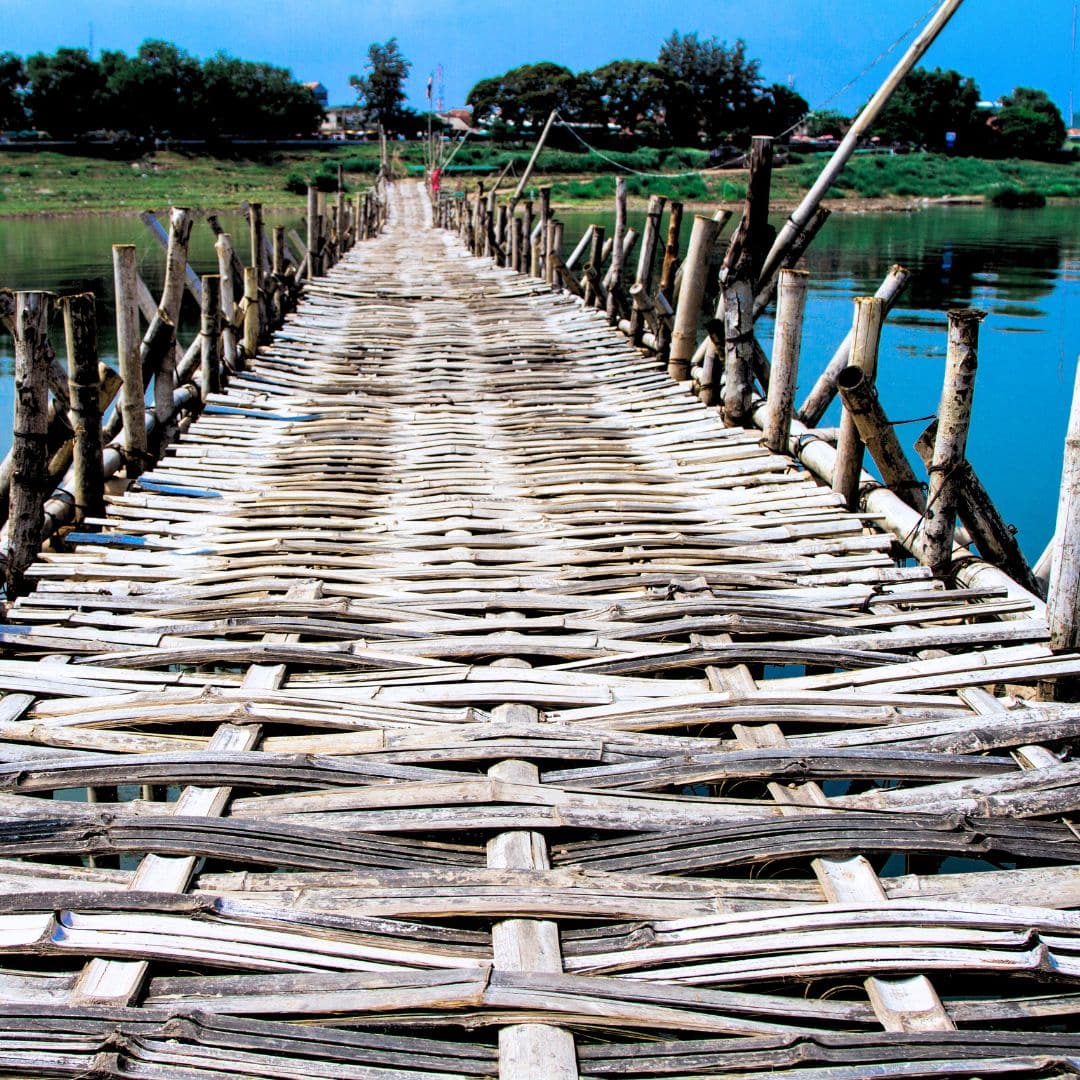
The main attraction here is a bamboo bridge that is taken down each monsoon season and rebuilt again once the rains pass. At one point in time, the bamboo bridge was the main way to get to the river island of Koh Paen, but with the introduction of a modern steel bridge, the bamboo bridge has mostly just become a draw for tourists rather than a necessity for travel. Still, it’s an impressive construction, and worth a look!
Other than that, you’re mostly looking at making your own fun here. There are local markets to explore, local temples to visit, and local flavors to taste, but the pace of life is slow. Don’t plan on spending more than a couple days here, though it is worth a stop!
I have a bit of a soft spot when it comes to buildings constructed with local, eco-friendly materials, and this resort in Kampong Cham made largely out of bamboo definitely fits the bill.
Coastal Cambodia – Beaches, Islands, and More
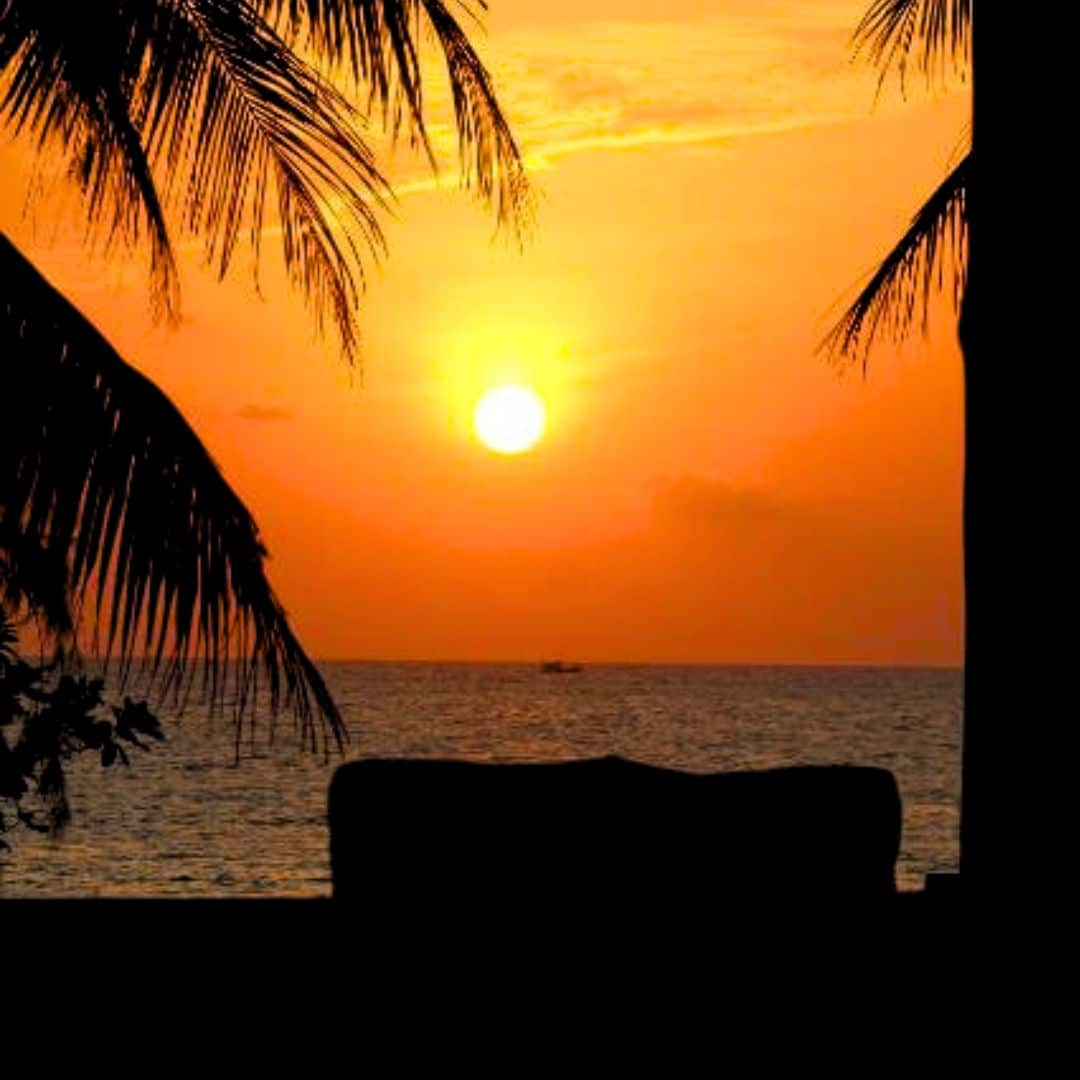
Cambodia’s coast is often treated as an afterthought, but time spent exploring the coast can definitely help balance a temple-heavy itinerary. After sun-rise temple tours and hot days poking around ruins, time by the water can give the family a chance to breathe.
Beaches and islands here are much less resort-y than what you’ll find in nearby Thailand, but no less beautiful. They’re a great chance to slow down, spend long stretches outdoors, and let the kids (and adults) reset before the next move.
Kampot and Kep
Kampot and Kep are best approached as a pair. They sit close enough together that it makes sense to base yourself in one (probably Kampot) and explore them both.
Kampot is a coast adjacent riverside city best known for growing high-quality black pepper. As such, a farm tour where you can learn more about how pepper is produced is an absolute must. Interestingly, the region also has salt fields where salt is harvested!
Kep, about 30 minutes away, is smaller and even more subdued. The crab market is the big draw for most visitors, and the trails in Kep National Park provide short walks with beautiful coastal views.
There are also nearby French Colonial ruins, waterfalls, hiking trails, and caves, if you’re looking to stay active while there!
A classic Salt and Pepper adventure for well-"seasoned" travelers.

Koh Rong
Koh Rong is Cambodia’s most well-known island and offers some of the country’s best white-sand beaches. Clear waters, warm temperatures, and a range of accommodations make it an easy introduction to island life, especially for travelers coming straight from the mainland.
The island features a number of different beaches ranging from well-touristed with all the amenities to quiet, private, and hard to reach. Where you decide to set up depends a lot on your preferences, but I’d suggest staying somewhere near Long Set Beach, as there are a wide array of food and hotel options available there.
If you’re looking for lazy beach days, decent snorkeling, and a chance to unwind, this is the island you’re looking for!
Long Set Beach is a great choice for beautiful white beaches with close-by amenities, but it can turn into a bit of a party scene once the sun sets.
Spots like Hill Top Resort keep you close to the beach but outside of the party, perfect for relaxing evenings after days spent on the sand.

Koh Rong Samloem
Koh Rong Samloem is the quieter alternative to its larger neighbor and appeals to travelers who want a slower, more stripped-down island experience. Life here moves at a gentle pace, with long stretches of beach, shallow water, and very little pressure to do anything at all.
Most accommodations are small resorts or bungalows, and the amenities are basic. Electricity may be limited to certain hours, and Wi-Fi can be inconsistent, but that simplicity is part of the draw. Days tend to revolve around swimming, reading, and unstructured time outdoors.
Koh Rong Samloem is especially well suited to families and travelers looking to disconnect. With fewer crowds and less nightlife, it feels calmer and more contained than Koh Rong. For those willing to trade convenience for quiet, it offers some of the most relaxing beach time in Cambodia.
Getting away from it all doesn't have to mean leaving comfort behind, too.
Lazy Beach on Koh Rong Samloem has comfortable rooms fit for the whole family, private beach access, and a game room for when you need downtime from your downtime.
Off the beaten path spots in Cambodia that are worth the effort
These destinations sit farther from the main routes and take more effort to reach, but they reward travelers who can slow down and stay present. Travel days are longer, plans are looser, and flexibility matters more than efficiency.
If you have the time, these places can round out a trip in a meaningful way. They provide context for Cambodia’s better-known highlights and often end up being the moments people talk about long after they return home.
Mondulkiri
Mondulkiri feels very different from the majority of Cambodia. Located in the country’s eastern highlands, it is cooler, greener, and far less densely populated than the lowland regions frequented by most visitors. The main draw here is nature. Ethical elephant sanctuaries (no touch, no feed), forest walks, and waterfall visits are the highlights for the region. Activities here tend to focus on outdoor experiences rather than sightseeing.
That said, the roads to get here can be rough, and travel times are often longer than what you expect. Mondulkiri is best suited for families with extra time and a desire to see a different side of the country. It’s definitely different than other spots in Cambodia, and it can often end up being one of the most memorable part of the trip!
Choosing the right lodgings is a key part of making the most of your time in any location.
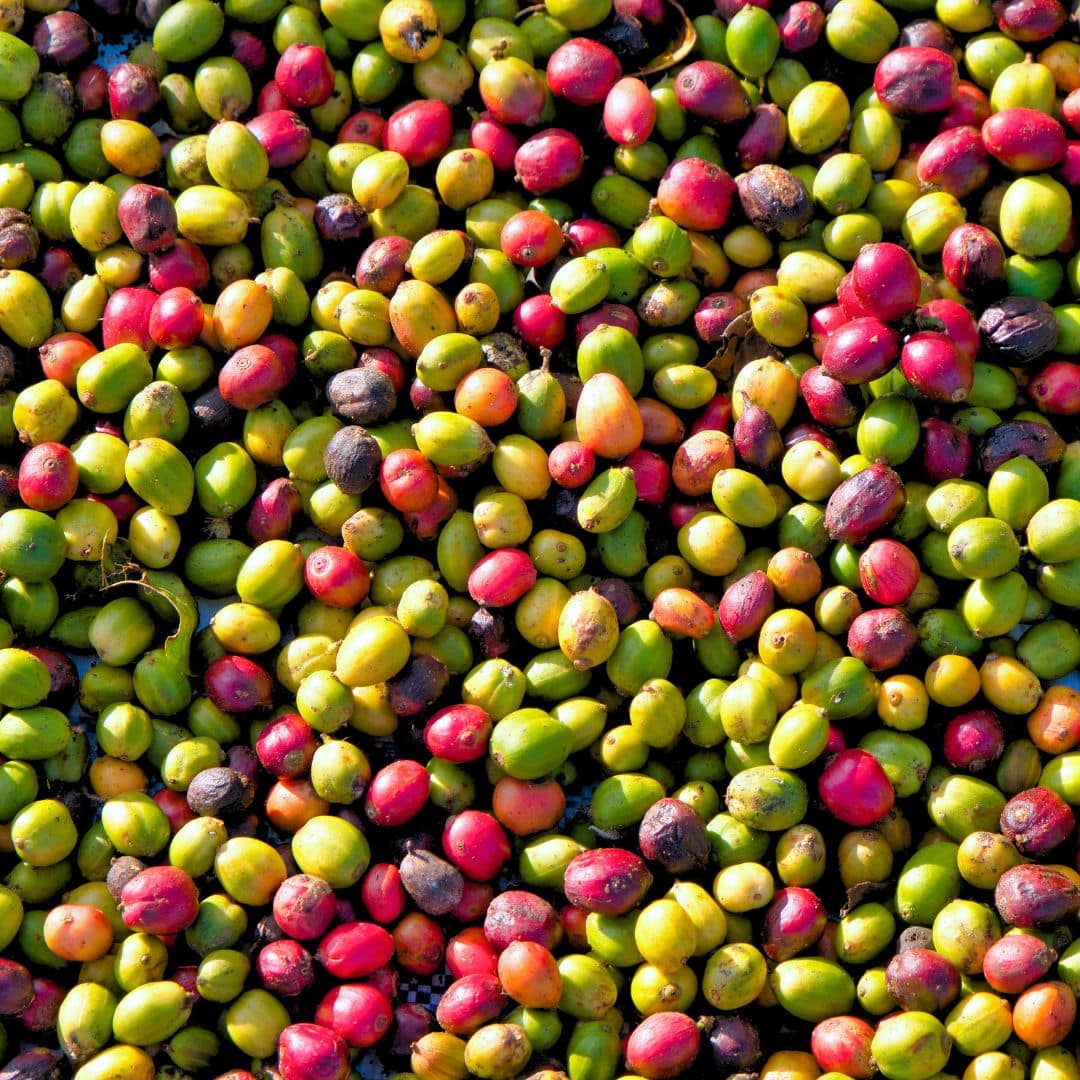
This farm stay in a lodge on a coffee farm is sure to be a hit with beautiful views, a swimming pool for those hot afternoons, and, of course, local coffee options.
Kratié
Kratié is a quiet Mekong River town best known as one of the only places in the world where you can see the endangered Irrawaddy dolphins. The town itself is calm and on the smaller side, with a relaxed riverfront, quiet-for-Asia markets, and one of the largest Buddhist temples in the country.
Most visitors come for dolphin-watching trips in the Mekong. As with most wildlife tours, sightings of the elusive dolphin aren’t guaranteed, but the tour operators are pretty good at finding them. With ongoing conservation efforts, things are looking up for the endangered dolphin, and the current population in this patch of the river is estimated at around 111 individuals.
Other things to do in the area include visiting the 100-Column Pagoda, visiting Koh Trong island in the Mekong, and checking out the colonial-era architecture in town.
There are a ton of very similar dolphin tours on offer in Kratie, but if you plan on only staying in the area for a couple days, it's a good idea to use Get Your Guide to book your tour before you ever arrive.
I personally like this tour option that gets you out on the rive in Kayaks instead of on a speedboat, or worse, using a tuktuk to watch the dolphins from the shore.

The Cardamom Mountains
The Cardamom Mountains cover a vast stretch of southwestern Cambodia and remain one of the country’s least explored regions and one of South East Asia’s largest tropical rainforests. Dense tree coverage, rivers, and wildlife define the landscape, and development here is intentionally limited. This is Cambodia at its most rugged and untamed.
Travel in the Cardamoms usually revolves around guided eco-lodges, river trips, and jungle activities rather than sightseeing. Experiences often include hiking, kayaking, and learning about conservation efforts that protect both wildlife and local communities. Comfort levels vary, but many lodges strike a thoughtful balance between access and sustainability. And, if I’m being honest, this is exactly the kind of trip that I love taking.
The Cardamom Mountains are best suited for travelers with extra time who are interested in nature and responsible tourism. This is not a quick add-on, and will almost certainly be one of the more expensive trips you can take in Cambodia. But for those who want to experience Cambodia’s wildest parts, it offers a rare sense of scale, quiet, and immersion in the natural landscape.
The Cardamom mountains are a very off the beaten trail kind of place, so there's relatively few options for places to stay when you visit.
Personally, I feel like Canvas and Orchids really nails providing a luxury jungle safari experience while keeping prices manageable! Plus, they'll help you book excursions out from the hotel to let you see the beauty of the mountains first-hand.
Other options include the budget-friendly Chi-Phat Village (partnering with the Wildlife Alliance) or the even more luxurious Cardamom Tented Camp.


