Best Places to See Orangutans in the Wild (With Kids)
Seeing orangutans in the wild is one of those travel experiences that will stick with you for a lifetime!
Obviously, there’s the excitement of it all: jungle cruises in tropical forests, giant trees, and that exciting moment you finally spot a bright orange shape high in the canopy. But trips like this can also naturally introduce bigger conversations about conservation, deforestation, and how closely connected these animals are to the forests they live in.
Whether you choose to search for wild orangutans on foot in the jungle of Bukit Lawang, Sumatra, take a multi-day river trip through the wilds of Tanjung Puting, or keep things simple with an Orangutan resort along the Kinabatangan River, these are once-in-a-lifetime adventures that are both memorable and family-friendly!

TLDR: Seeing orangutans in the wild with kids can be an unforgettable adventure!
Here are the best options for families:
- Kinabatangan, Borneo – Logistically simple and great for younger kids. Book with a resort along the river and take boat trips out to spot orangutans and other amazing wildlife.
- Tanjung Puting, Kalimantan – Take a multi-day boat cruise with stops for short hikes and seeing semi-wild orangutans at feeding stations along the way.
- Bukit Lawang, Sumatra – Trek along jungle paths through areas with larger than typical populations of orangutans. Can be done with younger kids, but best with teens!
There are four main regions worth considering when booking a trip to see orangutans in the wild: Sabah and Sarawak, in Malaysian Borneo, Indonesian Borneo (called Kalimantan), and the island of Sumatra, which is also in Indonesia. Any one of these four can be an incredible experience, but what each location has to offer varies quite a bit.
Some locations are simpler, logistically. Some have better infrastructure. Some are easier locations for traveling with young kids. And some are more rewarding for families with older children who want a bit more adventure.
And while a lot of articles try to rank these destinations against each other, the reality is that the best place depends heavily on the kind of trip your family actually wants.
Should I see Orangutans in the wild or at a Rehabilitation Center?
Before planning a trip, it’s important to note that there are two very different ways to see orangutans, no matter which if the four regions you choose.
Visiting Orangutan Rehabilitation Centers is the easiest way to see semi-wild orangutans
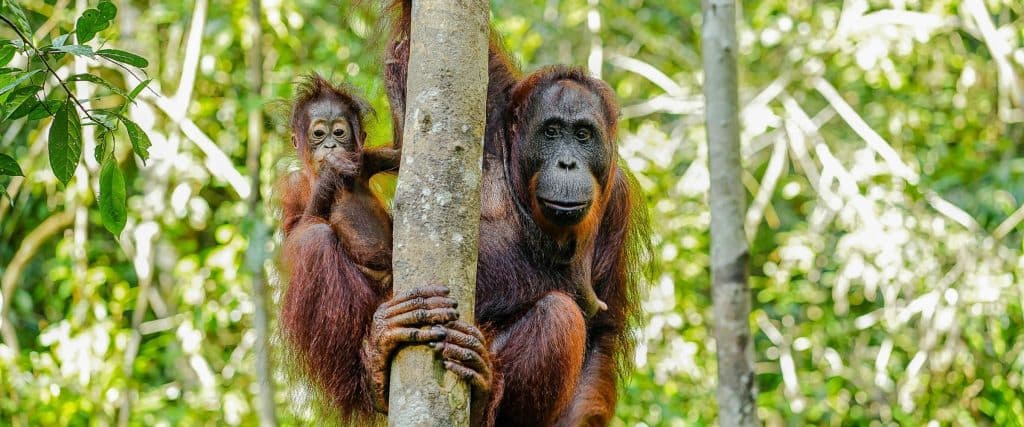
The simplest option of the two is taking a trip to an orangutan rehabilitation or rescue Center. These centers care for orphaned, injured, or displaced orangutans, typically with the goal of returning them to the forest. Many have feeding platforms or protected forest areas where visitors can observe some orangutans relatively easily.
For families with younger children, rehabilitation centers are often the easiest and most reliable way to see orangutans up close. The animals at this centers tend to be semi-wild, rather than truly wild, and are more than happy to make an appearance in exchange for free food.
Seeing Orangutans in the wild less certain, but very possible!
But if you want to see truly wild orangutans, it usually means river safaris, rainforest trekking, or staying in jungle lodges near where the orangutans live naturally. Despite the added effort and expense needed, wild sightings are never guaranteed, although some places have very high success rates.
These experiences tend to feel more immersive and less like visiting a zoo, which makes them particularly rewarding for older kids, teens, and adults.
Seeing both wild and semi-wild Orangutans?
The good news is that each region allows your family opportunities to do either or both!
Many of the places where you can see orangutans in the wild also have nearby rescue and rehabilitation centers, largely because of how important these centers are to the sustaining and growing these endangered orangutan populations.
For my family’s trip, we started with looking for orangutans in the wild (and succeeded!), and then followed up with a trip to a rehabilitation center to take a closer look.
Sabah, Malaysia (A Logistically Easy place for Families to see Orangutans)
Sabah tends to be the place many families start looking first, and for good reason! It’s one of the easiest places in the world to combine genuine wildlife experiences with relatively comfortable travel logistics.
Roads and domestic flights are generally straightforward, English is widely spoken, and there are lodges and tours for a wide variety of budgets. You can visit rehabilitation centers, take wildlife river cruises, spend time in primary rainforest, and still finish the trip with a few quiet beach days afterward if you want, all in a relatively small area!
That kind of ease and flexibility matters a ton with kids, and, ultimately, was the reason my own family chose Sabah for our own orangutan adventures during our year of traveling the 11 countries of Southeast Asia.
Sepilok Orangutan Rehabilitation Centre (Semi-Wild Orangutans)
Sepilok Rehabilitation Center, located on the edge of the Kabili-Sepilok Forest Reserve, is one of the best-known rehabilitation centers for orangutans in the world. It’s also a remarkably easy spot for seeing a large number of semi-wild orangutans!
Despite its location, on the edge of 43km² of virgin rainforest, it still feels surprisingly accessible. Boardwalks and viewing areas make it possible to experience the forest without long or difficult hikes, which can make a big difference with younger children. And since it’s only 22km outside of Sandakan, it’s an easy day trip from anywhere in the city.
The orangutans here are semi-wild rehabilitated animals that move freely through the surrounding forest. Their movements aren’t restricted, but scheduled feeding times during the day are enough of a draw that visitors will almost certainly see at least a few orangutans! Depending on the day, sightings can range from distant glimpses in the trees to very close encounters near feeding platforms.
For younger kids especially, this is often one of the easiest places to actually observe orangutans without needing hours of patience or physically demanding trekking. Our family ended up seeing several different orangutans (including a nursing mother!) almost immediately after we arrived.
While you can definitely find guided tours of Sepilok online, I highly recommend NOT booking them!
Many of the tours I've seen are several hours long and cost $150-$300 per person when all that visiting the center should cost you is RM30($7.60) for adults and RM15($3.80) for kids. (Plus the cost of a Grab there.)
There's also a small fee if you want to bring a professional camera in, instead of just your phone, but, especially if you're traveling with kids, there's absolutely no reason to be paying that much. Just be sure to bring an educational book on orangutans (like this one) to read before your trip and the kids will have a wonderful time!
Other things to do at Kabili-Sepilok Forest Reserve
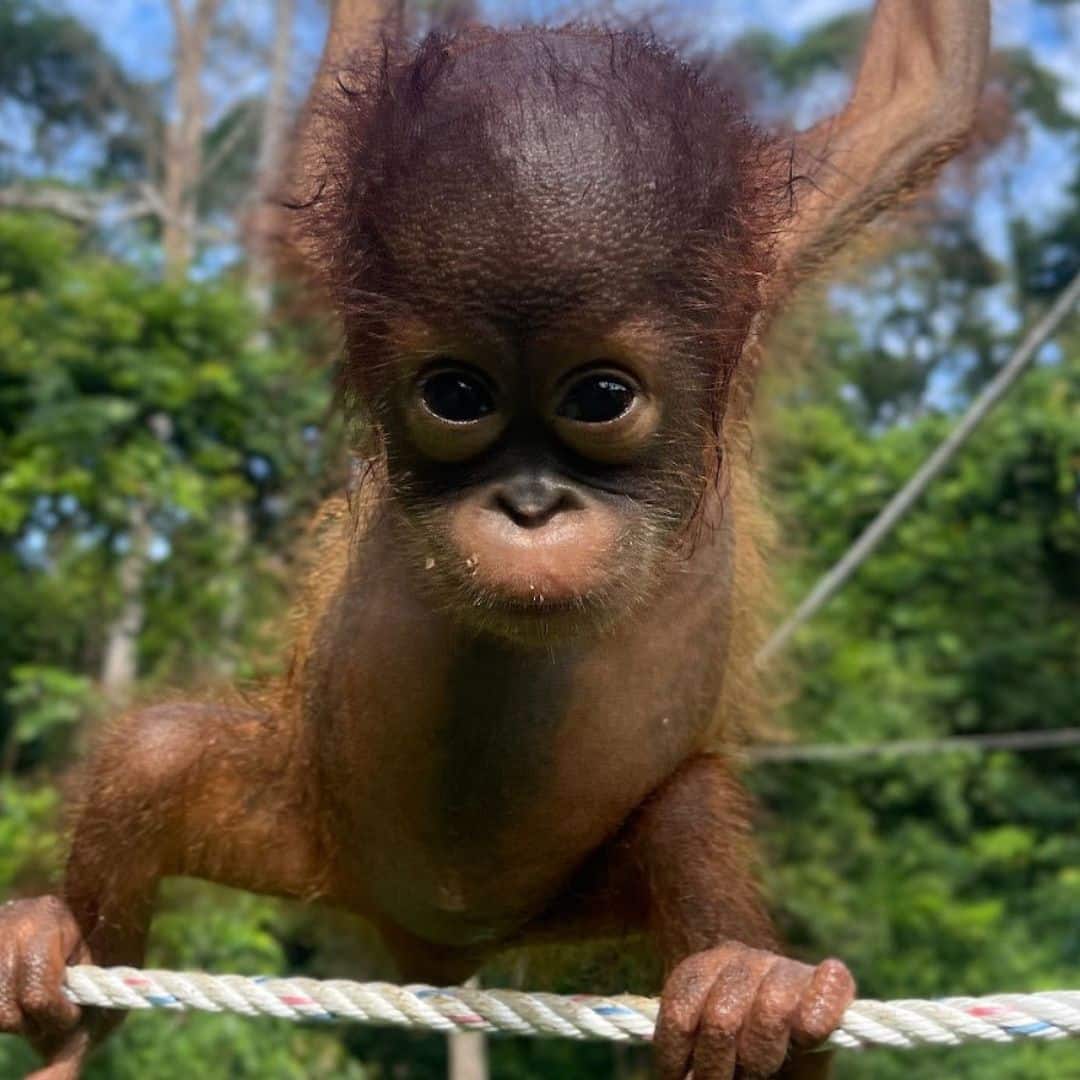
While Orangutans are definitely the highlight, it’s worth pointing out that Sepilok is also home to a sun bear conservation project and a really cool rainforest discovery center!
Sun bears are the world’s smallest bear species and are known for having an incredibly long tongue that they use for collecting honey straight out of beehives! They also have a light, crescent shaped patch of fur on their chests that give them a unique look.
Unfortunately, they have historically been hunted for bear bile, which is used in traditional Chinese medicine practices. This, combined with the same levels of environment loss that threatens the orangutans, has led to declining populations and the bears’ status as a Vulnerable species with the IUCN.
The Bornean Sun Bear Conservation Centre protects several different sun bears and features tons of great educational exhibits to help kids learn about these awesome animals. Definitely worth a visit, since it’s basically across the street from the Orangutans.
Sepilok’s Rainforest Discovery Center, on the other hand, is about a 10-minute drive away. My family decided to skip it (because the kids were hungry and we had just spent several hours looking at animals), but if you have a spare day or remember to bring some snacks, it looks like a super cool experience as well!
It features hiking trails, canopy walks, and even night hikes in the protected rainforest areas where you may be able to spot some pretty incredible animals, including tarsiers!
If I have one regret from my trip to Sandakan, skipping the night hike here would be it.
Kinabatangan River Safari (Wild Orangutans)
Kinabatangan Wildlife Sanctuary hits that sweet spot of adventure and affordability that so many traveling families are searching for! It’s a protected area covering roughly 65,000 acres of land along the banks of the Kinabatangan River, and home not just to orangutans, but a multitude of rare animals, including the entirety of the Borneo Big 5!
Fun fact! The Borneo Big 5 were modeled after Africa’s Big 5 animals and includes 5 of Borneo’s most famous creatures. They are:
- The Orangutan
- The Pygmy Elephant (a sub-species of Asian Elephant and the smallest elephants in the world)
- The Estuarine Crocodile (also called the salt-water crocodile)
- The Proboscis Monkey
- The Rhinoceros Hornbill
But what makes Kinabatangan a top choice for families is that, instead of long hikes on rainforest trails, much of the wildlife viewing happens from boats! Basically every lodge up and down the river offers small boat cruises up and down the river and along the different tributaries. This changes the pace of the experience quite a bit, and makes it both simpler and more accessible for families with smaller kids.
That said, while there’s usually enough happening along the banks of the river to hold kids’ attention, there may be long stretches where that’s not the case. I remember one morning where we got up for an early morning boat tour only to be greeted with a thick fog that prevented us from seeing anything for the first 45 minutes. Not ideal.
In all, my family spent 5 days here, with 3-4 boat rides per day, and we managed to spot all five of the Borneo Big 5, along with loads of other birds. But we only spotted 3 wild orangutans. A lone male and a mother with her baby. Sightings are never guaranteed, so if you choose to go this route as well, I definitely recommend staying for at least 5-7 days to maximize your chances of seeing orangutans!
My family loved our time in Kinabatangan and managed to spot all five of the Borneo Big 5 during our week there. However, you should be prepared for your trip to be more "adventurous" than "luxurious."
The quality of the boat tours depends largely on the skill of your guides. On some trips out we had excellent guides who showed us incredible animals and shared tons of facts about them. On other trips out, we saw very little, with guides that didn't seem to know the area well.
Still, we had a great time on each of our trips out!

Danum Valley Conservation Area
Danum Valley is a much more immersive rainforest experience. Visiting Danum requires time spent hiking through forest, surrounded by nature on all sides. Humidity, heat, and lots of creepy crawlies (including leeches) mean this is a trip that’s better for seriously adventurous families with older kids, rather than those looking for an easy family holiday.
The jungle here feels dense, ancient, and genuinely wild. Wildlife sightings here can be incredible, but they will almost always require more patience, longer walks, and a willingness to spend time simply moving quietly through the forest.
While there are definitely orangutans living here, I’ve heard more than a few stories from travelers who never spotted one during their treks.
Don’t get me wrong, a trip here would definitely be an incredible experience, but it’s not where I would take my kids with the hope of spotting orangutans.
The Danum Valley is one of the wildest patches of forest that you can visit in Borneo, with all sorts of incredible animals to spot. However, you aren't guaranteed sightings of specific animals, including orangutans.
If your heart is set on seeing orangutans, specifically, I'd probably start looking elsewhere. But if you just want an incredible Borneo wildlife experience, this is a great option.
Tabin Wildlife Reserve
Tabin Wildlife Reserve is often overlooked compared to Kinabatangan or Danum Valley, but for some families it can be a very good middle ground between the two. Located in eastern Sabah, near Lahad Datu, Tabin Wildlife Reserve offers a mix of rainforest wildlife, jungle walks, night drives, with lodge-based stays that feel adventurous without becoming overly difficult for most families.
Orangutans do live here, although sightings are less predictable than they are around Sepilok or Kinabatangan. In practice, Tabin works better as a broader wildlife destination rather than a place focused entirely on orangutans.
That variety is often what makes it memorable with kids. Families may also see hornbills, macaques, civets, deer, and occasionally pygmy elephants. Night drives are usually a highlight for older children. And if you manage to spot an orangutan while there, it will absolutely be a special moment for everyone!
While orangutan sightings are possible here, the incredible diversity of bird life is the main draw here. There's also a mud volcano that local wildlife use as a source of natural salts and people use for its skin care properties!
This particular tour includes all your meals during your stay, guided tours, and rainforest bungalows with great views of the surrounding jungles.
For families with elementary-aged kids or older, Tabin can be a good way to experience a wilder side of Sabah without committing to the higher costs and more remote atmosphere of Danum Valley.
Sarawak, Malaysia (A More Relaxed Mix of Wildlife and Culture)
Located on the other side of the island, Sarawak can feel calmer and slower-paced than Sabah. While Sabah is focused on a wide variety of wildlife experiences and spending time in nature, Sarawak blends its natural areas with a variety of cultural activities to create a broader travel experience. But for families who want that broader experience it can feel like the perfect spot!
Kuching is one of the easier cities in Borneo to travel with kids, and it works well as a base for shorter wildlife experiences mixed with museums, riverfront walks, caves, national parks, and cultural visits. However, orangutan sightings in the wild are generally less reliable than in Sabah.
Semenggoh Wildlife Centre (Semi-Wild Orangutans)
Semenggoh is the best-known orangutan rehabilitation center in Sarawak, and a fairly easy day-trip out of Kuching. Similar to Sepilok in Sabah, the orangutans here are rehabilitated animals living semi-wild in a protected forest areas. There are twice-daily feeding times at 9:00am and 3:00pm where at least a few of the local orangutans will often come close enough for visitors to observe them.
The atmosphere here tends to feel a little quieter and a little less developed than Sepilok, which some families prefer. But it also means a bit less polish.
Semenggoh Wildlife Centre is open to the public two times a day, from 8am-10am and again from 2pm-4pm and costs RM10/adult and RM5/child for entry.
Whether you see orangutans here or not will depend largely on how plentiful food is in the forest, and how lucky you are that day!
Matang Wildlife Center (Orangutan Rehabilitation Center)
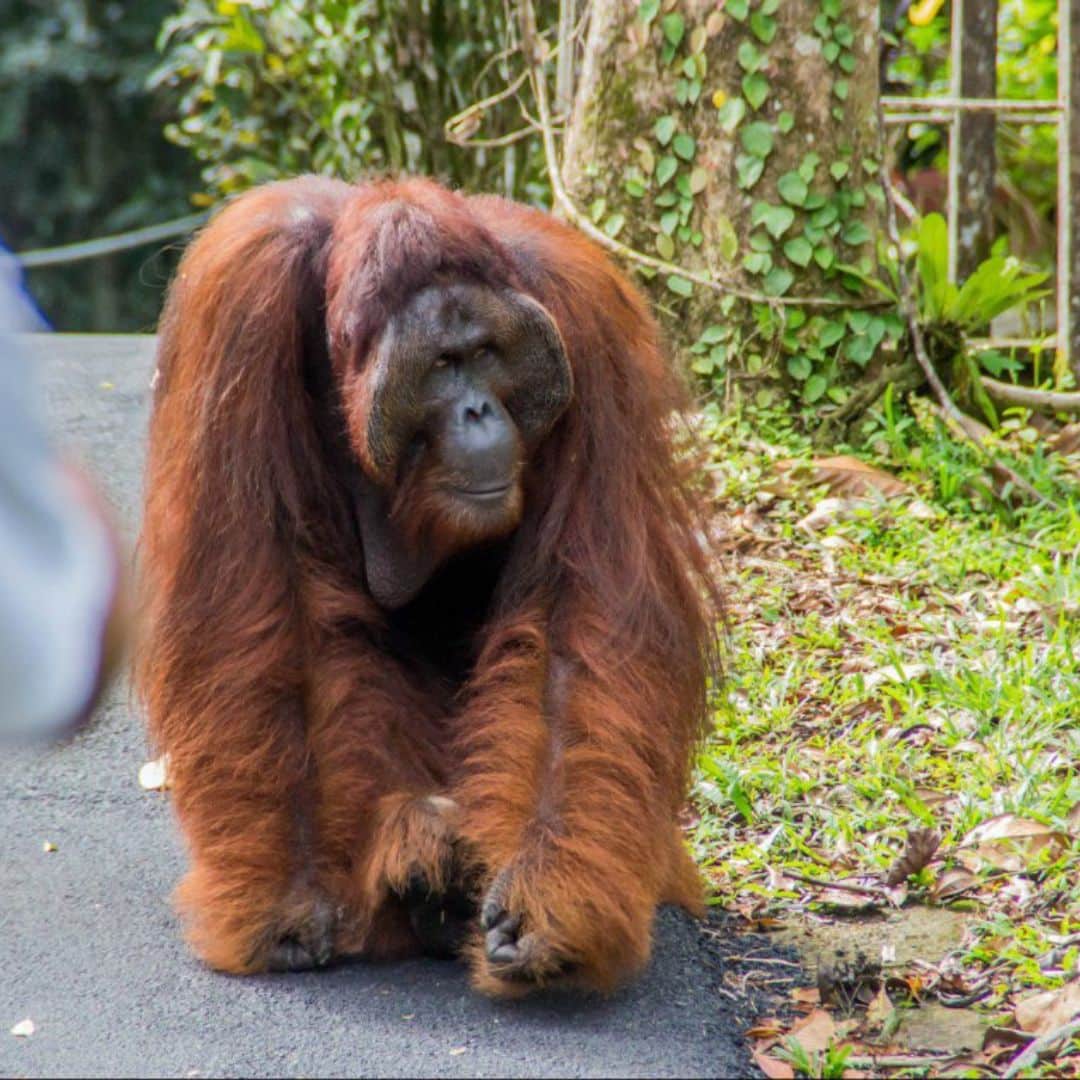
Unlike Sepilok and Semenggoh, the orangutans at Matang are not allowed to roam free as they like but are instead kept in (still spacious) enclosures. This is because the orangutans here are actively being rehabilitated, either from injuries that need looking after or from a dependence on humans that would prevent them from surviving on their own in the jungles of Borneo.
If you’re in Sarawak, this is the most sure-fire way to see orangutans, but it’s not much different from seeing them in (a very reputable) zoo.
Batang Ai National Park (Wild Orangutans)
This is probably Sarawak’s best-known region for seeing truly wild orangutans.
The forests around Batang Ai National Park and the nearby Lanjak-Entimau Wildlife Sanctuary contain one of Sarawak’s largest remaining orangutan populations. The problem is that sightings can be very uncommon because the rainforest here is dense and the animals themselves are spread across a huge area.
Trips here are usually focused more on rainforest immersion and longhouse experiences than guaranteed wildlife encounters.
For families with older kids who enjoy adventure travel, a trip here can be rewarding. The trails are wonderful and it’s a great place to get into nature if you’re already visiting Sarawak. But if you’re hoping for orangutans, you may be disappointed.
Kalimantan, Indonesia (Best for Families Wanting an Up-Close Orangutan Experience)
Kalimantan, which is the Indonesian portion of Borneo, accounts for roughly 73% of the land area on the island, including vast tracts of tropical rainforests and peat swamps. Perfect habitats for Bornean Orangutans! And, in fact, there are more wild orangutan populations in Kalimantan than in any of the other places where they live!
However, Kalimantan’s infrastructure is not as well-built out as the locations in Malaysia, and many of the parks that the orangutans call home are remote and difficult to get to. Even so, there are a handful of spots scattered across the island that are open for tourism, including some of the best up-close experiences in the world!
Tanjung Puting National Park (Semi-Wild Orangutans)
Tanjung Puting National Park is the best-known orangutan destination in all of Kalimantan. Trips here Typoically involve multi-day journeys on traditional wooden riverboats called klotoks. Visitors to the park will live on these boats for 2-3 days and slowly move down the rainforest waterways, stopping at different feeding stations, forest trails, and research areas along the way to see what they can see!
Because you’re staying on the boat in the middle of the river, you’re constantly surrounded by nature, and have plenty of chances to see wild life throughout the trip, including lots of orangutans! However, even if you don’t spot them along the riverways, there are several different feeding stations along the river where you’ll almost certainly get a chance to see some, up close!
It’s important to note that, while, yes, these are technically semi-wild orangutan sightings (because they’re happening at feeding stations), the orangutans here spend almost all of their time living in the very wild jungles surrounding these stations. They are not caged. Not made to come to the stations for tourists. And definitely not tame animals or pets. Which is why I consider this to be one of the best places on earth for getting up close with these magnificent animals!
Tanjung Puting Feeding Stations
Many of the most famous orangutan viewing spots are actually feeding stations located inside Tanjung Puting National Park. Camp Leakey, Pondok Tanggui, and Tanjung Harapan are three such research and feeding stations that are often mentioned as being incredible places to view orangutans.
They aren’t separate parks or separate destinations in the way people sometimes assume when first researching Kalimantan. They’re individual stops that most river expeditions visit while traveling through the national park by klotok boat.
In practice, a typical trip looks like this:
- A family will arrive in Kumai
- They’ll board a klotok riverboat
- Spend days traveling up the Sekonyer River into Tanjung Puting
- Stop at different feeding stations and forest areas until the end of their trip!
Each of the different feeding stations were originally connected to rehabilitation and research efforts, which is why we know most of what we know about orangutans today!
While there are more than a few Orangutan boat tours in the area, few of them have the same 5 star rating that this one does, especially after over 200 reviews!
Travel 3 days through the jungles of Tanjung Puting, sleeping on the boat and taking regular excursions onto shore to see the beauty of the rainforest firsthand. You're very likely to spot orangutans on this cruise, but may also see proboscis monkeys, rare birds, and more!
Sebangau National Park (Wild Orangutans)
Sebangau National Park is known for truly wild orangutans living in peat swamp forest.
There are research stations and conservation programs operating in the park, but tourism in the park happens at a much smaller-scale than in Tanjung Puting, and it is generally not centered around feeding platforms.
If you want to see orangutans here, it involves guided treks or river exploration while keeping an eye on the forest canopy for movement. That often appeals to travelers who specifically want a less managed wildlife experience, but it also means that there’s no guarantee of seeing orangutans at all. And, even if you do, it won’t be as close up as at some place like Camp Leaky.
That said, any sightings you do get will be hard-earned victories, which can definitely feel good!
If you choose this route, I suggest waiting until your kids are a bit older and have some experience with wild trekking.
Hike through jungles and see a different species of Orangutan in Sumatra, Indonesia
While the other three locations for spotting orangutans are all located on Borneo, there are also a handful of orangutan destinations on the Indonesian island of Sumatra, located to the west of Malaysia.
Sumatran orangutans belong to one of two different species, both of which are different from their more populous cousins on Borneo. The rarer of the two, the Tapanuli Orangutan, has a range limited to a single park south of Sumatra’s Lake Toba and consists of an estimated population of fewer than 800 individuals. Realistically, these are not orangutans that you’re likely to spot.
However, the other species in Sumatra, aptly named the Sumatran Orangutan, can be found, if you’re willing to do some hiking!
Gunung Leuser National Park (Wild Orangutan Trekking)
Gunung Leuser is one of the last great rainforest ecosystems left in Southeast Asia. The park covers roughly 3,061mi² on the island of Sumatra, and is a UNESCO Natural Heritage site.
Longer treks deeper into the park can feel genuinely remote, with opportunities to see orangutans living fully in the wild. But getting there also requires a much higher level of physical stamina and flexibility than many families want on their vacations.
For the right family, though, with teens who love to trek through jungles, it can be incredible. Still, it’s important to go in with realistic expectations about the physical side of the experience. This is not a starter hike!
This is a three-day hike with jungle camping at two different campsites in Gunung Leuser National Park!
This is a super-highly rated tour based out of Bukit Lawang, and featuring guides that have been certified by the Indonesia Tourist Guides Association.
While they do allow families with kids to book, it's not really a beginner-friendly hike, so be sure your kids are fit enough to keep up.
Bukit Lawang (Mostly Wild Orangutan Hikes)
Most Orangutan tours in Sumatra start in Bukit Lawang. This is a small tourism-focused village located a couple hours outside of Medan, where the airport is located.
Years ago, there was an orangutan rehabilitation center, called Bohorok Orangutan Centre, that was located here, but it closed in 2002 due to over-tourism. The orangutans in the area were becoming too acclimated to interacting with humans, which was putting them at risk of overdependence on feeding stations and increased risk of spreading disease since the concentration of orangutans in a small area was greater than it should have been.
After the closing of Bohorok, feeding platforms were phased out to help give the apes time to disperse, and today there are no legal feeding platforms operating in the area.
This means the orangutans in Bukit Lawang are fully wild, however, they are still very used to humans and do not try to run or hide when trekkers come close enough to see them, and the population density of orangutans is still significantly higher than in other parts of the forest.
Basically, if you’re wanting to see orangutans on a hike (not a boat ride), Bukit Lawang offers you the best chance of success!
While it’s definitely possible to bring younger kids here, they should be prepared to do some walking! Private trips out from Bukit Lawang can range from a few hours of hiking to spending a full week in the jungle really soaking in the experience.
Where is the Best Place to see Orangutans in the wild?
There probably isn’t a single correct answer.
For many families, Sabah ends up being the easiest place to start because it balances wildlife, accessibility, and comfort so well. Families wanting a slower-paced trip with a mix of wildlife and cultural experiences may end up preferring Sarawak, despite the lower chance of seeing wild orangutans. Kalimantan often appeals most to families looking for a deeper rainforest expedition experience, especially if the idea of slow river journeys and time spent in the jungle sounds exciting rather than intimidating. And Sumatra can be incredibly rewarding for families with older kids who genuinely enjoy trekking and don’t mind more physically demanding travel.
In the end, the best orangutan trip isn’t always the most remote, or adventurous one. It’s the one that matches your family’s pace closely enough that everyone has the energy to enjoy the trip you’re on.