Saily Vs HolaFly – Which eSIM service is better for frequent travelers?
As someone who’s both constantly traveling and constantly online, I’m always looking for ways to stay connected abroad without paying airport-SIM prices or spending my first hour in a new country trying to find a phone shop that actually takes credit cards.
For the past few years, Airalo has been the go-to name most travelers recognize when it comes to eSIMs, but lately the landscape’s getting more interesting. Saily, backed by Nord Security (the same team behind NordVPN), has entered the market with some serious budget appeal. Now it’s going head-to-head with another major player: HolaFly, the eSIM brand that promises unlimited data and an instant QR-code setup.
So which one’s actually better? Is it smarter to go with Saily’s simple, affordable plans or HolaFly’s “never run out of data” approach?
Let’s break it down and see which eSIM is worth installing before your next flight.

What is an eSIM?
Before diving into which app deserves space on your phone, let’s make sure we’re talking about the same thing.
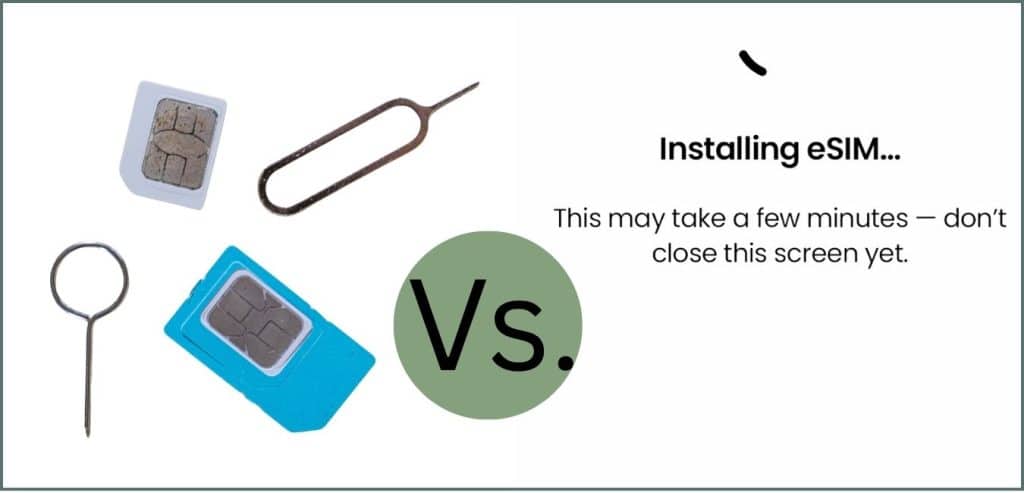
A SIM card (short for Subscriber Identity Module) is that tiny piece of plastic your phone uses to connect to a network. It’s basically your phone’s ID badge. It stores your number, messages, and access to your mobile plan. Traditionally, if you wanted to change plans or use a local provider abroad, you had to pop that little card out and swap in a new one.
An eSIM – or embedded SIM – does all of that digitally. Instead of juggling tiny cards or hunting for a paperclip to open your SIM tray, you just download your plan directly to your phone. The data your carrier needs to identify your device is stored electronically, meaning you can switch between plans with a few taps instead of a trip to the store.
Why use an eSIM instead of a physical SIM card?
In short: it’s your SIM card, but without the plastic or the hassle. Because honestly, nothing kills the travel buzz faster than standing in a crowded airport trying to pry open your SIM tray with the end of an earring.
Using eSIMs makes that whole process obsolete. Instead of carrying around a collection of tiny plastic cards from past trips (and inevitably losing half of them), you can store multiple eSIMs right on your phone. Most newer models can hold eight or more profiles at once, with two active at the same time.
Two active profiles means you can keep your regular number active for texts from your bank or family, while switching between travel data plans for internet wherever you go. No tools, no cases to remove, no worries about dropping a tiny SIM card and never finding it again.
And for some travelers, especially those with newer iPhones, the choice isn’t even optional anymore. Apple stopped including physical SIM slots in U.S. models starting with the iPhone 14. If you’re using one of those, eSIMs aren’t just convenient. They’re your only option.
Manufacturers say this helps reduce plastic waste and makes room for bigger batteries, though, we’re not seeing those benefits, yet. While it may have a positive effect in the future, the main take-away at the moment is that newer iPhone users aren’t even capable of getting the cheaper data offered by local phone companies using traditional SIM cards.
Which phones can use eSIMs?
The good news is that most modern smartphones now support eSIM technology. The slightly less good news is that not all of them do. Older phones, budget models, and region-specific phone lines often leave off newer features like eSIMs.
If you’re not sure whether your phone makes the cut, there’s a quick way to check: open your phone app, dial *#06#, and look for an EID number on the list that pops up. If you see one, congratulations, your phone is eSIM-compatible! If not, you can only use physical SIM cards, for now.
You’ll also need your phone to be unlocked – meaning it isn’t tied to a specific carrier. If you bought it as part of a contract or on a payment plan, you may need to contact your provider to unlock it before you can use an eSIM from another company. Unlocking your phone can definitely be a pain, but it’s gotta be done if you plan on using that phone out of country.
If unlocking your phone isn’t possible, the main alternative is buying an unlocked phone, just for travel. Just make sure it has a decent camera so you can capture all the fun!

Once you’ve confirmed that your phone is eSIM capable and carrier unlocked, you should be good to go!
Both Saily and HolaFly make setup super simple from that point. After purchasing your plan, you’ll get a QR code you can scan to install your eSIM in minutes. No tech degree required, and no need to visit a kiosk at the airport.
If you’re a planner, you can even activate your eSIM before you travel, so your phone connects to local networks the moment you land. That first text to say “we made it” hits a lot faster when you’re not hunting for Wi-Fi.
Are eSIMs worth it for travel?
That depends on what kind of traveler you are.
If you’re the type who loves to hunt for deals and doesn’t mind chatting with a clerk at a local phone shop, getting a local SIM card will almost always be cheaper. In countries like Vietnam or Thailand, for example, you can get several gigabytes of data for the price of a single airport latte. The downside? You’ll have to wait until you arrive, find a provider, show your passport, and hope the shop has someone there. (I had a late flight into the Philippines and found all the kiosks empty.)

An eSIM, on the other hand, lets you skip all that. You can buy and install your plan before you even leave home, and have data available before you even get off the plane. It’s fast, flexible, and perfect for people who like to have all the pieces in place ahead of time.
Some services, like HolaFly, even offer unlimited data. Which sounds dreamy until you realize “unlimited” often means “unlimited… at slower speeds after a few gigabytes.” Still, for heavy data users who stream, navigate, and post on the go, it’s a massive convenience.
For me, eSIMs are like the travel insurance of internet access: not always the cheapest option, but easily the most convenient. Especially when you land somewhere late, tired, and desperately trying to order a Grab or Uber to your hotel.
Saily vs. HolaFly: Which one should you actually use?
Now that we’ve covered what eSIMs are and why they make travel life easier, let’s talk about the two contenders.
Saily is one of the newer options available, It was launched in 2024 by Nord Security, the same company behind NordVPN. I was one of the first people to give their service a try, and I’ve been recommending them ever since! It’s simple, affordable, and backed by a brand that already has a solid reputation for online privacy and reliability.

HolaFly, on the other hand, has been around a bit longer and they have built their reputation on one key promise: unlimited data for a reasonable price. No data usage math, no running out halfway through your trip. Just an easy setup and endless scrolling. It’s a very compelling premise, and in my own testing it’s worked out pretty well!
Both services let you download an eSIM straight to your phone in minutes. Both are significantly cheaper than paying international roaming fees through your U.S. carrier. (Definitely don’t do that!) And, unfortunately, both have one or two downsides that may make you consider the other instead!
But the real question – what it all boils down to – is: What kind of traveler are you?
Because that’s where the differences between these two starts to matter. Let’s take a close look at each service to figure out which one is the right one for you.
Saily – A Privacy Focused eSIM with Premium Features
While Saily is a relative newcomer to the eSIM world, it didn’t come out of nowhere. It’s built by Nord Security, the same people behind NordVPN, one of the most trusted names in online privacy, and my recommended VPN for everyone. So, needless to say, Saily has got some serious tech muscle behind it.
The setup process is also about as easy as it gets. You download the app, choose your destination(s), and buy a plan. Once purchased, the app gives you a big “Install eSIM” button to press and it installs in your eSIM in a couple of minutes.
What kinds of data plans does Saily offer?
At the time of this writing, Saily currently lists coverage in 200+ destinations, and their regular plans come in country, regional, or global flavors. Once you pick the locations you want covered, you can choose how much data you want, and for what period of time. Unfortunately, the duration is linked directly to how much data you want, so larger packages last longer and their smallest package (1GB) only lasts for a single week.
Pricing on these plans ranges from $5 for a single GB in Europe to $67 for 20GB that can be used across any of the countries that Saily covers and which lasts a full 365 days from the date of purchase. If you’re just interested in buying some “back-up” data to leave on your phone in case of emergency, that 20GB plan is one of the best options on the market, coming out to about 18 cents per day for a year!
Having once run out of local data on my phone on a deserted beach in Egypt, I can personally attest to how valuable having a back-up data plan available can be.
- Inexpensive
- Easy to use
- From a trusted internet security brand
- Offers Premium extras with their monthly plans

Saily’s Premium Plans
Outside of their regular plans, Saily also offers a handful of more premium plans. One such is the Ultra Plan, which is designed to be a sort of set-it-and-forget-it data plan for frequent travelers.
As long as you’re in a country covered by Saily, this $60/month plan provides 30GB of highspeed data each month, and unlimited data at (a much slower) 1mbps speed. Since most places have free wifi in hotels and cafes, 30GB may be plenty to keep you covered each month, and you’ll never have to worry about buying local plans again.
This plan also comes with extra perks, like access to Nord’s Security Suite of tools (including NordVPN), airport lounge access, security line fast tracking, and more. I’ve written a more extensive article on the Ultra Plan, if you’re interested in learning more.

Other Premium Plans include the $50/month Premium Plan, which is similar to the Ultra Plan but with only 10GB of data and no unlimited fall back data, and the $20/month Plus Plan, which drops it down to 5GB/month and removes lounge access and fast-track services (but keeps the Nord Security Tools, which makes it worth it even without the data, if you would be buying the separately anyways!)
As of today, I can only find the Premium and Plus plans in the Saily App, not on the web, but you can buy the Ultra Plan here.
HolaFly – Unlimited Data for a Reasonable Price
HolaFly built its reputation on one very tempting word: unlimited. The vast majority of its plans promise unlimited data, and the work in over 270 destinations, which tops Saily’s offerings and then some. The combination of easily staying connected across so many countries sounds like the holy grail for digital nomads and families traveling with multiple devices. And, in many cases, they deliver.
No worrying about running out mid-trip, no topping up, and no “How much data do I have left?” math. Just fast internet, everywhere.
Setup is painless. After purchasing a plan, HolaFly sends you a QR code you can use to add your eSIM. You technically don’t even need their app installed. Scan the QR code, and your phone connects instantly! Or, well, after a couple minutes. The app is still worth installing, though, since it helps you with managing your plans in an easy to use interface that keeps things from getting confusing.
In my own testing (in Thailand), I found HolaFly to be super-dependable. In a week of testing, I never ran into any hiccups, and it always worked without issue, from the moment my plane touched down until I switched my phone into airplane mode to head home.
But “unlimited” does come with fine print. HolaFly’s unlimited plans include fair usage policies, meaning your data speeds may slow down after a certain amount of high-speed usage. It’s up to the individual data providers in each country to decide when your connection gets throttled and what speed you’ll end up with. It’s still unlimited, but if you’re streaming movies or uploading photos constantly, you might notice a dip after the first few gigabytes each day.
To get around this, I recommend saving processes like uploading all your new videos to the cloud for when you have Wifi. It’s faster that way anyways, and saves you battery power while out and about!
HolaFly has been around for awhile, but is typically better known in Europe than in other parts of the world. But if you're headed somewhere else, don't count them out! We used them for data in Southeast Asia recently and found them to be just what we needed!

What kinds of data plans does HolaFly offer?
As with Saily, buying HolaFly’s regular plans begin with choosing your destination, which once again come in single-country, region, or global flavors. But, since HolaFly’s plans are almost all unlimited, once you’ve selected your destination all that’s left is to choose your duration and the number of eSIMs you want! (1 eSIM per phone)
HolaFly’s plans come out to be a bit more expensive per day, but potentially way less expensive per gig. For instance, Saily’s smallest plan is only $9 for a single week. That same week period would cost 3 times as much ($27.90) using HolaFly, but HolaFly offers unlimited data during that time compared with only a single GB of data with Saily!
Basically, if you plan on actually using your phone for internet while traveling, HolaFly offers a much better value when looking at the “normal” plans.
HolaFly’s Premium Plans
Things get a bit more complicated when you start looking at the Premium Plans.
Where Saily’s premium plans added on a ton of very premium extras, HolaFly’s premium plans focus on providing three main benefits: Simplicity, Value, and Peace of Mind. HolaFly has 3 tiers that I’d lump into their Premium offerings. These are the Unlimited Plan, the Light Plan, and the Always On plan.
The flagship plan is the Unlimited Plan, which is basically the same as their “regular” global plans, but cheaper. Where a month of travel on the “regular” plan would cost $166.90 for unlimited data, the monthly Unlimited Plan only costs $64.90/month. And it throws in a free European phone number so you can receive authorization texts while traveling! (You can’t send texts with this number, though, so don’t rely on it for SMS communications.)
If that’s still too expensive, then you can opt for the Light Plan, which knocks the price down to $49.90/month, but limits you to 25GB/month of data, making it the only “not” unlimited plan on the site, other than….
…the Always On Plan! This plan is probably my favorite Holafly feature as a budget-savvy traveler. Once you’ve purchased either the Unlimited or Light Plans and let them expire, your eSIM will get automatically switched to the Always On Plan. It gives you 1GB/month of FREE data that can be used in 70+ destinations globally. 1GB isn’t a ton of data, but it’s an incredible safety feature for travelers who may run out of data on a local plan, since it gives them a fall back option to top up their local plan’s balance or upgrade to one of HolaFly’s plans real quick.
It’s also super-useful if you forget to buy a plan before arriving in country, since it gives you data on arrival, without needing to log onto the airport wifi or stand in line for a local SIM.
Basically, if you plan on ever doing international traveling, it is worth it to buy at least one month of the Light Plan or the Unlimited plan from HolaFly. It’s just an absolutely incredible value and proof that HolaFly has their customer’s backs.
So… Which eSIM app should you use?
I wish it were that cut and dry! But ultimately, it comes down to what features you need and what you’re willing to pay for. I’ve included my recommendations for a few different scenarios in the chart below to help you sort things out, but if you still have any questions, feel free to shoot me a quick email at Jacob@neverendingfieldtrip.com and I’ll help find the best plan for you!
Unlimited Global Data for a reasonable price, PLUS it enables access to HolaFly's Always On plan. Every traveler should buy this plan at least once, but it's also a great choice for a monthly plan during periods where you're fast traveling between a lot of countries.
If you aren't using more than 30GB/month, this plan is an incredible choice for frequent travelers. High speed data with a low speed fallback connection, access to extras like NordVPN and Airport lounges, and built-in security features makes this a premium choice for professionals.
HolaFly offers unlimited data on their regular plans, making them a cost effective choice for travelers who don't want to have to manage how much data they're using. Just choose the destination and the dates of your trip, install your eSIM and you'll be good to go! Just note that some destinations do throttle heavy data usage, and the rules on when and where are a bit foggy.
If you're planning on crossing the globe during the upcoming year and are looking for a cost-effective way to have some data on hand in case of an emergency, this is the plan I'd opt for. With only 20GB provided, it probably won't be your main plan, especially if you use a lot of internet. But it will provide peace of mind in those instance when your local SIM runs out of data.
Happy travels, and may your signal bars always stay full.