Incredible Coral Reefs and Real (Komodo) Dragons – Labuan Bajo with Kids
Komodo National Park has been on my personal bucket list since childhood, but in the way of young kids making plans to see the world, it wasn’t until I was booking tickets for our Komodo cruise that I ever considered that there would be a town outside the park where people would stay! Labuan Bajo is that town.
Located only a (relatively) short distance from Komodo island, it’s where all the tourists go when they’re not hiking the wilderness in search of dragons. And, increasingly, it’s a location that’s growing into a spot worth visiting all on its own.

While it was originally a fishing village on a sleepy island, Labuan Bajo has become a de facto jumping-off point for the vast majority of tours and liveaboard cruises that visit Komodo, and the sheer amount of activity packed into the surrounding waters is hard to overstate. It’s impossible to walk more than a couple minutes down Labuan Bajo’s main street without spotting a handful of shops advertising live-aboard cruises, diving trips, and adventure just over the horizon.
But Labuan Bajo itself has started attracting some attention, too! As one of Indonesia’s 5 Super Priority Destinations, the town has seen a lot of recent development. New hotels, upgraded roads (with sidewalks!), and a reworked harbor front for easier access for cruises all come together to make the island easier to access.
It is still a fishing town at heart, but it’s growing into a place that’s worth a visit on its own.
Komodo National Park Cruises & Tours
While there are definitely things other than Komodo worth mentioning in this article, Komodo National Park is the reason most people come to Labuan Bajo, and that’s not going to change any time soon. The island’s combination of rugged terrain, bright blue waters, and wildlife you can’t find anywhere else makes it one of those places that doesn’t really need marketing.
The star of the island, the Komodo dragon, is considered the largest lizard in the world, thanks to it’s impressive length and muscular body. There is technically a longer species of lizard that lives in Papua New Guinea (called the crocodile monitor), but the Komodo dragon can grow to be much heavier (up to 300 pounds) and has successfully captured global attention for being such a cool animal.
Our experience on Komodo
We visited the island in 2024, and loved every minute of it!
Visitors to the island are not allowed to strike out on their own, but instead must join guided hiking tours. (For safety. Please don’t try to explore the island on your own.) Our particular tour had 3 guides, each with a long stick, who walked in front, behind, and in the middle of our group. They informed us that, while we would be looking for dragons, there was a real chance that we wouldn’t actually spot any, but as luck would have it, we ended up seeing several!
The largest was probably between 5-6 ft long (my estimate) and lying still in the shade, and our guides encouraged all of us to take pictures with it. I was surprised at how disinterested in us the Komodo dragon seemed, but I could tell from the the way that the guides were acting that, while they felt like it was safe enough for getting pictures, there was still a real danger in being that close to it.

The other large dragon that we spotted was walking along the path, right next to our group, and the guides put their sticks to use in directing it away from us, though my daughter insists that it looked like it wanted to snack on me.
We also spotted several smaller Komodo dragons (1-2ft), a couple deer, and a handful of chickens that I, frankly, was surprised to see roaming free across the island. At the end of our tour, we were directed to a strip of local restaurants, artisans, and t-shirt sellers on the beach, because what’s a tour without the gift shop? Be sure to bring cash with you for a few coconuts and a t-shirt or two!
Visitors can choose between a day trip to Komodo or a liveaboard cruise, and both have their advantages.
Komodo day trips are simpler. You’re picked up in the morning, you spend the day hopping between islands and seeing the sites, and then you’re back in town for dinner. It's less expensive (overall) and you get to see the highlights of the region.
This is a top-rated tour available to book online using Klook, so you can be sure to have your trip booked before you arrive. There are also tons of spots to book in-person after you arrive, if you prefer to shop around, but I definitely prefer having things pre-booked.

Liveaboards, on the other hand, move at a slower pace. You spend several days at sea, sleep on the boat, and have all your meals provided for you on the boat. This gives you more time at each stop, and sometimes allows you to beat the crowds, though there are enough different liveaboards that they also create their own crowds.
This is one of the better rated (and fancier!) cruises available out of Labuan Bajo, and it looks like an excellent choice for families looking for a once-in-a-lifetime experience!

Families with younger kids may prefer the predictability of taking a day trip. Families with older kids might love the adventure of sleeping on the water. Ultimately it’s up to your family, but my kids (8 and 9, at the time) absolutely loved living on the boat for a few days! (Just be sure to bring some books for the downtime. There’s a lot.)
A typical cruise route includes a mix of the park’s highlights:
- Padar Island, with its famous ridge hike that shows up on every travel poster for a reason. For real. A picture I took here is still my phone wallpaper over a year after our trip.
- Komodo Island, where the dragons live their very unbothered lives.
- Pink Beach, which does have a pink color when the light hits it right. But which is probably not as pink as you’re hoping.
- A few different snorkeling spots, usually over coral gardens that look like someone turned the saturation up.

Boats range from simpler wooden vessels to sleek, multi-deck cruisers. The nicer options cost more, but they also tend to offer better safety gear, better communication, and crews who know the area well. In a region where nature has the final say, experience matters.
Whatever route you take, it’s hard to finish a Komodo tour without a phone full of photos and the sense that you just spent the day inside a nature documentary.
Things to Do around Labuan Bajo
Labuan Bajo isn’t a large town, but it has a handful of places that are easy to enjoy between boat trips. Most activities happen along the waterfront, where cafés, small restaurants, and tour offices sit above the harbor.
One of the simplest things to do is just taking a walk in the late afternoon. The light gets soft, fishing boats drift back in, and the whole bay turns gold. A few newer cafés and gelato shops line the main road offering good places to cool off and watch the harbor settle in for the evening. Families will find that most spots are relaxed and used to travelers coming in with kids and backpacks and beach hair.
If you enjoy markets, the local night market is also worth a look. It’s not as large or chaotic as the larger markets in Indonesia, but the seafood grills are popular, and the atmosphere is friendly. Fresh fruit stands, small snack vendors, and a few souvenir tables fill out the space.
There are also a number of shops around town selling woven bags, wooden carvings, and handmade items from Flores and nearby islands. It’s not a major shopping destination, but you can find some great souvenirs if you look around.
Labuan Bajo works best as a base. It’s a place to eat well, rest, and enjoy slow evenings after spending days on the water.
Land-Based Adventures Outside the Town
While most visitors head straight for the water, the inland areas around Labuan Bajo can be worth setting aside a day or two to explore.
One of the most popular spots is Cunca Wulang Waterfall, a small, but beautiful, hidden waterfall with emerald pools and rock ledges shaped by years of fast-moving water. It’s a short hike to reach it, and the scenery feels very different from the island landscapes in the national park. Older kids and teens usually love the chance to swim here, though the rocks can be slippery and it’s best visited with a local guide who knows the conditions.

Closer to town is Batu Cermin, or Mirror Cave. It’s a limestone cave with shafts of sunlight that hit the walls at certain times of day, creating a “mirror” effect. It's a small, simple cave to visit, so if your kids are experienced cavers they may not be impressed. But it’s a good one if you want something easy and interesting to do in town.
This particular tour also visits Bukit Sylvia, which is a convenient lookout point for seeing the varied landscape around Labuan Bajo!

If you’re interested in local cultures, there are several villages in the area that you can visit to learn more about the day-to-day lives of the people who call this island home. One of the most interesting to visit is Wae Rebo.
Getting there does involve a bit of a hike, though, so many of the tours to the village are overnight tours with food and lodging provided by your guides. The tour I linked allows kids 8 and older to join, but it's worth evaluating how likely it is that your kids would enjoy a full-day hike before signing up.

None of these land-based activities overshadow visiting Komodo National Park, but they do round out the trip nicely.
Snorkeling and Diving Around Labuan Bajo
While most visitors to the area come to see the dragons, the waters in Indonesia are some of the richest in South East Asia, and you don’t have to be an expert diver to appreciate them. (Though it helps!) Whether you’re snorkeling with kids or looking for a more serious dive experience, there are options for just about every comfort level.
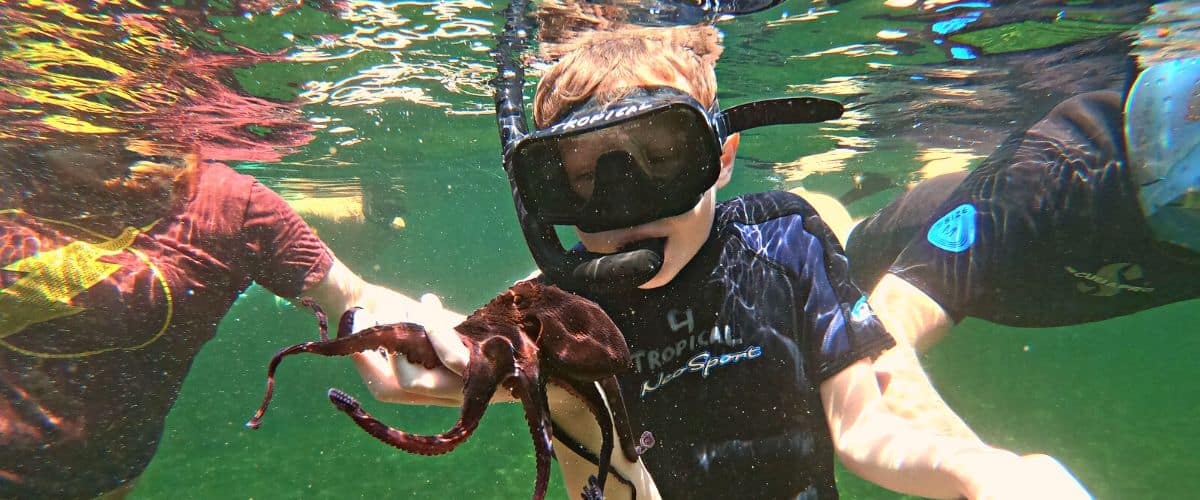
If you’re planning on just doing snorkeling, you’ll probably be satisfied with just joining a Komodo National Park day tour, since the best sites are inside the park boundaries. The water here is remarkably clear, and the coral is healthy and colorful. During our snorkel outings on our cruise, we saw tons of different reef fish, and even baby black-tip sharks!

For SCUBA divers, this region is known for its strong currents, which is important for an abundance of marine life. However, those strong currents require a certain level of capability and are not beginner friendly. That said, not every site is advanced. Dive shops in town do a good job of matching divers to the right locations, and most are very clear about conditions. A reputable operator will tell you honestly whether a site is suitable for beginners or if it’s better left to more experienced divers. It’s worth choosing a shop based on safety and communication rather than price alone.
You can’t walk more than a couple minutes in town without finding a dive center advertising an assortment of trips, but if you want to make sure your shop is reputable, you can check their rating on PADI’s official site.
We did not dive during our stay in Labuan Bajo, but I have a feeling that we’ll be back to do it right soon!
Discovery Dives are beginner-friendly guided SCUBA outings with experienced PADI-certified professionals that can be done without needing to be certified yourself. They're a great first step into the world of diving, and a convenient way to explore the underwater world without needing to invest time and money into getting your certification.
That said, if you plan on doing a lot of diving, getting your certification makes it way more affordable in the long run.

Where to Stay in Labuan Bajo
Labuan Bajo has a surprisingly wide range of places to stay, and the experience changes a lot depending on where you book. The town is built along a series of hills that rise up from the water, so geography plays a bigger role here than it does in flatter coastal destinations.
Hotels and guesthouses near the waterfront are the most convenient. This is where we stayed, and I definitely recommend the area! You can walk to restaurants, tour offices, and the harbor without needing a ride, and the area stays active well into the evening. Rooms here tend to have smaller balconies but easy access to everything.
While Eco Tree didn't have the largest or most elaborate rooms that we've stayed in, it did have comfortable rooms at a good price, right in the center of where we wanted to be.
The on-site restaurant was lovely (with great pizza!) and the views from the restaurant deck were spectacular, especially for sunset.

Spots higher up the hill (and closer to the airport) will often have even better views of town, but come with the trade-off of being further from the waterfront and all the restaurants, dive shops, etc. that are located there. Labuan Bajo is built on a hillside, so distances that look relatively close on the map may actually be further than you expect, because of where the roads do and don’t run.
Wherever you stay, it helps to decide whether you want the convenience of the waterfront or the views from higher up, and choose based on the experience you want.
Practical Tips for Visiting Labuan Bajo
The best time to visit is the dry season, roughly from April to October. The water is clearer, the weather is more predictable, and boat tours run more reliably. The shoulder months can be good too, just with a higher chance of rain or choppy water.
If you’re planning to visit Komodo National Park, book your tour with a reputable operator. Safety varies between companies, and this is a region where experience really matters. Boats should have life vests for adults and children, clear communication about currents, and crew members who know the area well.
It helps to bring cash, especially for markets, small shops, and entrance fees. There are ATMs in town, but they’re not always consistent. I found that most of the restaurants and cafes we visited accepted credit cards, cash is always king.
For days on the water, pack reef-safe sunscreen, rash guards, hats, and plenty of water. The sun is strong, and shade on boats can be limited. Sunscreen is expensive in tourist areas like Labuan Bajo, so if you have space for it in your checked bag, it’s worth bringing with you. We also made liberal use of ginger chew candies for motion sickness on the boats. Not as effective as medicines like Dramamine, but without the drowsiness side effects.
Final Thoughts: So much more than just Komodo Dragons
It’s easy to think of Labuan Bajo as “just” the doorway to Komodo National Park. And in many ways, it is. That’s the reason most people buy the plane ticket in the first place. But spending time here can show a fuller picture. The town is growing, shifting, and finding its place between its fishing-village past and its new(er) role as a major destination.
Visiting here gets you the big moments: ridge hikes at sunrise, drifting over coral gardens, and spotting your first Komodo dragon. But you also get the quieter parts: the harbor in the evening, kids eating gelato after a hot day, and fishermen mending nets along the water.
Labuan Bajo doesn’t feel polished in the way some destinations do. But it does feel real. It’s a place where adventure feels close and in-between moments feel laid back. Whether you come for a quick trip or stay a little longer, it leaves you with the sense that there’s always one more island out there waiting to be explored.