A Practical Guide to Managing Money while Traveling
Whenever we’re planning our next destination, we prefer spending that time thinking about the fun parts of living in field trip. We look forward to seeing incredible architecture, learning the science behind a local cup of coffee, or exploring the history of ancient mountain towns. However, for all that to happen, we have to look at the practical side of travel, too!
I’m talking about dealing with money.
If you haven’t spent much time traveling overseas, you might be wondering how you’re going to access the money you need during your travels. Can you use credit cards? Is it cash only? Where do I even get more cash?
This article is here to help you answer those questions and more, so you can have the confidence to travel internationally, without the stress! These are the simple ways that we keep money management easy so we can focus on our trips.

Note 1: This blog is not about making money while traveling.
Just being able to access the money options you already have.
Note 2: I encourage readers to get a Wise account in this article using my referral code. While I may be compensated monetarily when people use my referral code, I genuinely recommend Wise as an excellent service for managing payments while traveling, and I use it constantly.
Quick Tips:
- ATMs are the simplest way to get cash while traveling
- To avoid per transaction fees, try to withdraw larger amounts so you go to the ATM less often
- Decline conversion at the ATM (Your bank will give you a better rate)
- Pay with local currency, not USD, when given a choice
- Use a Wise account, or something similar, as a travel account in case your card gets lost or stolen
- Don’t keep all your payment methods in the same place!
How do I get cash while traveling?
Several times over the years, I’ve seen people recommending bringing all the cash you think you’ll need during your trip with you and exchanging it for local currency. But, while you certainly could do that, I personally don’t feel like its worth the effort, or the stress of carrying that much cash around with me!
I’ve traveled across more than 25 different countries on every continent except Antarctica, and I can confidently tell you that in almost any destination you visit, the easiest way to get money is by using the humble ATM to withdraw local currency.
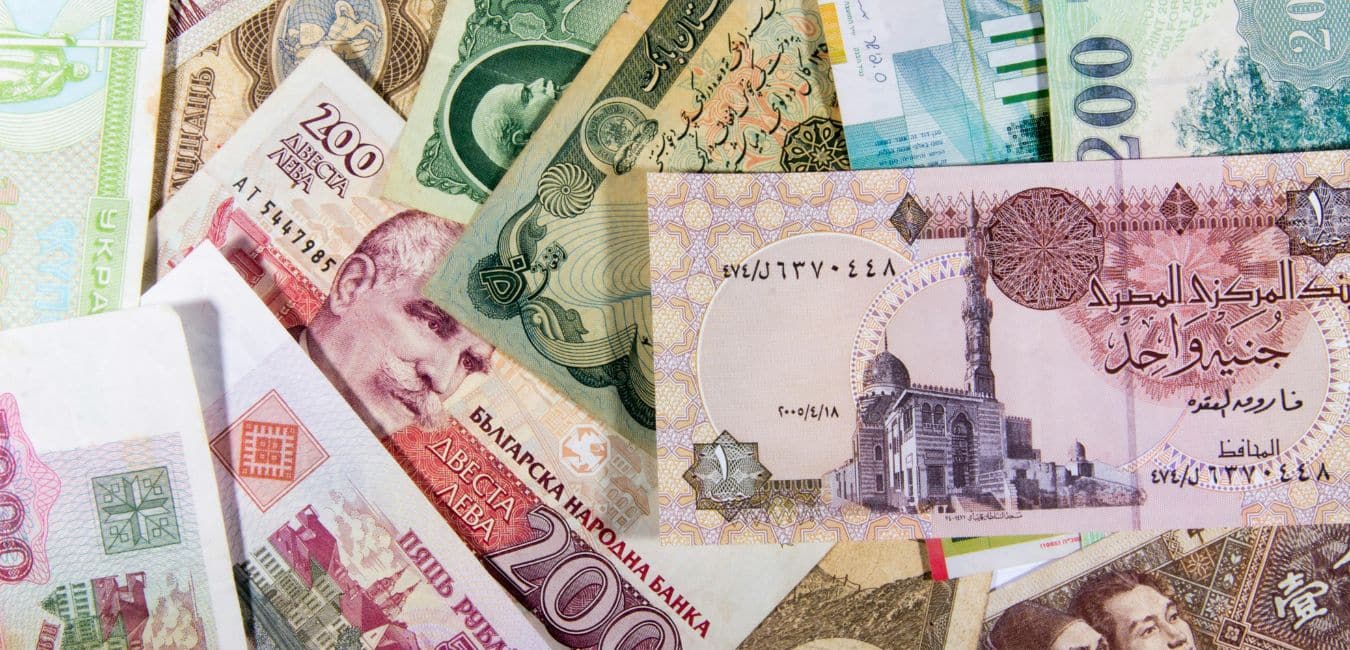
Personally, I have a Bank of America card that has worked at nearly every ATM that I’ve ever visited. That said, it’s a good idea to check with your bank ahead of time to make sure your debit card will work internationally or at ATMs that are out of network, especially if you bank with a smaller, local bank. Alternatively, you can get a physical debit card with a Wise account that will work at ATMs in over 150 countries.
But do note that there are limits on how much cash you can withdraw from ATMs using Wise. In March 2026, when I’m writing this, Wise limits monthly ATM withdrawals to $6000, which is plenty for what my family uses. But if you think you’ll be pulling more than that out of ATMs in a month, you’ll likely need a different (or additional) option.
The biggest downside to using ATMs for cash while abroad is that you’ll likely be paying transaction fees every time you withdraw money. For instance, in Vietnam, I have to pay a $5.00 ATM transaction fee, plus an international transaction fee that scales with how much I take out. Typically, I spend $7-$10 for every visit to the ATM. But, cash is essential for making payments at many of the smaller shops and restaurants, so it ends up being a necessary expense.
While ATMs are pretty much everywhere, it’s a good idea to always keep a $100-$200 of “emergency” cash in a safe place, just in case. This should be in a common currency like US Dollars or Euros, and should be kept in a different spot than your main wallet, such as a hidden pocket in your backpack or a safe in your room. (I used to have a belt with a zipper pocket along the inside edge!) I like mine to be mostly in $20 bills, for ease.
This is money that I almost never touch. But there have been times when having it has been an absolute lifesaver.
How do I get the best exchange rate at an ATM?
While using an ATM tends to be the most reliable way to get local cash, not all ATMs are created equal, and picking the right ones can be important.
When possible, it is usually best to avoid the standalone ATMs you see in airports or near big tourist spots. These machines often have much higher fees and give you less local money for your dollar. Instead, look for an ATM that is part of a real, local bank. These are safer and usually have better rates.
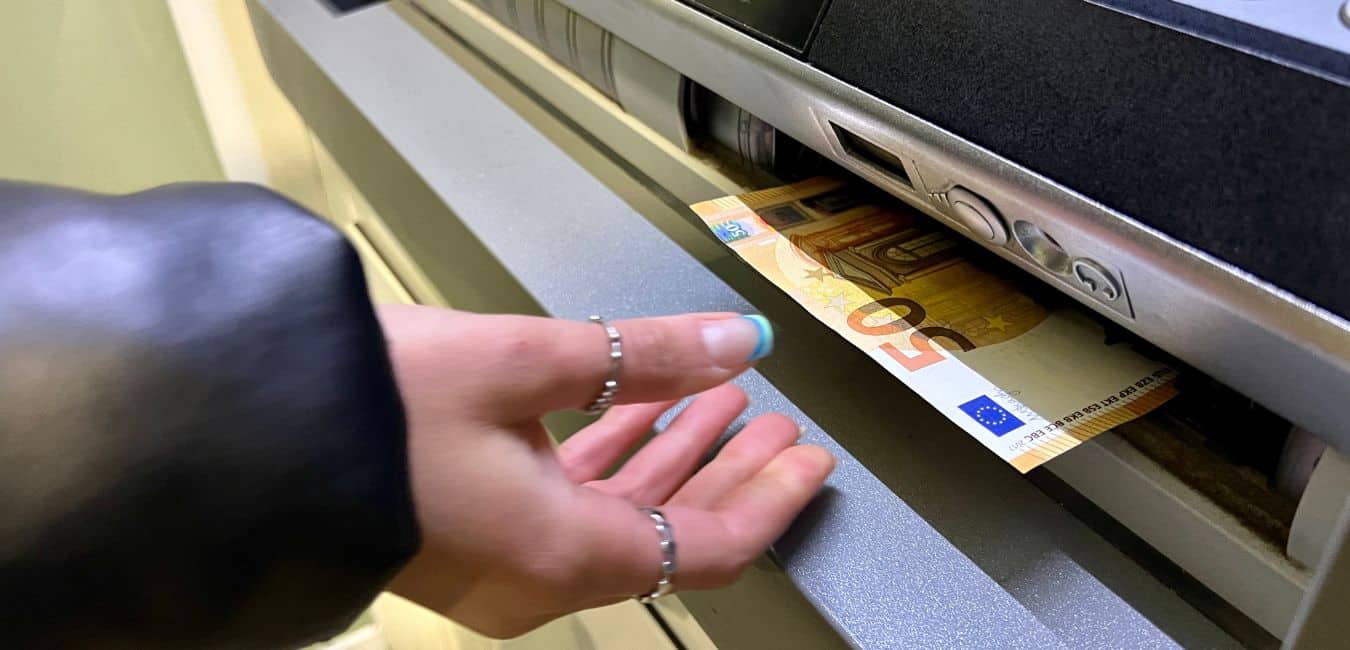
Another benefit is that if the machine makes a mistake or keeps your card, you can walk inside the bank during the day and ask for help. This is much easier than trying to call a support number in a different country while you are trying to enjoy your day.
Some ATMs will also ask you if you want to be “charged in your home currency” at a “guaranteed rate.” While it might seem easier to see the total in your own money, you should always say no to this offer. If you say yes, the company that runs the ATM will get to choose which conversion rate to apply to your dollars. Saying no let’s your home bank choose the conversion rate and they will almost always give you a better rate!
(This is another area where Wise shines, as they use some of the best conversion rates possible when you withdraw cash using their debit card!)
How do I keep track of conversion rates on the go?
One of the trickiest parts of managing money while traveling is simply keeping track of how much things actually cost. There have been several times when I’ve made a mistake with the currency conversion in my head and ended up agreeing to a price that’s more than I intended to spend.
So, while it’s good to keep the basic exchange rates in your head, you’ll probably want to download a currency exchange app that will let you double-check prices on larger purchases. I use the XE: Currency Exchange to check the current rates anytime I’m unsure, but there are a ton of different apps out there that will work just as well.
Can I use credit cards while traveling?
Yes! Smaller vendors and street restaurants often won’t take credit cards, but most hotels, grocery stores and nicer restaurants almost certainly will. While I always try to keep cash available, I would say that 80% of the transactions I make while traveling are card purchases, though that number varies from country to country.
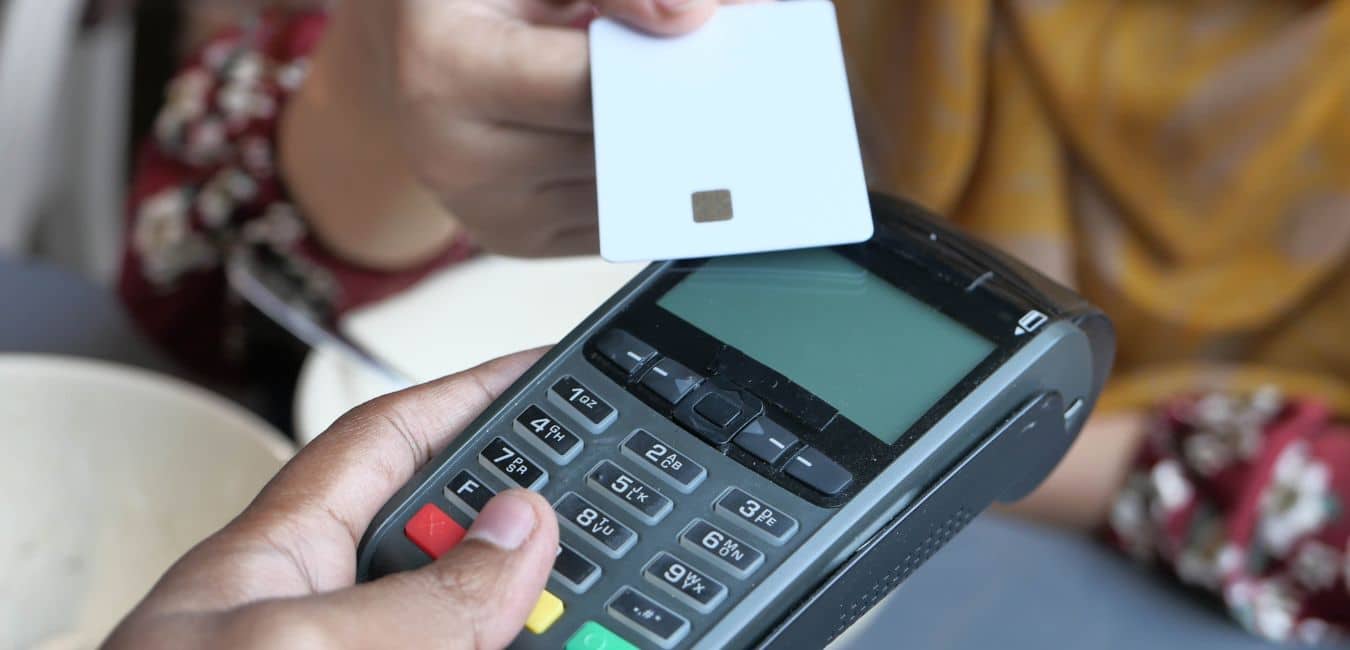
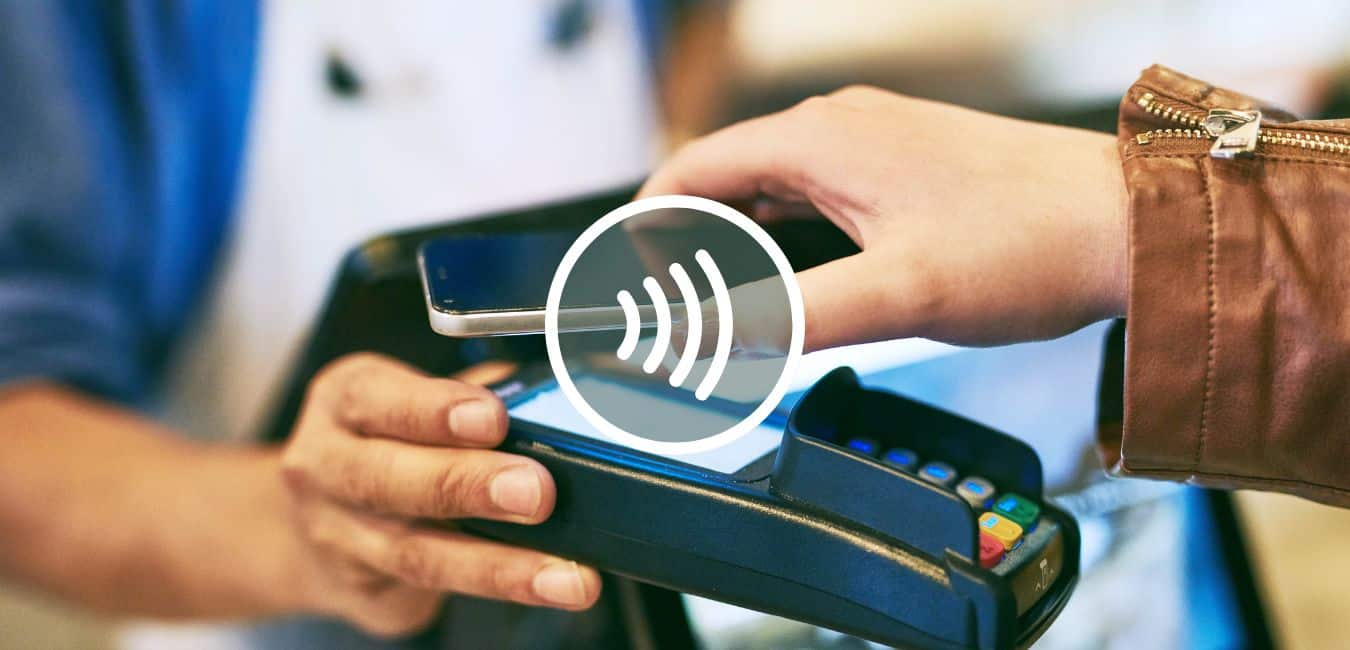
Even better, most modern POS machines accept NFC card payments, which means you can pay using a digital wallet on your phone instead of using a physical card. I personally love that, because it means that when I’m out and about, I can leave most of my payment methods in a safe place and only bring what I need.
Typically, I leave my main wallet at the house or hotel, out of sight, and only bring my Wise debit card, one physical credit card, my phone, and a modest amount of cash with me when I go out.
IMPORTANT!
If you plan on using a credit card while traveling abroad, be sure to choose one without foreign transactions fees! These fees can be absolutely killer when traveling and are applied to every transaction you make while outside your home country. With as much travel as we do, I won’t even look at a credit card if it has foreign transaction fees.
Many businesses will charge a credit card processing fee when you use a credit card (typically 3.5%). It’s worth being aware that that happens, but that fee is most likely less than what you would pay in ATM fees to get cash, so it’s still often the better choice. But be sure to check how much the fee is, because in some places I’ve visited (like the Galapagos islands) the fee was significantly more than 3.5% and cash ended up being the cheaper option!
What happens if I lose my debit card while overseas?
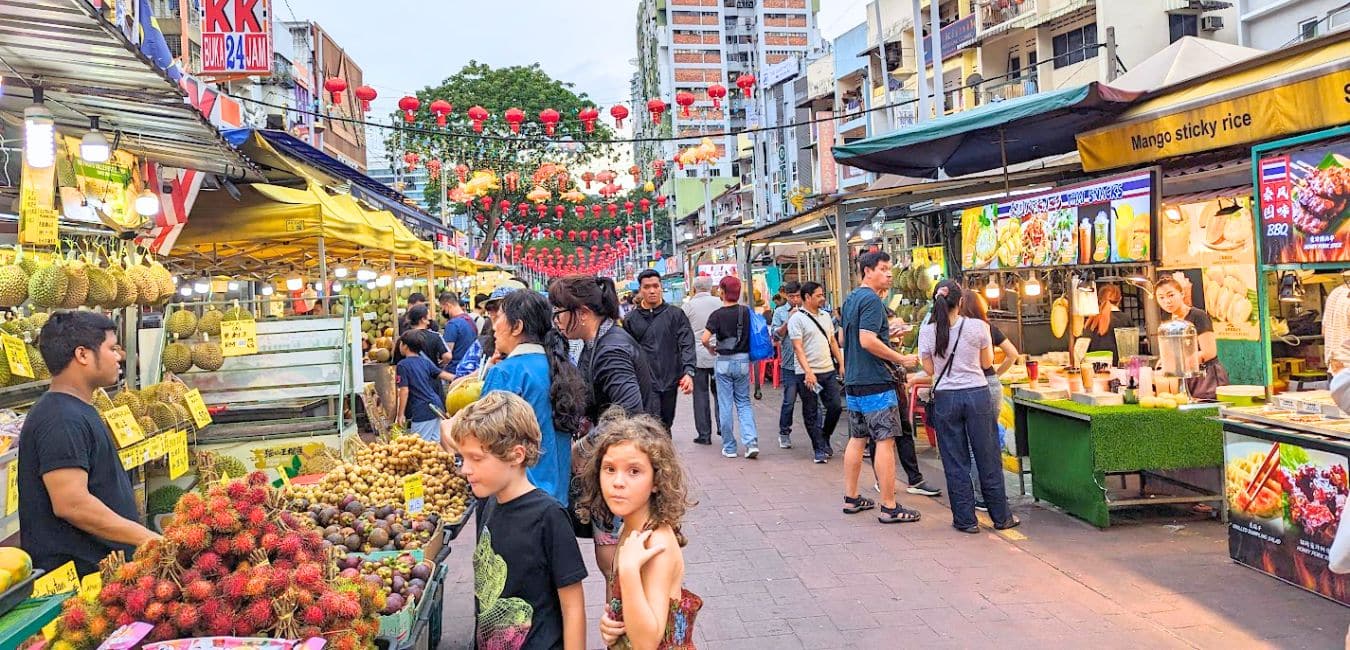
Story time. On one of my family’s recent trips to Kuala Lumpur, I found myself and a hungry family looking at some delicious street food without any local cash in my pocket. Luckily (so I thought), there was an ATM in a nearby convenience store. I went in, grabbed some cash, and bought some delicious food.
The next day, I received a notification from my bank that they had denied some weird charges on my debit card that they wanted me to review. It turns out, someone had gotten my card information (I think from that ATM) and was trying and failing to buy things. Within minutes my card was canceled and that crisis was averted.
The problem was, I was traveling in Southeast Asia, and my bank needed to send me a new card. They offered to mail it to me overseas, but it got lost in the mail, not once, but twice, before I had it sent to a family member who was able to send it to me using DHL. In all, it took 3 months to get access to my debit card again, and if I had had only one way of getting cash out, I would have been out of luck.
Even when you’re trying to be careful, it pays to have a back up plan or two. Having a few different safety nets in place can be the difference between an inconvenience and needing to buy an expensive last-minute flight home.
In my case, I had access to a local bank account in the country where I was staying, as well as access to my Wise account, but you could also potentially use a credit card for a cash withdrawal, in a pinch. If none of those work, then you might try transferring money to a friend or trusted acquaintance using Wise (or Paypal, or Venmo) and having them withdraw it as cash for you, but this requires having a friend or trusted acquaintance there with you.
Note: I don’t recommend withdrawing cash from an ATM using a credit card, as the APR on cash tends to be higher than for purchases. However, it’s good to have it as a backup option, just in case. If you want this ability you need to get a PIN for your credit card.
Credit card PINs are not typical for American credit cards, but if you request one, your credit card company will normally give you one. You will not be able to withdraw cash from an ATM using your credit card if you don’t have one, and they are very difficult after you’ve already left the country. So be sure to set one well in advance of your trip!
I highly suggest having a backup debit card that you keep in a separate spot from your main card. Whether that means using your Wise card for your day to day expenses and keeping your main bank card in a safe place, vice-versa, having that redundancy goes a long way towards preventing having a very bad day.
Wise is one of my most-used money apps while traveling, for a variety of reasons.
Whether it's using bank transfers to pay rent, splitting a bill with a friend, or using the physical debit card to pull out cash for some shopping, Wise has the tools that I need to keep my trip running smooth.
Use my referral code to sign up (by clicking the button) and get your first transfer of up to $600 fee-free.

Can I pay with things using my phone while overseas?
Yes! And I do all the time!
The most straight-forward way to do this is by using a digital wallet on your phone, like Google Pay or Apple Pay. Once you’ve added your cards to your digital wallet on your phone, you can pay for things by just tapping your phone, even if you do not have your physical card with you. This is great for when you don’t want to carry a bunch of cards with you, though sometimes it can fail, so bringing at least one card with you is still a good idea.
The other method for paying with your phone is through QR Payments. While this method isn’t really a thing in the US, it’s extremely popular in Southeast Asia, and can rarely be found in other areas of the world, as well. Basically, QR payments are just simple bank transfers, like sending money to someone using Zelle, but all the information needed to make the transfer is kept in a QR code that you can scan. It typically only works with local bank accounts within a single country, so it’s not super-convenient for travelers, but if you stick around in a country long enough to make getting a bank account worth it, having the ability to pay with QR Codes means not needing to carry a bunch of extra cash.
For those who want that convenience without needing a local bank account, you should check out the app Moreta Pay. I’m not an affiliate and I haven’t personally used it yet, but I do have several friends who are using and loving it. It’s limited to a handful of countries at the moment with more promised to come, so I imagine I’ll get the chance to try it out for myself pretty soon!
Do I need to open a bank account when traveling?
For the vast majority of people, no. You do not need to open a local bank account when traveling.
Opening a bank account in another country can be very difficult and can require paperwork, and possibly a residency visa. Instead, if you find yourself needing bank services, like making bank transfers, using an app like Wise is typically a much better option.
Do I need to let my Bank know that I’m traveling?
There was a period of time, not too long ago, when you had to let your bank know you were traveling or else you wouldn’t be able to access your funds when you landed. After 10 years of travel, I can say that, largely, that is no longer the case.
I don’t typically let my bank know my travel plans ahead of time, and I’ve yet to run into a real problem that comes from that. Most often, I may have a transaction declined when I arrive in a new place, but I’m able to confirm it’s a valid transaction using the bank’s app or by responding to an SMS from them, and everything works just fine once again.
If that makes you nervous, you definitely can let your bank know about your travel plans, but they will likely still ask you to confirm it’s you the first time or two you try to use your card in a new place.
More important is making sure you have a way to get the SMS alert that they send you when something looks suspicious. I highly recommend keeping your cell phone number active for SMS while traveling! The easiest way to do this is to travel with a phone that has dual SIM capabilities so you can keep your home phone number active while traveling.

How much money should I get at the airport?
When you first arrive in a new country, your first task should be getting enough cash to last for 24 hours. It only has to be enough to cover your ride to the hotel, your first few meals, the purchase of a local SIM (if needed), and any small tips (if in a tipping country).
I typically try to get around $100 out for my first round of cash. That’s plenty to get you through a day or two in most places, and if you’re in a cash-heavy place they’ll usually have plenty of ATMs in the more popular areas.
What should I do if I have too much cash left over at the end of my trip?
If you have too much cash left as you get to the end of your trip, try to go “cash-only” for any daily needs and meals. If you start this a day or two out from your departure date, you’ll likely be able to spend most everything. There have been several times I’ve ended up buying a cup of coffee in the airport using the last of the coins in my pocket and paying the balance with a credit card.
Alternatively, you can save any left over cash for a future trip to that same region! I buy a new coin purse for every country we visit that I use throughout my stay there, and any left over cash stays in that coin purse so I have all my different currencies divided out by country.
Also, you can get your money exchanged for a different currency before you continue your travels. I only do this if I greatly misjudged how much cash I needed for my last week in a country, but it can be helpful for not needing to immediately find an ATM when landing somewhere new.
Ultimately, it’s up to you!
Wise is one of my most-used money apps while traveling, for a variety of reasons.
Whether it's using bank transfers to pay rent, splitting a bill with a friend, or using the physical debit card to pull out cash for some shopping, Wise has the tools that I need to keep my trip running smooth.
Use my referral code to sign up (by clicking the button) and get your first transfer of up to $600 fee-free.